Packing doesn’t have to be a chaotic, last-minute shove-fest. With a few smart systems, your suitcase can become a portable command center instead of a black hole of tangled chargers and wrinkled clothes. This guide breaks down five practical, road-tested packing tips that keep your bag organized, your outfits ready, and your travel stress way lower—whether you’re heading out for a weekend or a month.
Build “Outfit Clusters” Instead of Random Pieces
Most people pack by item type (all shirts, all pants, all shoes) and end up with a suitcase full of clothes that don’t quite go together. Instead, think in “outfit clusters”: small, mix-and-match combinations that work across multiple days.
Start with a base palette of 2–3 neutral colors (like black, navy, beige, or white). Then add 1–2 accent colors (a bold shirt, scarf, or accessory) that work with everything else. For each cluster, include a top, a bottom, and a layering piece that all coordinate with at least two other items in your bag.
The goal is to make every item earn its place by being wearable in multiple ways. A single pair of dark jeans that works with three tops and one light sweater is more valuable than two extra “just in case” pieces you’ll never touch. This approach reduces overpacking, speeds up getting dressed, and helps you look put-together in your photos without hauling half your closet.
Use a Two-Layer System for Toiletries (So You Never Start From Zero)
Toiletries cause a lot of last-minute scrambling—tiny bottles, airport liquid rules, and that “did I forget my toothbrush?” panic. Solve this with a two-layer system: a permanent travel kit and a small “daily use” add-on.
Your permanent travel kit lives in your luggage and is always ready. Stock it with minis or decanted versions of your essentials: shampoo, conditioner, body wash, moisturizer, sunscreen, razor, toothbrush, travel-size toothpaste, deodorant, and any basic meds. As you return from trips, top it up right away so it’s perpetually ready to grab and go.
Then, have a tiny second pouch for “daily use” items you refuse to buy double of—like your favorite serum, prescription meds, or a specific hair product. Before a trip, you only need to move a few of these into your daily-use pouch, not rebuild your entire toiletry kit from scratch. This setup saves time, prevents forgotten basics, and keeps you compliant with liquid limits by design.
Treat Cables and Tech as a Single “Unit,” Not Loose Extras
Nothing burns time in a hotel room faster than untangling cables or hunting for a charger that somehow buried itself in your socks. Pack your tech like it’s a kit, not a pile of pieces.
Use a slim tech organizer, zip pouch, or even a repurposed sunglasses case to hold all your small electronics together: phone charger, laptop charger, earbuds, plug adapters, power bank, and a short universal cable if you have one. Keep this tech kit in your personal item (not checked baggage) so it’s always accessible during flights and layovers.
Before every trip, do a quick “tech roll call”: device + charger for each, plus one backup charging option (like a power bank or multi-port plug). And if you’re traveling internationally, add region-specific adapters into your kit and leave them there permanently. This approach keeps you powered up, avoids frantic airport purchases, and makes it easy to work, navigate, or entertain yourself anywhere.
Pack a Micro “Arrival Kit” at the Top of Your Bag
The first hour in a new place can feel disorienting—especially if you’re tired, it’s late, or your room isn’t quite ready. That’s where an “arrival kit” saves the day: a tiny collection of essentials you can access instantly without unpacking everything.
Pack this kit in a small pouch and place it right on top of your luggage (or in an easy-access pocket of your backpack). Include items like: a compact toothbrush and toothpaste, face wipes or a small cleanser, a change of underwear, a fresh T-shirt, lip balm, a small moisturizer, basic pain reliever, and one or two snacks. If you wear contacts, add a spare pair or mini solution.
This lets you freshen up in minutes, even in an airport bathroom or train station, so you feel more human and less rumpled. It’s especially helpful after overnight flights or long bus rides: you can reset quickly and step into your first few hours of travel feeling ready instead of wrecked.
Use Lightweight “Compression Zones” Instead of Overstuffing
Instead of cramming everything into one solid mass, think of your bag as divided into “compression zones” that each have a job: clothes, bulkier layers, and flexible fillers.
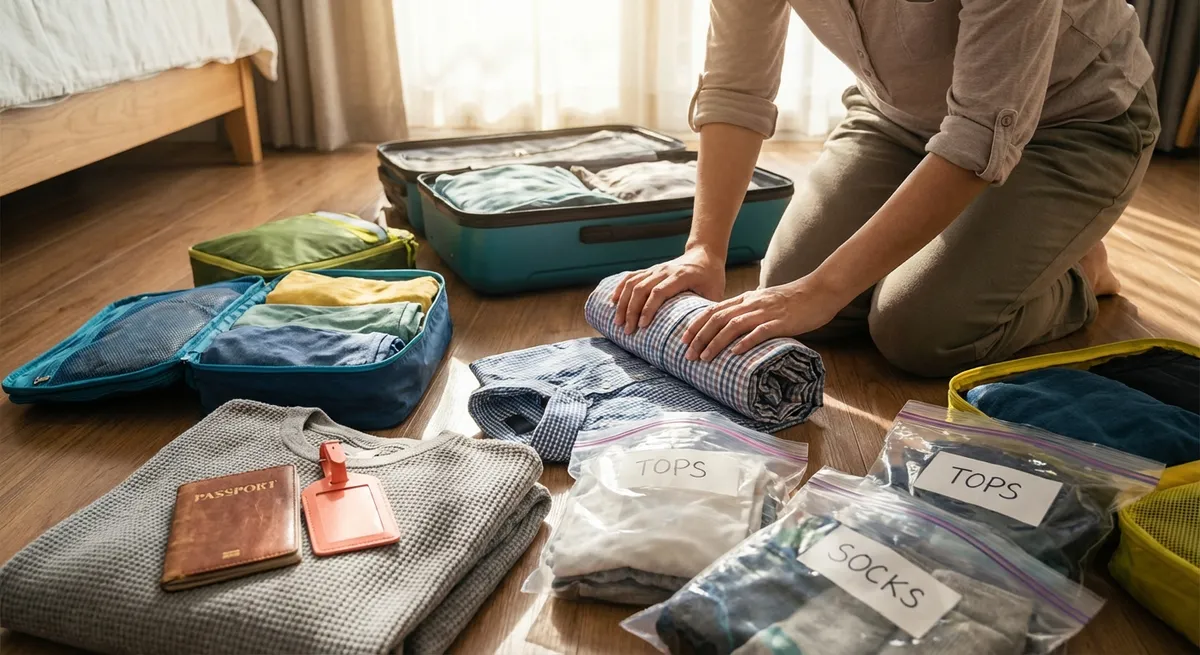
For clothing, rolling or using packing cubes can help compress items and keep them organized by type or outfit. Reserve one cube for tops, one for bottoms, and one for undergarments or sleepwear. This makes it easier to pull out exactly what you need instead of exploding your whole suitcase every time you change.
Place heavier or bulkier items (like jeans and sweaters) closer to the wheels in a rolling suitcase so it’s more stable. Then use soft items—like socks, scarves, or lightweight tops—as “fillers” around the edges and inside shoes. These fillers protect more delicate items and help reduce shifting during transit, which keeps your bag neater and your clothes less wrinkled. The result: everything fits, nothing feels crammed, and unpacking becomes optional instead of mandatory.
Conclusion
Smart packing isn’t about owning special gear or mastering some secret folding ritual. It’s about creating simple systems—outfit clusters, a ready-to-go toiletry kit, a unified tech pouch, and a small arrival kit—that make every trip smoother from the moment you zip your bag. With these five strategies, your suitcase becomes less of a stress source and more of a reliable sidekick, ready to roll whenever you are.
Sources
- Transportation Security Administration (TSA) – What Can I Bring? - Official guidance on carry-on rules, liquids, and restricted items for U.S. air travel
- U.S. Department of State – Traveler’s Checklist - Government checklist for preparing documents, meds, and essentials before international trips
- CDC – Traveler’s Health Packing List - Health-focused packing advice, including medications, first-aid items, and hygiene considerations
- Mayo Clinic – Travel Health Tips - Guidance on staying healthy on the road, useful for planning medical and comfort items to pack
- BBC Travel – Smart Ways to Pack Light - Practical insights and techniques for traveling with less while still bringing what you need
Key Takeaway
The most important thing to remember from this article is that this information can change how you think about Packing Tips.