Packing doesn’t have to be the stressful warm‑up act to your vacation. With a few smart moves, your suitcase can become a portable home base that’s easy to live out of—on red‑eye flights, weekend getaways, or months‑long adventures. These packing tips are all about making each day on the road smoother, lighter, and way more fun.
Build a “Grab-and-Go Core” You Never Unpack
Imagine having 80% of your packing done before you even book a flight. That’s what a grab‑and‑go core gives you: a small kit of essentials that lives in your suitcase or travel bag all year.
Start with a dedicated pouch or small packing cube and stock it with travel‑sized toiletries (in leakproof containers), a spare toothbrush, toothpaste, deodorant, lip balm, and a tiny hairbrush or comb. Add a compact first‑aid mini kit (bandages, pain reliever, any prescription meds, and a few allergy pills), plus a few multi‑use items like travel‑size sunscreen and a small pack of tissues.
Then create a second “tech core”: a universal adapter, one high‑quality multi‑port charger, a short charging cable for each device you actually use, and a compact power bank. Keep these together in a separate pouch that always stays in your suitcase or backpack.
The secret is discipline: once you’re home, restock anything that’s low and put the kits straight back in your luggage—not in your bathroom drawer. When your next trip pops up, you’re not starting from scratch; you’re just topping up and adding clothes.
Design Outfits Around Layers, Not Individual Days
Instead of packing “Monday outfit, Tuesday outfit, Wednesday outfit,” think in layers and building blocks. This gives you more combinations with fewer pieces and helps you adapt to changing weather without overstuffing your bag.
Start with a simple color palette: 2–3 neutrals (like black, navy, gray, tan) and 1–2 accents (a color you love in a top, scarf, or accessory). Choose bottoms that go with everything—one pair of comfortable pants, one pair of shorts or a skirt, maybe lightweight joggers or leggings. For tops, pack items that can layer over or under each other: breathable t‑shirts, one long‑sleeve layer, and one lightweight sweater or cardigan.
Add a packable outer layer that suits the season: a foldable rain jacket for unpredictable weather, or a compressible insulated jacket for chillier destinations. Shoes take up lots of space, so aim for two pairs: one comfortable walking pair and one “upgrade” pair that works for nicer dinners but is still walkable.
Before you pack, do a quick outfit test: can every top work with every bottom? Can each piece be worn at least two or three ways? If not, swap it for something more versatile. This mindset shrinks your suitcase while expanding your options once you arrive.
Pack by “Access Level” So You Never Dig for Essentials
How you organize your bag can matter more than what you bring. Think of your luggage in layers of access—what you need constantly, occasionally, and rarely—and pack accordingly so you never have to explode your bag in the airport or hotel lobby.
Keep “constant access” items in your personal item (backpack or tote): passport/ID, wallet, phone, boarding passes, a pen, hand sanitizer, lip balm, glasses, and any medications. Add one comfort item (like a scarf that doubles as a blanket or an inflatable neck pillow) and one small entertainment item (e‑reader, book, or headphones).
Your carry‑on or main suitcase should hold “daily use” items near the top: one full outfit change (including underwear and socks), sleepwear, your toiletries kit, and a light layer. Pack these in a cube or on top so you can reach them quickly if your room isn’t ready or your checked bag is delayed.
“Rare access” items—like backup shoes, extra outfits, or specialty gear—can live at the bottom or in harder‑to‑reach pockets. If you’re checking a bag, always assume it might arrive late: keep at least one full change of clothes and your essentials in your carry‑on. That single habit turns a possible disaster into a mild inconvenience.
Tame Toiletries and Liquids Before Security Does It for You
Nothing slows down your travel groove like a bag search and tossed liquids at security. A little pre‑trip planning with toiletries saves time, stress, and mess.
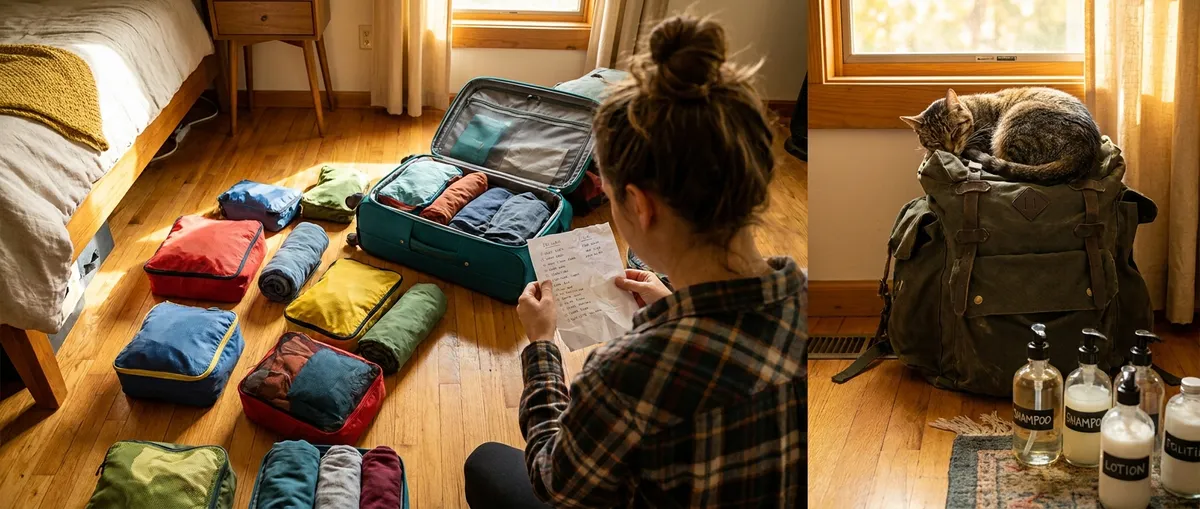
First, audit what you truly need daily—cleansers, moisturizers, contacts solution, hair products, makeup, etc.—and decant them into TSA‑compliant containers (100 ml/3.4 oz or less if you’re flying). Use sturdy, clearly labeled bottles or jars and put them in a clear, zippered pouch so you can pull them out in seconds at security.
Whenever possible, swap liquids for solids: solid shampoo and conditioner bars, bar soap, solid facial cleanser, solid perfume, and even solid sunscreen sticks. These are spill‑proof and usually don’t count against your liquid allowance, leaving room for must‑have liquids like specialty skincare or medication.
Always double‑bag anything that could leak (like hair oil or serum) and keep the toiletry pouch near the top of your bag or in an easy‑access pocket. On travel days with early flights or long layovers, consider a mini “freshen up” kit in your personal item: toothbrush, toothpaste, face wipes, and moisturizer. You’ll feel human again after a red‑eye or long bus ride without unpacking everything.
Give Every Item a Job (or Two) Before It Earns a Spot
The fastest way to overpack is to let “just in case” items sneak into your bag. Before anything makes it into your suitcase, challenge it: “What exactly will you do for me on this trip—and how many times?”
Prioritize items that are multi‑use. A large scarf can be a blanket on the plane, a sarong at the beach, a shawl for evenings, and a makeshift pillow. Lightweight leggings can be plane pants, sleepwear, or a workout layer. A simple black t‑shirt can dress down with shorts during the day and dress up with jewelry and nicer shoes at night.
Use this same lens for gear: a foldable tote bag can become a grocery bag, laundry bag, or extra carry‑on if you pick up souvenirs. A small carabiner clip on your backpack can secure a hat or water bottle. Even a few zip‑top bags can protect electronics from rain, hold snacks, or contain wet swimsuits.
When you’re tempted to add something “just in case,” ask: is there something I’m already packing that could handle that same job? Most of the time, the answer is yes—and that’s space you’ve just reclaimed.
Conclusion
Packing well isn’t about stuffing your life into a suitcase; it’s about choosing the right few things that make every day on the road easier. A grab‑and‑go core, layer‑friendly outfits, smart organization, streamlined toiletries, and hard‑working multi‑use items all add up to one big benefit: you spend less time wrestling your bag and more time enjoying where you are.
Next time you travel, try implementing even two of these packing moves. Notice what you didn’t miss, what you actually used, and how your bag felt to carry. With each trip, your packing style gets sharper—and your travels feel more effortless, from zip to click to go.
Sources
- Transportation Security Administration – What Can I Bring? - Official TSA guidelines on liquids, electronics, and other items allowed in carry‑on and checked baggage
- U.S. Department of State – Travel.gov - Government advice on preparing for international travel, including documents and medications
- Mayo Clinic – Travel and Health - Evidence‑based guidance on health essentials and medications to consider packing
- CDC – Travelers’ Health - Official recommendations on travel health kits, vaccines, and destination‑specific precautions
- REI Co-op Expert Advice – How to Pack a Suitcase - Practical tips on packing techniques, cubes, and organizing gear efficiently
Key Takeaway
The most important thing to remember from this article is that this information can change how you think about Packing Tips.