Packing doesn’t have to be a frantic, last-minute scramble. With a few smart habits, your suitcase can turn into a calm, organized command center that actually makes travel easier instead of more stressful. These five practical tips focus on what you do before and while you pack—so you can spend less energy on your bag and more on the adventure.
Turn Your Bed into a Packing “Staging Area”
Before anything goes into your suitcase, it should pass through a staging zone—your bed, a table, or even a clean floor. Lay everything out where you can see it at once: clothes, shoes, tech, toiletries, documents, and extras. This simple step gives you a bird’s-eye view of how much you’re really bringing.
Use this moment to:
- Group items by category (tops, bottoms, underwear, accessories, electronics).
- Remove duplicates (“Do I really need three black T-shirts?”).
- Check outfits against your trip’s actual days and activities.
- Spot missing essentials, like a belt or adapter, before you zip your bag.
Treating the staging area as a “pre-check” for your packing keeps your suitcase from becoming a black hole of random stuff. It’s also the easiest way to avoid overpacking and last-minute panic.
Build Outfits, Not “Options”
Instead of packing clothes as standalone items, think in complete outfits. Start by listing your trip days and what you’ll be doing each day (city exploring, hiking, work meetings, dinners out). Then assign specific outfits to each scenario, mixing and matching pieces as much as possible.
A few ways to make this work:
- Choose a simple color palette (for example: navy, white, gray, and one accent color) so everything coordinates.
- Make sure every bottom works with at least two tops.
- Favor versatile layers: a light sweater that works on a plane, at a café, and over a dress at night.
- Plan “repeat heroes,” like jeans or neutral sneakers, that you’ll wear multiple times.
Lay each outfit on the bed, including socks, underwear, and accessories if they’re specific (like tights or a belt). Once you see that every activity has a complete solution, you’ll feel more confident bringing fewer items—and you’re less likely to pack “just in case” clothes that never leave your bag.
Use Containers with a Purpose (Not Just for Tidiness)
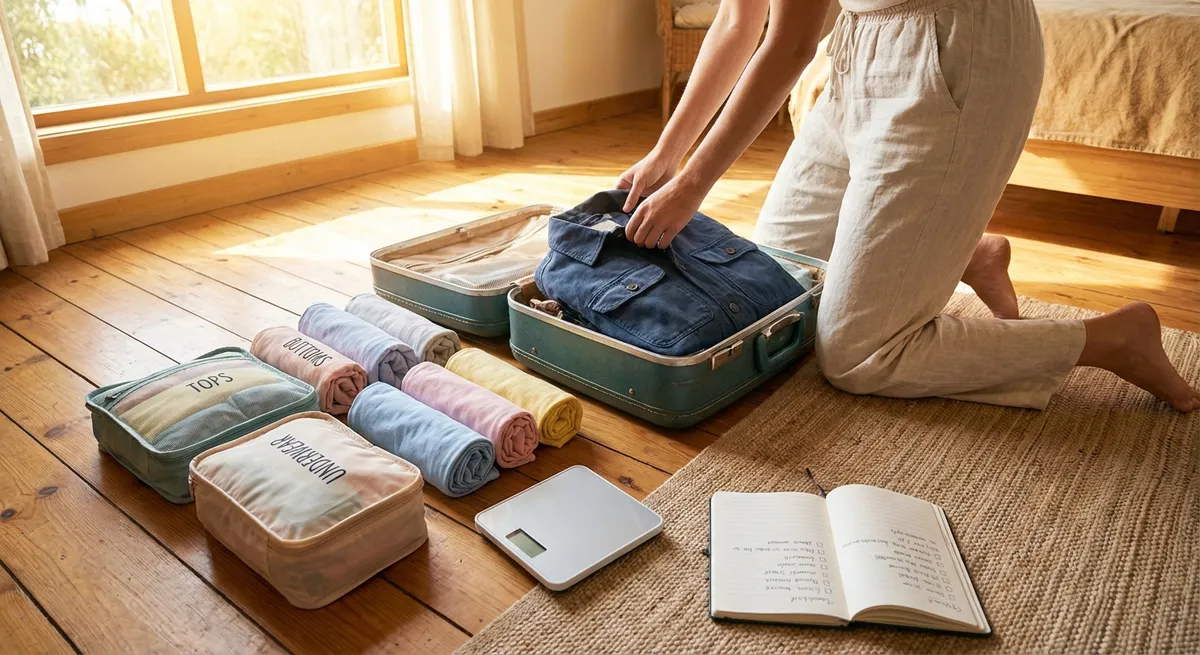
Packing cubes, pouches, and small bags aren’t just about aesthetics; they’re about function. The goal is to make locating and repacking items effortless, especially when you’re moving between hotels, trains, or flights.
Here’s a simple container system that works for most trips:
- One cube for tops, one for bottoms, one for underwear/sleepwear. This keeps categories clear and easy to grab.
- A dedicated “night one” pouch. Include pajamas, toothbrush, mini toiletries, and any medication you’ll need right away. If you arrive exhausted or late, you don’t have to dig through everything.
- A tech pouch. Store chargers, cables, adapters, and earbuds together. This reduces the risk of leaving something plugged in at a hotel.
- A wet/dry bag. Useful for swimsuits, gym clothes, or anything that gets damp—so it doesn’t mingle with clean outfits.
You don’t need expensive gear. Reusable zipper bags, small drawstring bags from shoes, or simple toiletry cases all work. The key is consistency: the same types of items always live in the same type of container, so you can find them in seconds.
Pack a “Daily Essentials Kit” for Life on the Go
Think about everything you reach for during a normal travel day—not at your destination, but in transit. That’s your daily essentials kit, and it should live in your personal item, not buried in your suitcase.
Your kit might include:
- Travel-sized hand sanitizer and wipes.
- Lip balm and a small moisturizer (planes are dry).
- Refillable water bottle (empty through security).
- Simple snacks you know sit well with you—nuts, granola bars, or crackers.
- Pen, mini notepad, and a small pack of tissues.
- Compact power bank and charging cable.
- Any essential medication for the day (never in checked luggage).
Use a small pouch or clear bag so you can move this kit between backpacks, totes, or daypacks without re-packing every time. Having these items in one grab-and-go place can turn airport lines, layovers, and long bus rides from draining to manageable.
Leave “Comfort Space” in Your Bag
Most travelers focus on how much they can fit, but a little empty space is a gift to your future self. Leaving a bit of breathing room helps with souvenirs, last-minute purchases, and the inevitable “return trip shuffle” when you’re packing quickly.
Plan for comfort space by:
- Starting with a slightly smaller suitcase or backpack than you think you need—then packing to about 80–90% capacity.
- Using a compressible cube or stuff sack that you don’t fully compress on the way out, giving you expansion room later.
- Avoiding “space-filler” items like extra shoes or bulky hoodies if you’re only packing them because there’s room.
That intentional buffer means your bag is easier to close, easier to carry, and less likely to burst at the seams when you head home with a few new finds. It also keeps packing and repacking simple, especially if you’re changing locations frequently.
Conclusion
Smart packing isn’t about mastering every hack—it’s about creating a few reliable habits that make travel smoother every single time. By staging your items before they hit the suitcase, packing in outfits, using purpose-driven containers, keeping a daily essentials kit handy, and leaving a bit of “comfort space,” you’ll transform packing from a chore into a quick, confident routine.
The payoff? Less time wrestling with zippers and more energy for the experiences that make your trip unforgettable.
Sources
- U.S. Department of State – Travel Preparation Tips - Official guidance on preparing for trips, including documents and essentials to keep accessible
- Transportation Security Administration (TSA) – What Can I Bring? - Detailed rules on items allowed in carry-on and checked bags, useful for planning your packing list
- Mayo Clinic – Jet Lag Disorder: Prevention - Explains how to manage comfort and health while traveling, informing what to keep in your essentials kit
- BBC Travel – The Smart Way to Pack a Suitcase - Offers additional expert-backed packing strategies and organization ideas
- REI Co-op – How to Choose Luggage, Packs and Bags - Breaks down how to select and organize bags and packing systems for different trip styles
Key Takeaway
The most important thing to remember from this article is that this information can change how you think about Packing Tips.