If your suitcase has ever felt like a chaotic mix of “just in case” items and nothing that actually goes together, you’re not alone. The secret to stress-free packing isn’t magic—it’s strategy. By treating your suitcase like a tiny, curated wardrobe instead of a storage bin, you can travel lighter, dress better, and waste zero time worrying about what to wear. Let’s turn your packing list into a smart outfit system that works from airport seats to rooftop bars.
Start with a Color Story, Not a Pile of Clothes
Instead of pulling random favorites from your closet, pick a simple color story first—then let that guide what you pack.
Choose one base color (like black, navy, or tan), one neutral (white, gray, or cream), and one accent color (something you love wearing: olive, rust, burgundy, blue). Every clothing item should fit this palette so it can mix and match easily. For example, navy pants, a white tee, a striped shirt, and a rust sweater can produce multiple outfits with almost no mental effort.
This approach cuts down on “single-use” pieces and makes it easier to get dressed when you’re jet-lagged or getting ready in a dim hostel room. Bonus: a cohesive color story looks great in travel photos and helps you feel put together without trying too hard.
Build Around “Hero Pieces” You’ll Wear on Repeat
Instead of starting with what you might wear, start with what you know you’ll wear constantly—your “hero pieces.”
Think about your daily travel reality: walking, sitting on planes or trains, grabbing casual meals, and maybe dressing up slightly in the evenings. Choose 2–3 hero items that are comfortable, versatile, and can be styled up or down. Examples: a pair of dark, stretchy pants; a breathable midi dress; a good-quality plain t-shirt; or a lightweight button-down.
Then ask: “How many different outfits can I build around this one item?” If a piece doesn’t work with at least three other things in your bag, reconsider it. Hero pieces should:
- Resist wrinkles or look good slightly rumpled
- Work with both sneakers and slightly nicer shoes
- Be easy to hand wash and quick to dry
- Make you feel confident when you put them on
When in doubt, upgrade your hero pieces and simplify everything else.
Use the “Weather Sandwich” Layering Strategy
Weather is unpredictable, but your packing doesn’t have to be. Instead of guessing, think in layers: a base, a mid-layer, and an outer layer—your “weather sandwich.”
Your base layer is what touches your skin: breathable tops, comfortable underwear, and socks appropriate for the climate. Your mid-layer is your temperature adjuster: a light sweater, fleece, or cardigan. Your outer layer is your protection: a packable rain jacket, windbreaker, or warmer coat, depending on the destination.
The key is flexibility. A light merino wool sweater and a compressible rain shell can handle chilly planes, cool evenings, and surprise rain showers without taking up much space. You can strip down to just the base layer in hot weather or wear all three when it gets cold.
Before you pack, check the forecast for both daytime and nighttime temps, and plan layers you can combine in different ways. This one strategy often replaces bulky hoodies, extra jackets, and “emergency” sweaters that rarely get worn.
Pack Smarter Fabrics, Not More Clothes
Fabric choice can make the difference between a fresh, easy wardrobe and a suitcase that smells like a gym bag.
Look for travel-friendly fabrics that resist odors, dry quickly, and don’t wrinkle easily. Merino wool is a standout for socks, base layers, and t-shirts—it’s naturally odor-resistant and can be worn multiple times before washing. Synthetic blends (like polyester-spandex mixes) are great for active days, while breathable cotton or linen blends work well in hot, dry climates.
If you’ll be gone for more than a week, plan to do a small wash instead of packing enough outfits for every day. A tiny bottle of concentrated detergent plus quick-dry fabrics means you can rotate a few favorites instead of overstuffing your bag. This approach keeps your luggage light and your clothes fresher, especially in humid or hot destinations.
Use Micro-Organizing Tricks to Keep Outfits Ready-to-Go
Even the best-packed wardrobe can turn chaotic if everything ends up in a jumble. A few simple organizing habits keep your outfits easy to find and your bag stress-free.
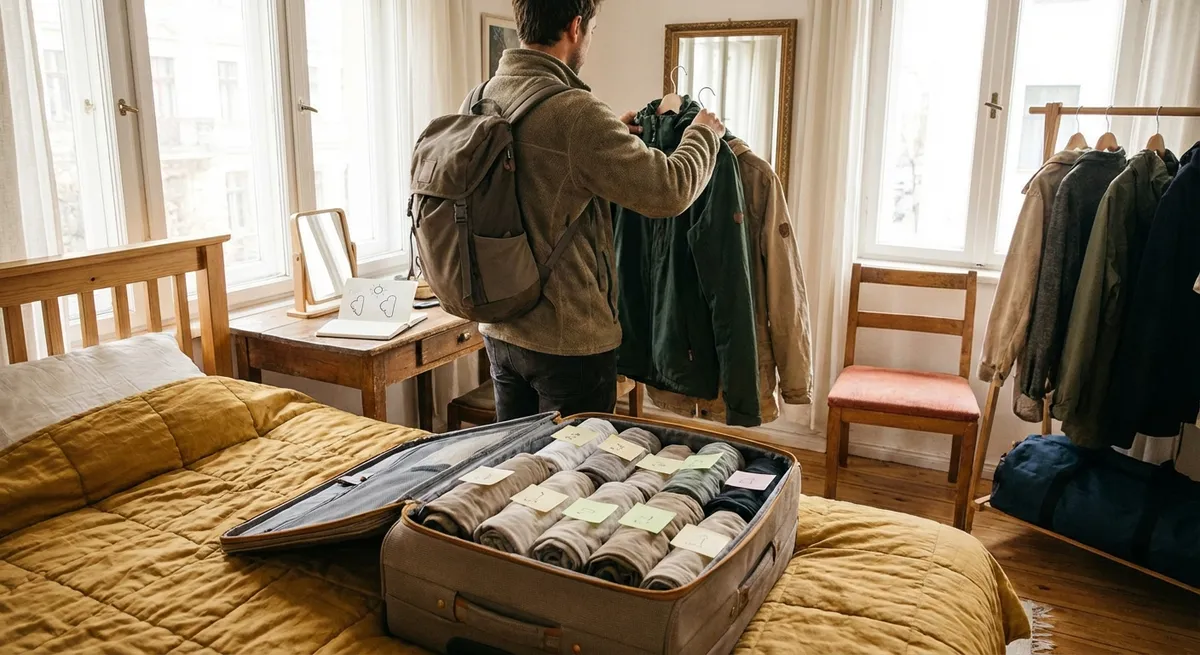
Use packing cubes or small pouches to group items by type or activity: one for tops, one for bottoms, one for underwear and socks, and one for “going out” or nicer pieces. Roll softer items like t-shirts and leggings to save space and make it easier to see what you have at a glance. Stiffer pieces (like jeans or structured shirts) can be folded and placed along the edges or back of your bag to form a “frame.”
If you’re moving around frequently—like on a multi-city trip—pre-build 1–2 “grab-and-go” outfits by placing them together in a cube or section of your bag. When you’re tired or rushing to check out, you’ll have a ready-made outfit without rifling through everything you own.
Conclusion
Packing doesn’t have to feel like guessing—it can feel like designing a tiny, efficient wardrobe that works exactly the way you travel. Start with a clear color story, build around hero pieces, layer smartly for shifting weather, choose fabrics that work harder for you, and keep everything organized so getting dressed is the easiest part of your day. With a little intention upfront, your suitcase becomes less of a burden and more of a backstage crew quietly making your trip smoother, lighter, and a lot more fun.
Sources
- U.S. Department of State – Traveler’s Checklist - Official guidance to help you plan and prepare for international trips
- REI Co-op – How to Pack a Suitcase - Practical advice on packing strategies, organizing, and choosing travel-ready clothing
- New York Times – The Right Fabrics for Travel - Overview of fabric types that perform well on the road, including quick-dry and odor-resistant options
- Cleveland Clinic – Merino Wool: Is It Really Better? - Explains the benefits of merino wool for odor control, comfort, and temperature regulation
- National Weather Service – Forecasts - Reliable source for checking detailed weather forecasts before you finalize your packing list
Key Takeaway
The most important thing to remember from this article is that this information can change how you think about Packing Tips.