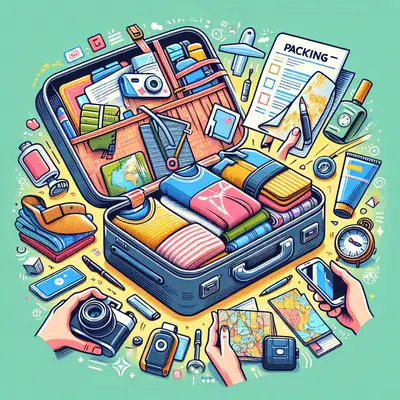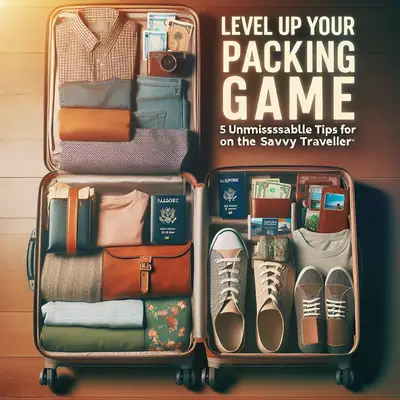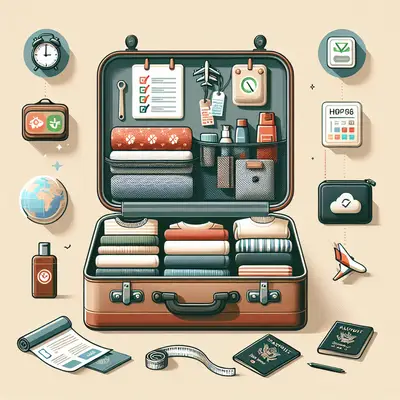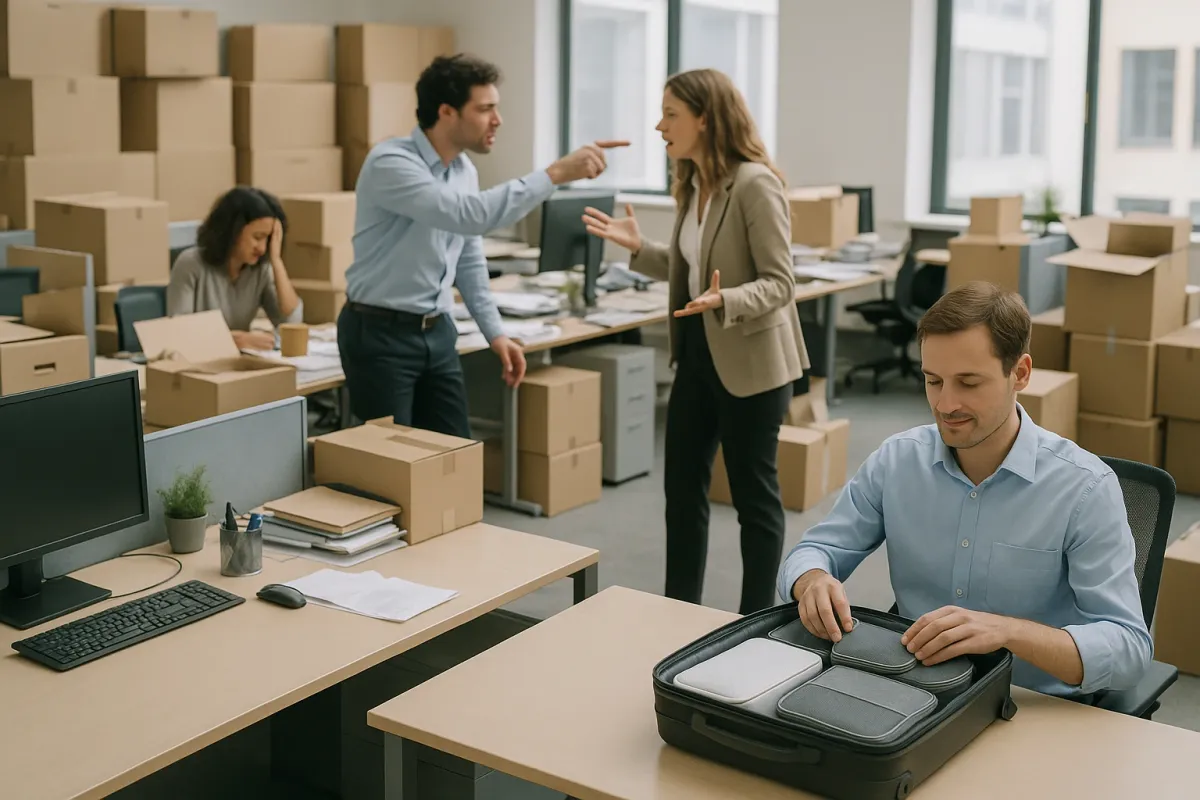
If you’ve scrolled social media this week, you’ve probably seen those viral Bored Panda stories where people share the moment they realized their workplace was truly toxic. Endless demands, zero boundaries, and the constant feeling you have to be “on” 24/7? That’s not just a career red flag—it’s also exactly how a lot of people pack for travel.
If your suitcase looks like your overworked brain—stuffed, disorganized, and bursting at the seams—it’s time for an intervention. Inspired by the current conversation around burnout and toxic office culture, let’s flip the script and build a packing routine that feels calm, intentional, and totally under your control.
Here’s how to pack like someone who has finally escaped a toxic workplace: clear priorities, smart boundaries, and absolutely no unnecessary baggage.
Audit Your “Job Description” Bag Before Anything Goes In
In those workplace stories, the first big red flag is usually this: the job description kept expanding, but no one took anything away. That’s exactly what happens to your luggage when you keep adding “just in case” items and never subtracting.
Before you put a single thing in your suitcase, do a quick “role audit” for your bag:
- Write down what your luggage actually needs to do: cover X days, Y climates, Z activities (e.g., “4 days, city + one nicer dinner, light hiking”).
- For each activity, list the minimum items required, not the maximum you could imagine using.
- Anything that doesn’t serve at least two purposes or one clearly planned activity is “scope creep” and stays home.
Actionable tip:
Lay everything out on your bed and ask of each item: “What specific job are you doing on this trip?” If you don’t have a clear answer in three seconds, it doesn’t make the cut. This prevents you from overpacking the same way clear role definitions prevent burnout at work.
Set Boundaries With Your Toiletries Like You Would With Your Boss
Toxic employers push you to always be available; toxic toiletry bags push you to bring your entire bathroom. With airlines tightening liquid rules and more travelers going carry-on only, this is where strong boundaries pay off.
Here’s how to “HR-manage” your toiletries:
- Limit liquids to a tiny fixed space (a clear 1-liter bag or a single small pouch) and make everything fit that boundary.
- Choose multi-taskers: moisturizer with SPF, shampoo bar that doubles as body wash, tinted balm that works for lips and cheeks.
- Travel-size what actually matters and decant the rest into 30–50 ml containers instead of buying full minis.
- Skip items you only use occasionally at home (full glam makeup kit, 4 hair styling products) unless they’re crucial for a specific event.
Actionable tip:
Do a 3-day “test run” at home: challenge yourself to get ready only using what fits in your travel toiletry kit. Anything you didn’t touch during those days doesn’t need to come on your next trip. This boundary-setting at home prevents last-minute toiletry panic before you fly.
Create a “Non‑Toxic” Capsule Wardrobe Instead of “Always On” Outfits
Many people in those workplace stories describe feeling “on display” and under scrutiny all the time. That same pressure shows up in travel packing: planning a totally different outfit for every photo, every meal, every moment. The result? Overstuffed bags and decision fatigue on the road.
The fix: a calm, non-toxic capsule wardrobe for travel.
How to build it:
- Pick one base color (black, navy, or beige) and one accent color that you love in photos.
- Choose fabrics that don’t wrinkle easily and can be worn multiple times (merino wool, performance blends, linen blends).
- Aim for tops that all work with all bottoms—no “orphan” pieces.
- Plan for 2–3 outfit formulas you can repeat (e.g., “light tee + linen pants + overshirt” / “dress + light jacket”) instead of 7 totally different looks for 7 days.
- Use accessories (scarves, jewelry, a hat, one standout piece) to make photos feel varied without packing whole new outfits.
Actionable tip:
Try the “9-piece rule” for trips up to a week: 4 tops, 3 bottoms, 1 outer layer, 1 dress or jumpsuit. If they all mix and match, you’ll have more than enough combinations—without feeling like you’re hauling an entire closet on your back.
Build a “Healthy Culture” Inside Your Bag: Smart Systems, Not Chaos
In every viral toxic workplace thread, people talk about chaos: no systems, last-minute fires, nobody knowing where anything is. A suitcase packed five minutes before leaving for the airport feels exactly like that.
Turn your luggage into a healthy, well-run “office” with simple systems:
- Use packing cubes or large zip pouches as “departments”: tops in one, bottoms in another, underwear/socks in a third, sleepwear and loungewear in a fourth.
- Give tech its own “IT department”: one small pouch for cords, chargers, adapters, and backup battery—always packed and ready to grab.
- Create a permanent “travel drawer” at home with duplicates of your essentials (toothbrush, small toothpaste, razor, universal adapter, mini first-aid). Your bag is half packed before you even start.
- Keep important docs digital + physical: passport, confirmation numbers, and insurance in a cloud folder and printed in a slim folder or passport wallet.
Actionable tip:
Pack your bag in “layers of urgency.” Top layer: what you’ll need in the first 12 hours (PJs, one change of clothes, meds, charger, toothbrush). Deeper layers: things you can wait to unpack. If your bag gets gate-checked or delayed, you’ve still got what you need to function calmly.
Protect Your Energy: Design Your Personal “Travel Labor Laws”
The biggest thread running through those toxic workplace stories? No protection for people’s energy—no real breaks, no boundaries, no respect for limits. Your packing can either protect your travel energy or drain it before you even arrive.
Think of your suitcase as your personal “labor law” toolkit:
- Always pack a small comfort kit in your personal item: eye mask, earplugs or noise-canceling earbuds, lightweight scarf or hoodie, and a refillable water bottle (empty through security).
- Prepare “off-duty” gear: a soft outfit you change into as soon as you reach your hotel or train, and one cozy piece (like a big T-shirt or leggings) that signals to your body: “We are done for the day.”
- Pack only one small “work” corner if you truly must work (laptop, charger, notebook)—and make a rule that it stays zipped away during non-work hours.
- Include simple, packable self-care: a mini massage ball, a sheet mask, herbal tea sachets, or a tiny candle (for accommodations that allow it). These tiny rituals protect your energy far better than that fifth pair of shoes.
Actionable tip:
Before every trip, write down one sentence: “On this trip, I refuse to ______.” It might be “I refuse to answer work emails after 7 p.m.” or “I refuse to carry more than I can comfortably lift myself.” Let that sentence guide what makes it into your bag—and what gets left behind.
Conclusion
Those viral stories about toxic workplaces are uncomfortable to read because they’re so relatable—but they’re also a wake-up call. You don’t have to run your life, your time, or your suitcase in crisis mode.
By auditing what you really need, setting boundaries with toiletries and outfits, building simple packing systems, and protecting your energy with intention, you create a stress-free packing routine that actually supports the trip you want to have.
Next time you get ready to travel, don’t just ask, “Do I have everything?” Ask, “Does what I’m packing reflect the kind of life—and vacation—I’m trying to build?” When your answer is yes, your bag will feel lighter, your mind will feel clearer, and your trip will feel a lot less like work and a lot more like freedom.
Key Takeaway
The most important thing to remember from this article is that this information can change how you think about Packing Tips.