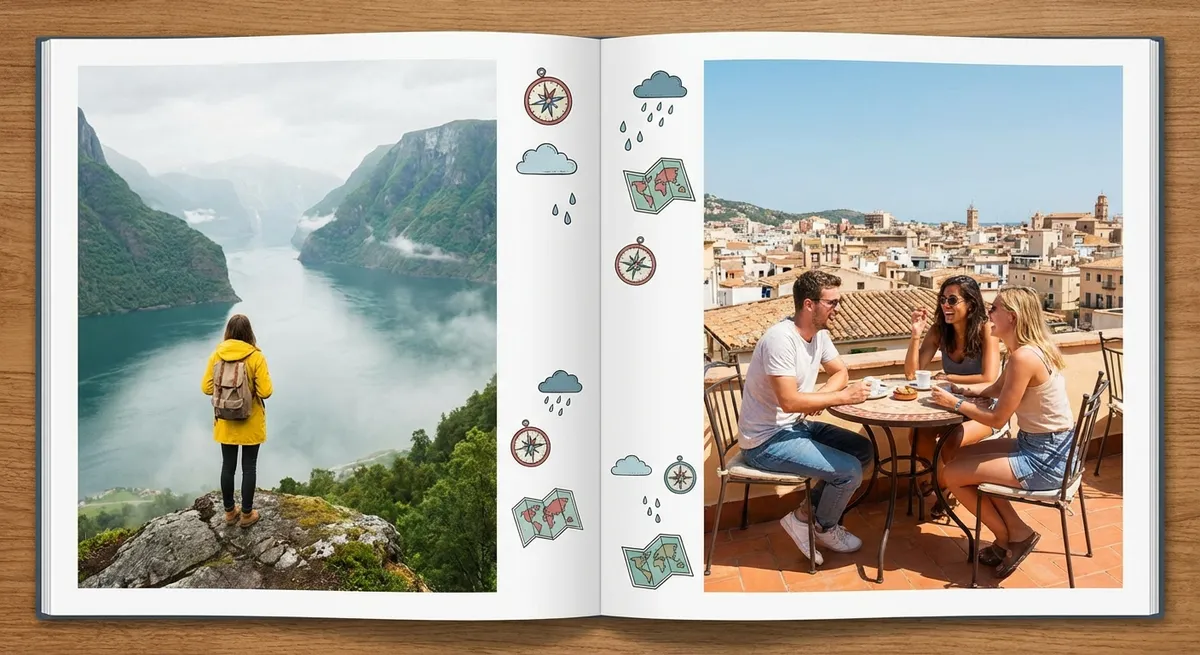
Planning where to go is more than chasing cheap flights and pretty photos—it’s about choosing a place that actually feels right once you’re there. One of the most underrated ways to do that? Matching destinations to your weather comfort zone and travel style. When you align climate, season, and vibe with what you genuinely enjoy, everything from your packing to your daily plans gets easier—and your trip feels way more “you.”
This guide walks you through how to use weather, seasonality, and local rhythm to pick destinations that fit your mood, energy level, and budget, with practical tips you can use for your very next trip.
Start With How You Actually Like to Feel on a Trip
Instead of asking “Where’s cool right now?” start with “How do I want to feel on this trip?” Your ideal destination might be less about a famous city and more about the climate and pace that match your current season of life.
Ask yourself:
- Do you want cozy, slow, and introspective—or bright, social, and high-energy?
- Are you happier in crisp air and layers, or warm sun and light clothes?
- Do you enjoy a bit of weather drama (rainstorms, snow, wind), or does that stress you out?
- Are you hoping to walk everywhere, or are you fine hopping on buses and trains when it’s too hot or cold?
Once you know your “weather mood,” you can narrow destinations by season. For example, if you love cool, sweater weather and café-hopping, a shoulder-season trip to Paris in October or Kyoto in November might beat a packed, hot summer visit. If you crave sunlight and ocean time, consider going to the Canary Islands or Hawaii in winter when days are short at home but still long and bright there.
Practical Tip #1: Create a “Comfort Profile” Before You Pick a Place
Write down three columns: “Love,” “Tolerate,” and “Avoid” for:
- Temperature (cold / mild / hot)
- Humidity (dry / moderate / humid)
- Sky (sunny / mixed / cloudy)
- Crowd level (low / moderate / high)
Use that as a filter when you research destinations and dates. If a place is famous for steamy summers and you know you crash in humidity, shift your dates—or your destination—early.
Pick Destinations by Season, Not Just by Name
Many destinations are technically “year-round,” but they don’t feel the same in January as in June. Shoulder seasons and off-peak months can completely transform how you experience a place: fewer crowds, lower prices, more relaxed locals—and often better weather for actual exploring.
Look at destinations through a seasonal lens:
- Spring is ideal for cities and nature trips where wildflowers, mild temps, and longer days matter: think Lisbon in April, Tokyo during cherry blossoms, or U.S. national parks like Zion in May.
- Summer works great for coastal and high-altitude destinations: Croatia’s islands, the Scottish Highlands, or Canada’s Rockies.
- Autumn is perfect for food and culture trips: wine regions during harvest, New England foliage, or Barcelona after summer crowds leave but sea temps are still swimmable.
- Winter can be magical in two directions: snow (Alps, Hokkaido, Quebec City) or sun (Canary Islands, Madeira, Caribbean, parts of Southeast Asia).
Practical Tip #2: Search “Best Time to Visit [Destination]” Before You Commit
Before locking flights, type “best time to visit [city/region]” and compare at least two different sources (tourism boards, major travel sites, weather services). Pay attention to:
- Rainy seasons and monsoons
- Heat waves or very short daylight hours
- Peak holiday weeks (when prices spike and crowds surge)
If your dates fall in a less-than-ideal window, adjust your itinerary to match the climate: add more indoor stops in rainy season, plan early morning sightseeing in hot months, or focus on cozy food and culture experiences when days are short.
Use Weather Data to Plan Your Daily Rhythm
Once your destination and dates are set, dig into typical weather patterns. Not just “average high,” but things like sunrise/sunset times, wind, rain probability, and humidity. This helps you design days that feel natural—so you’re not exhausted by noon or stuck indoors during the best part of the day.
Here’s how to build a weather-friendly daily rhythm:
- In hot climates, lean into early mornings and evenings: sunrise walks, long midday lunch in the shade or indoors, then golden-hour exploring.
- In colder or cloudier places, stack your outdoor plans during the brightest part of the day and save museums, cafés, or markets for early mornings or dark evenings.
- In windy or coastal destinations, time beach visits for calmer periods and keep a flexible, backup plan for days when conditions aren’t ideal for water activities.
Practical Tip #3: Check Hourly Forecasts for Your First 3–4 Days
A few days before arrival, look up hourly forecasts for your first chunk of the trip. Use that to:
- Slot your “must-do” outdoor activities into the best weather windows
- Keep a short list of indoor alternates (museums, galleries, food halls, cooking classes)
- Decide what layers, shoes, or accessories you’ll actually need (rain jacket vs. umbrella, sandals vs. sneakers, light scarf vs. heavy coat)
This small prep step makes the difference between feeling at the mercy of the weather and feeling like you’re flowing with it.
Match Your Destination to Your Energy—and Trip Length
Not every destination fits every trip length or energy level. A long-haul flight plus jet lag might not be worth it for a three-day break, even if the destination itself is amazing. Likewise, a high-intensity city might feel overwhelming if what you really need is rest.
Think about:
- Trip length vs. travel time: If you’re flying 10+ hours, give yourself enough days to settle, adjust, and enjoy. For shorter trips, consider places within a few hours by plane, train, or car.
- Pace: If life has been hectic, pick a destination where “doing less” is built in—small coastal towns, mountain villages, spa regions, or islands with minimal transport complexity.
- Complexity: Big, sprawling cities with many neighborhoods and transit systems are thrilling but can be draining. Compact destinations with walkable centers make it easier to relax while still exploring a lot.
Practical Tip #4: Choose One “Anchor Activity” That Defines the Trip
Instead of overloading your list with sights, pick one core theme or anchor:
- Food-focused: a city with strong markets and local dishes (Bologna, Oaxaca, Penang)
- Nature-focused: hiking, lakes, or coastal walks (Dolomites, Lake District, Pacific Northwest)
- Culture-focused: museums, performances, architecture (Vienna, Washington DC, Florence)
Then choose a destination where that activity is easy, not forced. Use that anchor to filter out distractions. If your anchor is “ocean swimming,” you don’t need to chase a long list of inland day trips; if it’s “art and history,” you might prioritize museum neighborhoods over beach areas.
Let Local Events and Atmosphere Guide the Final Choice
Once you’ve narrowed your list by weather, season, and energy level, zoom in on what’s actually happening on the ground while you’re there. Festivals, holidays, and local events can either make your trip unforgettable—or unexpectedly stressful.
Examples of how events shape your experience:
- A small town food festival can turn an ordinary weekend into a trip you talk about for years.
- A major conference or sports event can drive up hotel prices and crowd public transport.
- National holidays might shut down some attractions but bring out parades, street food, and cultural celebrations you’d never see otherwise.
Practical Tip #5: Search “[Destination] events [Month/Year]” Before You Book Stays
Look up what’s happening during your potential dates. Once you find events:
- Decide if you want to be in the middle of them or a short train ride away.
- Book accommodation early if the event is large and aligned with your interests.
- Consider shifting your neighborhood, not just your dates—sometimes staying just outside the busiest zone gives you the best of both worlds: access and calm.
If nothing major is happening, that can be a win too: you’re likely to get better prices, easier restaurant reservations, and a more everyday look at local life.
Conclusion
Your ideal destination isn’t just a dot on a map—it’s a mix of climate, season, energy, and atmosphere that fits who you are right now. When you plan with weather-savvy, season-aware, and mood-based choices, your trips feel less like work and more like exactly what you needed.
Start with how you want to feel, filter places by season and comfort, use real weather data to shape your days, match destination intensity to your energy, and check what’s happening locally while you’re there. Do that, and you’re not just going somewhere—you’re choosing a place that’s ready for your version of an unforgettable trip.
Sources
- U.S. National Weather Service – Climate and Past Weather - Provides climate normals and historical weather data to help understand typical conditions for different destinations and times of year
- World Meteorological Organization – World Weather Information Service - Offers official, city-level weather and climate information from national meteorological services worldwide
- National Park Service – Plan Your Visit - Explains how seasons, weather, and visitation patterns affect experiences in U.S. national parks
- Japan National Tourism Organization – When Is the Best Time to Visit Japan? - A clear example of how seasonality and regional climate shape the experience of a single country
- European Travel Commission – Seasonality in European Tourism - Discusses how seasonal patterns influence crowd levels, prices, and travel experiences across Europe
Key Takeaway
The most important thing to remember from this article is that following these steps can lead to great results.