Travel isn’t just about where you go—it’s about how you move through every in-between moment. The layovers, the check-in lines, the bus rides across town. Most travelers just endure that “dead time.” Smart travelers turn it into an advantage.
These five travel hacks are simple micro-habits you can stack into any trip. No complicated systems, no apps you’ll forget about. Just small shifts that make every journey smoother, safer, and more fun.
Turn Waiting Time Into Planning Power
Airports, train stations, and hotel lobbies are packed with lost time—perfect for low-effort planning that pays off later. While you’re in line or sitting at the gate, zoom in on your map and save places you might actually use: pharmacies, late-night food spots, supermarkets, parks, and ATMs from reputable banks. Tag them with simple labels like “food,” “quiet,” or “wifi” so your future self can make decisions in seconds instead of scrolling aimlessly when you’re tired and hungry. Use offline maps so you’re not stuck if the signal disappears. This tiny habit means that when plans change (because they will), you’re never starting from zero—you’ve already built a mini safety net of options around you.
Lock Down Your Essentials Before You Leave the House
Most travel chaos starts before the airport: scrambling for a passport, forgetting a charger, or realizing your bank froze your card. Build a hard rule for yourself: nothing goes into your bag until three things are done. First, take photos of your passport, visas, vaccination records, and cards, and email them to yourself plus one trusted person. Second, set up travel alerts or international usage with your bank so your card doesn’t get blocked the first time you tap it overseas. Third, scan your calendar for anything that could blow up while you’re away—bills, deliveries, deadlines—and either reschedule or automate them. Each step takes minutes, but once you adopt this as a pre-trip ritual, you’ll travel with the calm of someone who knows the basics are already handled.
Use the “Two Pockets” Rule for On-the-Go Security
You don’t need a high-tech anti-theft system—just a simple layout that you follow on every trip. Designate one “live” pocket and one “deep” pocket. The live pocket is easy-access: transit card, a small amount of cash, and maybe your phone. That’s what you use in busy areas so you’re not constantly flashing your entire wallet. The deep pocket is harder to reach (inside jacket, money belt, hidden pouch, or zipped inner compartment) and always holds your main card, ID, and backup cash. Never use the deep pocket in crowded areas unless you’re in a secure space, like behind a locked bathroom stall or inside your hotel. Over time, this becomes muscle memory, so even when you’re tired, jet-lagged, or distracted, your most important items are always in the safest place on your body.
Treat Your Phone Like a Travel Command Center
Your phone is more than a camera—it’s the nerve center of your trip if you set it up right. Before you leave, create a dedicated “Travel” folder and move all relevant apps into it: airline, transit, maps that work offline, translation, currency converter, and your hotel or home rental app. Download offline languages in your translation app and offline regions in your maps app so you’re not stuck when the signal drops. Take screenshots of critical items—boarding passes, reservation emails, directions to your first accommodation, and any QR codes—and store them in a “Trip [City/Year]” album so they’re easy to find even without Wi-Fi or if an app crashes. Finally, switch on device tracking and add contact info to your phone’s lock screen; if it’s lost but found by a good human, you’ve just made it easy for them to help you get it back.
Build a Night-Before Ritual So Mornings Run on Autopilot
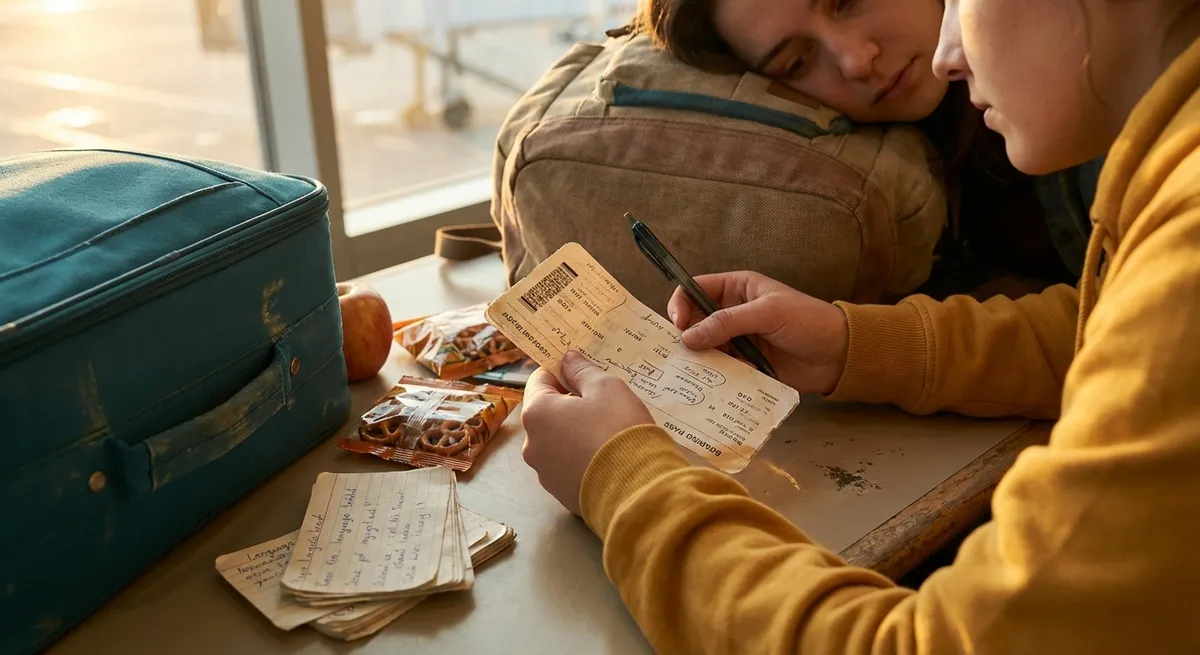
Morning departures are where even experienced travelers get tripped up: oversleeping, leaving something behind, or showing up at security with a water bottle still in their bag. The simplest hack is to stop making decisions in the morning and move them to the night before. Lay out your full “airport outfit,” including socks, belt, and jacket, and empty your pockets of anything you don’t want to bring so you’re not patting yourself down at 5 a.m. Pack a small “first hour” kit at the very top of your bag—snacks, meds, headphones, a pen for forms, and a portable charger. Store documents and IDs in the exact same spot every time so you’re never digging frantically at the counter. In the morning, you’re not “getting ready for a trip”—you’re just following a script you already wrote when your brain wasn’t half asleep.
Conclusion
You don’t need to overhaul your entire travel style to have a better trip. These micro-habits slip into the cracks of your day—while you’re waiting, packing, or scrolling—and turn idle moments into small wins.
Plan while you wait. Protect your essentials before you even leave. Keep your valuables in a predictable system. Turn your phone into a reliable co-pilot. And let your night-before ritual carry you through those hectic early starts.
The more you repeat these habits, the more “lucky” you’ll seem on the road—less stress, fewer surprises, and more energy left for the parts of travel you actually care about.
Sources
- U.S. Department of State – Travel Tips - Official pre-trip checklist covering documents, safety, and planning
- Federal Trade Commission – Lost or Stolen Credit, ATM, and Debit Cards - Guidance on protecting cards and what to do if they’re compromised while traveling
- Centers for Disease Control and Prevention – Travelers’ Health - Information on vaccines, health documents, and preparation for international trips
- Transport Security Administration (TSA) – What Can I Bring? - Official list of items allowed in carry-on and checked baggage
- Google Maps Help – Download Areas & Navigate Offline - Instructions for using maps offline, crucial for navigation without data
Key Takeaway
The most important thing to remember from this article is that this information can change how you think about Travel Hacks.