Packing doesn’t have to be the part of your trip you dread. With a few smart strategies, your suitcase can feel like a mini “home base” that’s easy to live out of, simple to repack, and ready for whatever your itinerary throws at you. Think less chaos, more confidence—before you even leave the house.
Below are five practical, traveler-tested tips to help you pack with purpose and enjoy every day on the road just a little bit more.
Build Outfits, Not “Options”
Instead of pulling random favorites from your closet, start with your actual trip days. Look at your itinerary and sketch out outfits by activity: sightseeing, hiking, work meetings, dinners, flights, beach days. Then build specific combinations around those moments.
Aim for a tight color palette (for example: black, white, denim, and one accent color) so almost everything can mix and match. One pair of neutral shoes should work with at least 70–80% of what you’re taking. Prioritize clothing you can wear in more than one context—like a simple dress that works with sneakers for daytime and with a scarf and flats at night.
This approach slashes “just in case” items, which often become dead weight. You’ll also get dressed faster on your trip because you’ve already made the decisions at home when you’re not rushed or tired.
Use Packing Cubes to Create “Grab-and-Go” Zones
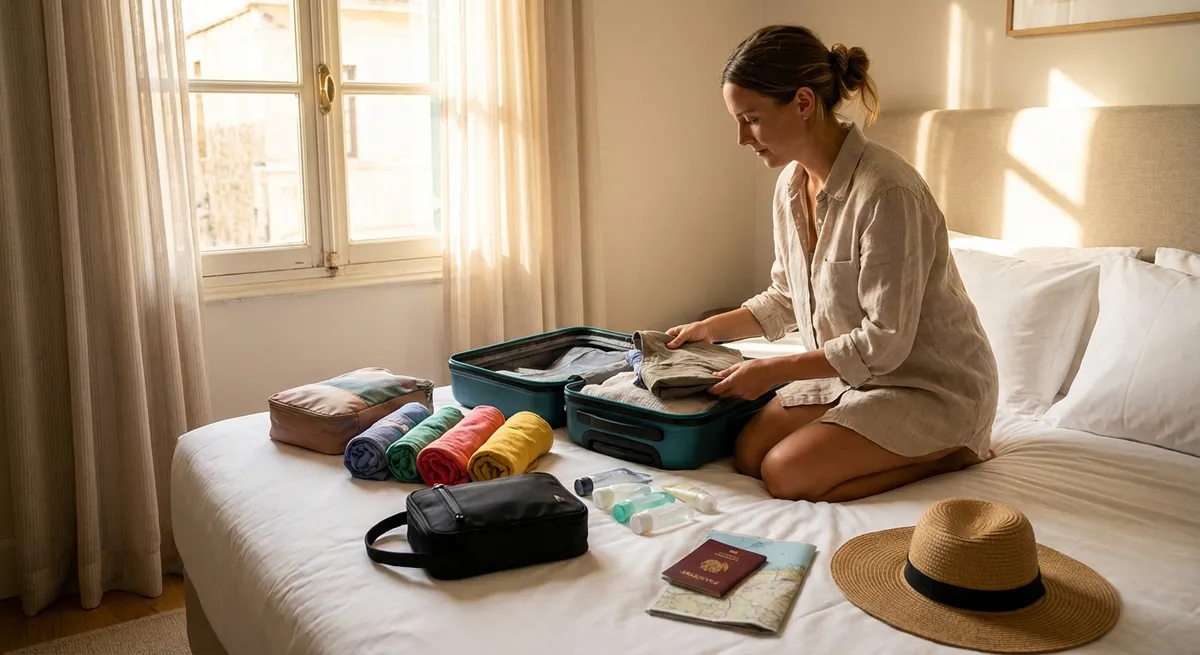
Packing cubes aren’t just for neat stacks; they’re for making your bag function like a tiny dresser. Assign each cube a job so you always know where to reach:
- Tops in one cube
- Bottoms in another
- Underwear and socks in a smaller cube
- Sleepwear and loungewear together
- Workout or swim gear in a separate cube, if needed
Roll or gently fold clothes inside each cube so you can see most items at a glance. Keep a thin, empty zip-top bag or foldable laundry bag in one cube—this becomes your “worn” section, so dirty clothes don’t invade the rest of your packing system.
When you arrive at your stay, move each cube straight into drawers or onto a shelf. Unpacking takes under two minutes, and repacking on the last day is simply reversing the process.
Make a Personal Comfort Kit for the Journey
Your “personal kit” is the small pouch that turns flights, trains, and long drives into something you can actually relax through. Keep it within arm’s reach in your personal item, not buried in your suitcase.
Consider including:
- Refillable water bottle (empty for security, then refill)
- Lip balm and a small tube of moisturizer
- Travel toothbrush and paste or disposable brush
- Earplugs and an eye mask
- Light scarf or packable layer (doubles as a blanket)
- Noise-canceling headphones or simple wired earbuds
- A pen for forms and quick notes
Use travel-size containers and keep the kit pre-packed at home. After each trip, restock it right away. Next time you’re heading out the door, you can just grab it without thinking—and your future, mid-flight self will be very grateful.
Pack a Mini “Laundry Plan” So You Can Bring Less
The simplest way to pack lighter is to plan on washing clothes partway through your trip—even if it’s just sink washing a few essentials. A minimal laundry setup barely takes any space but massively extends your wardrobe.
Pack:
- A small, sealable pouch with a few laundry detergent sheets or travel-size liquid
- A sink stopper (silicone ones are light and flat) if you’ll be hand-washing
- A thin, quick-dry clothesline or a few lightweight carabiners to hang items
- One or two quick-dry basics (underwear, socks, a T-shirt) made from synthetic or merino fabrics
Aim for clothes that can dry overnight so you can rotate them. Once you get used to washing a few things as you go, you can confidently travel with fewer items—especially for longer trips.
Create a Lightweight “Essentials Only” Day Pack
Think of your suitcase as base camp and your day bag as your field kit. A well-packed day bag means you won’t keep digging through your main luggage, and you’ll be ready for changes in weather or plans without returning to your hotel.
In your day pack, include:
- A compact, packable tote or foldable shopping bag
- Small first-aid basics (bandages, pain reliever, blister patches)
- Portable charger and charging cable
- Travel-sized sunscreen and hand sanitizer (if allowed)
- Photocopies or digital backups of key documents stored separately from the originals
- A small snack like nuts or granola bar
Keep the day pack ready to go near the top of your suitcase or already packed as your personal item. Each day, just swap out what’s been used (water, snacks, tissues) and you’re instantly set for another round of exploring.
Conclusion
Smart packing isn’t about rigid rules or fancy gear—it’s about designing your luggage to support the way you actually travel. Build real outfits, use cubes like drawers, keep your comfort kit close, plan to wash a few things, and treat your day bag like your daily command center.
Do that, and your suitcase stops being something you wrestle with and starts feeling like a smooth, reliable part of every adventure.
Sources
- U.S. Department of Transportation – Traveling with Liquids - Official TSA guidelines on liquids and travel-size toiletries for carry-on bags
- Centers for Disease Control and Prevention – Travel Health - CDC travel packing list with health-focused essentials and recommendations
- REI Co-op Expert Advice – How to Pack a Suitcase - Practical tips on organizing luggage, using packing cubes, and choosing gear
- Rick Steves Europe – Packing Light & Right - Detailed philosophy and checklist for traveling light, including clothing and laundry advice
- Mayo Clinic – Air Travel Health Tips - Guidance on staying comfortable and healthy during flights, helpful for planning personal comfort kits
Key Takeaway
The most important thing to remember from this article is that this information can change how you think about Packing Tips.