Travel doesn’t have to be complicated, expensive, or stressful to feel incredible. With a few smart habits, you can turn even a quick weekend getaway into a smoother, more joyful adventure. These travel hacks aren’t about extremes or gimmicks—they’re about simple, repeatable moves that make every trip feel easier, safer, and more fun.
Below are five practical strategies you can start using on your very next journey.
Turn Your Phone Into a Travel Command Center
Your phone can be the difference between “mild chaos” and “effortless flow” on the road—if you set it up before you leave.
First, download offline maps for your destination in apps like Google Maps or Maps.me. This lets you navigate without data, find your hotel if you get turned around, and see nearby ATMs, cafes, and transit stops even in airplane mode. Next, save essential info (hotel address, boarding passes, reservation codes, passport photo) in a notes app and a secure cloud folder so you can access them even if you lose paperwork.
Set up local transport apps in advance—metro, bus, ride-share, or regional train apps often have real-time delay info, route planners, and digital tickets that save you from fumbling with machines. Turn on time-zone-aware calendar settings so your flight times stay accurate when you land. Finally, add emergency numbers (local emergency line, nearest embassy, your hotel, and a trusted contact back home) as favorites so you’re never scrolling in a stressful moment.
This tiny bit of prep transforms your phone from “just a camera” into a portable trip assistant.
Treat Your First and Last 24 Hours as “Soft Landing” Time
Most travel stress hits at the edges of a trip—right when you arrive and just before you leave. Build in a “soft landing” buffer and your whole journey feels lighter.
When you arrive, keep your first 24 hours deliberately simple: choose a hotel with easy transit connections or airport pickup, plan just one low-effort activity (like a neighborhood walk or a nearby viewpoint), and book a casual restaurant within walking distance of your stay. This keeps you from burning energy on logistics when you’re jet-lagged or overloaded.
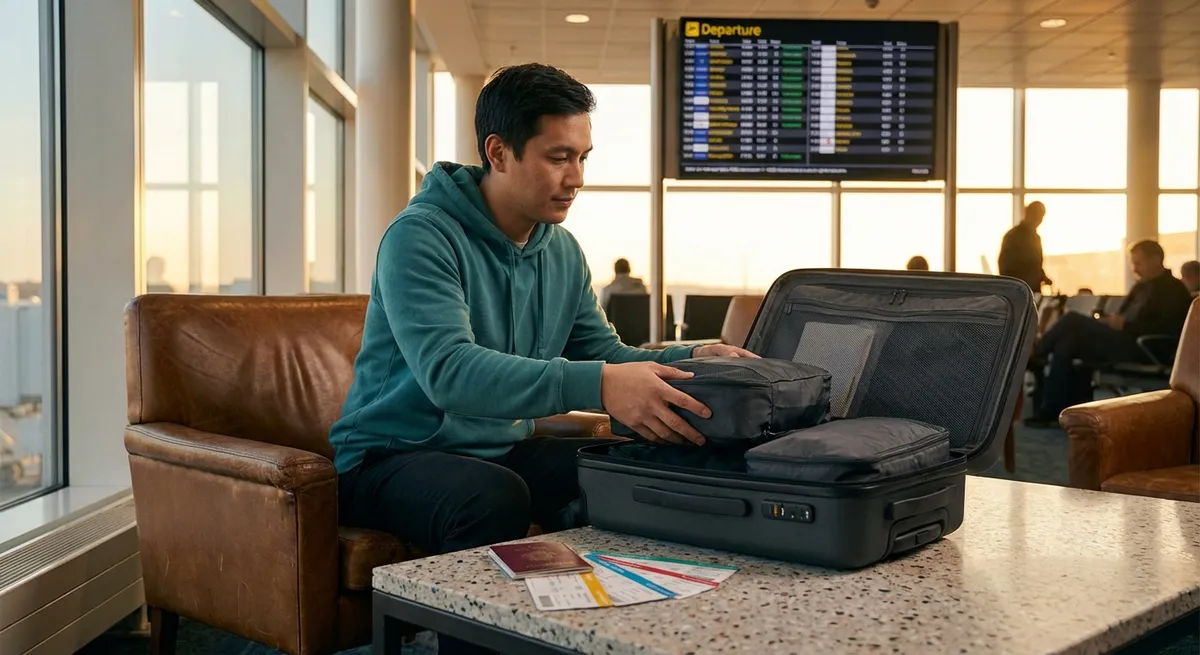
On your last day, avoid tight timing: don’t plan major sightseeing or long drives within a few hours of your departure. Instead, do something close and flexible—a park, a café, or a short museum visit—so you can head back without clock-watching panic. Prep your airport outfit and pack most of your bag the night before, leaving only essentials out.
By protecting the “edges” of your trip, you create a stress-free middle where you actually enjoy being there.
Use “Micro-Research” to Outsmart Tourist Traps
You don’t need to spend hours planning to avoid overpriced, underwhelming tourist spots. A few targeted “micro-research” moves can dramatically improve your experience.
Look up where locals actually eat near major attractions by searching maps with filters like “open now” and “rating 4.5+” a few blocks away from the main sights—often prices drop and quality goes up the moment you step off the main street. Check recent reviews (sorted by newest) for notes on long lines, closures, or construction around museums and monuments so you can time your visit better.
Scan local public transit or city tourism websites for passes that bundle multiple attractions or unlimited travel—these can save money and reduce the hassle of buying individual tickets. Search local blogs or city guides for “neighborhood walk” suggestions; walking a single interesting area can be more memorable than racing through a checklist of famous spots.
With just 10–15 minutes of smart searching, you can swap “crowded and generic” for “authentic and surprisingly easy.”
Build a Personal “Comfort Kit” You Always Pack
Tiny comfort items can turn delays, long rides, and unfamiliar places into something you actually don’t mind. The key is building a small, reusable “comfort kit” you keep ready to toss into any bag.
Anchor your kit around three things: rest, health, and small annoyances. For rest, include a compact sleep mask, earplugs, and either a soft scarf or inflatable neck pillow. For health, pack basic meds you know you rely on (pain reliever, motion sickness tablets, anti-diarrheal, allergy meds), plus bandages and hand sanitizer. For annoyances, add a universal travel adapter, a short charging cable, a portable power bank, a pen, tissues, and a few resealable bags for snacks or liquids.
Keep these in a small pouch that lives with your travel gear so you never rebuild it from scratch. Over time, customize it: maybe you add a favorite tea bag, lip balm, or a small notebook. This kit doesn’t take much space, but it can rescue you from bad flights, loud hostels, and “why didn’t I bring…?” moments.
Use “Two-Point Planning” to Stay Oriented in Any City
Getting lost can be fun—until you’re tired, hungry, or trying to catch a train. “Two-point planning” is a simple mental trick that keeps you oriented in any city without constantly staring at your phone.
Before you head out each day, identify two fixed “anchors”: usually your accommodation and one major landmark or transit hub (a big square, central station, famous monument, or river crossing). Learn how to walk or ride between those two points and roughly where they sit on the map (e.g., “the station is north of my hotel; the river is east of both”).
As you explore, frequently note where you are in relation to those anchors: “I’ve walked south from the station” or “The river is behind me, so my hotel is to the left.” This gives you a mental compass, helping you navigate back even if your battery dies or GPS glitches. If you get truly turned around, you only need to ask for or follow signs to that one big landmark or hub, then make your way back to your stay.
This tiny mental habit builds confidence, especially in big or unfamiliar cities, and makes wandering feel free instead of stressful.
Conclusion
Travel doesn’t get better just because you spend more—it gets better when you travel a little smarter. Turn your phone into a command center, protect your first and last days, do quick micro-research, pack a personal comfort kit, and use two-point planning to stay oriented. These are small, repeatable moves that add up to smoother days, fewer headaches, and more space for the memories you actually want to bring home.
Try just one or two of these hacks on your next trip, then keep what works. Over time, you’ll build your own personal playbook for travel that feels less like a scramble—and more like a skill you’ve mastered.
Sources
- U.S. Department of State – Traveler’s Checklist - Official guidance on documents, safety, and preparation before international trips
- Centers for Disease Control and Prevention – Travel Health - Up-to-date information on health precautions, vaccines, and travel medicine essentials
- Transportation Security Administration (TSA) – Travel Tips - Practical advice on airport security, packing, and what you can bring through checkpoints
- Google Maps Help – Download Offline Maps - Step-by-step instructions for saving maps for offline use while traveling
- European Commission – Passenger Rights - Overview of air and rail passenger rights within the EU, useful for dealing with delays and cancellations
Key Takeaway
The most important thing to remember from this article is that this information can change how you think about Travel Hacks.