Every trip has one sneaky wildcard: the weather. Sunny forecast? Surprise thunderstorm. “Mild” temps? Cue heatwave or cold snap. Instead of overpacking “just in case,” you can build a weather‑proof packing game plan that keeps your bag lean and your options wide open. Here’s how to pack smart so you’re ready for beach days, chilly evenings, and everything in between—without hauling your entire closet.
Build a Flexible “Core Outfit System,” Not Single-Use Looks
Instead of packing stand‑alone outfits, think in terms of a small, mix‑and‑match core that works across temperatures.
Choose 2–3 bottoms in neutral colors (like black, navy, beige) and 3–5 tops that all work together, from casual tees to a slightly dressier shirt. Aim for breathable, quick‑dry fabrics like merino wool blends or technical synthetics that stay comfortable in warm or cool weather and don’t wrinkle easily.
Layering is your superpower: a lightweight sweater or cardigan, a thin long‑sleeve base layer, and a packable jacket can turn warm‑weather outfits into chilly‑evening ones. If every top matches every bottom and can be worn with the same outer layer, you’ll get a week’s worth of outfits from a tiny capsule—perfect when you’re unsure whether the forecast will trend hot or cold.
Prioritize Smart Layers Over Bulky “What If” Items
Most overpacking happens when you add one more bulky item for every possible scenario: “What if it’s freezing?” “What if it pours?” “What if it’s windy?” Instead, pack fewer items that solve multiple problems at once.
Swap a heavy coat for a thin base layer, a mid‑weight sweater or fleece, and a packable shell. Worn together, they’re warm enough for surprisingly cold days; worn separately, they’re perfect for shoulder seasons or unpredictable climates. A compact, waterproof shell (preferably with a hood) can double as a windbreaker, raincoat, and extra warmth layer.
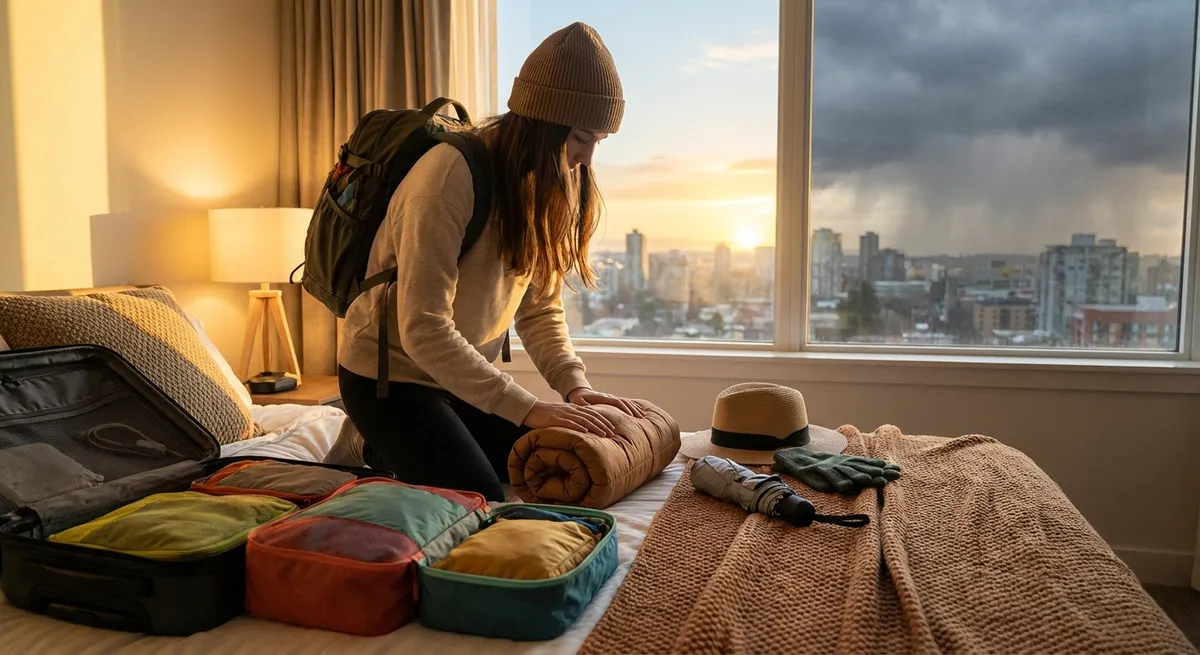
Look for compressible materials that roll or stuff into their own pocket or a small pouch—they take up far less space and are easy to stash in a day bag. This approach keeps you ready for temperature swings without dragging around a massive jacket “just in case.”
Pack Weather‑Ready Accessories That Punch Above Their Weight
Small accessories can completely change how comfortable you are in shifting weather—and they take almost no room in your bag.
A lightweight scarf or buff can be a neck warmer on a chilly flight, a head cover in strong sun, or a makeshift pillow on long rides. A compact travel umbrella or ultralight rain poncho fits in a daypack and saves you from scrambling for overpriced gear the second the sky opens up.
Throw in a packable hat: a wide‑brimmed one for sunny destinations or a thin beanie that squishes into a pocket for cooler trips. Don’t forget a pair of thin gloves if you’re headed anywhere that might be brisk at night. These small add‑ons turn a simple outfit into weather‑appropriate gear—without adding bulk to your main luggage.
Choose Footwear That Adapts to Wet, Hot, and In‑Between Days
Shoes are heavy and bulky, so you want each pair to cover as many conditions as possible. Aim for one pair you wear in transit and one backup pair in your bag, both chosen with weather flexibility in mind.
Make your main pair something you can walk in all day: lightweight sneakers or trail‑style shoes that have decent grip and, ideally, some level of water resistance. Mesh uppers dry faster if you get caught in the rain, and darker colors hide mud and stains better than white.
Your second pair depends on your trip style: breathable sandals for warm, beachy destinations, or a slightly dressier but still walkable shoe for city nights out. If you expect rain, pack quick‑dry socks and avoid cotton—synthetic or merino socks stay more comfortable when damp and help prevent blisters. One smart footwear combo plus the right socks can handle hot pavements, light rain, and cooler evenings without extra pairs weighing you down.
Use Weather‑Aware Packing Tools to Stay Light and Organized
A few clever packing tools help you adapt during the trip instead of trying to predict every condition before you leave.
Compression packing cubes or compression bags are great for controlling bulkier layers like sweaters and jackets—squeeze out the extra air so they don’t dominate your suitcase. Use a separate, small pouch for your “weather kit”: compact umbrella, rain shell, hat, scarf, and gloves. Keep this near the top of your bag or in your personal item so you can grab it quickly when a surprise storm rolls in.
Before you start packing, check not just the average temperatures but also the range and precipitation patterns for your destination. Many weather sites show monthly history and typical highs/lows, which is much more helpful than a single forecast. This lets you fine‑tune how many layers you bring and whether you need to prioritize sun protection, rain gear, or warmth—while still keeping your overall packing list lean and intentional.
Conclusion
Weather doesn’t have to hijack your suitcase—or your trip. When you think in layers, choose versatile pieces, and rely on compact accessories and smarter tools, you can walk into almost any forecast feeling prepared, not overpacked. Build a flexible core wardrobe, let a few high‑impact items handle the “what ifs,” and you’ll be ready to enjoy the journey whether it turns out balmy, breezy, or beautifully unpredictable.
Sources
- U.S. Department of State – Travel Tips - General advice on preparation and safety, useful context for planning what to pack
- Centers for Disease Control and Prevention – Traveler’s Health - Guidance on health-related packing (like clothing for specific climates and conditions)
- National Weather Service Climate Page - Historical climate data to help understand typical weather ranges at your destination
- REI Co-op – How to Layer Clothing - Detailed explanation of layering systems that inspire smarter packing for variable weather
- Harvard T.H. Chan School of Public Health – Sun and Skin Protection - Background on sun exposure and protection, helpful when choosing weather-ready accessories and clothing
Key Takeaway
The most important thing to remember from this article is that this information can change how you think about Packing Tips.