Packing isn’t just about what fits in your bag—it’s about how smoothly your whole trip flows. When your gear is dialed in, hotel rooms feel calmer, airport checks feel faster, and you can get from “just arrived” to “let’s explore” in minutes instead of hours. This guide breaks down a practical, no-fuss way to pack so that once you arrive, everything is easy to find, easy to use, and easy to repack.
Below are five traveler-tested tips that turn your suitcase into a mobile base camp you actually enjoy living out of.
Tip 1: Build “Grab-and-Go” Kits Instead of Random Items
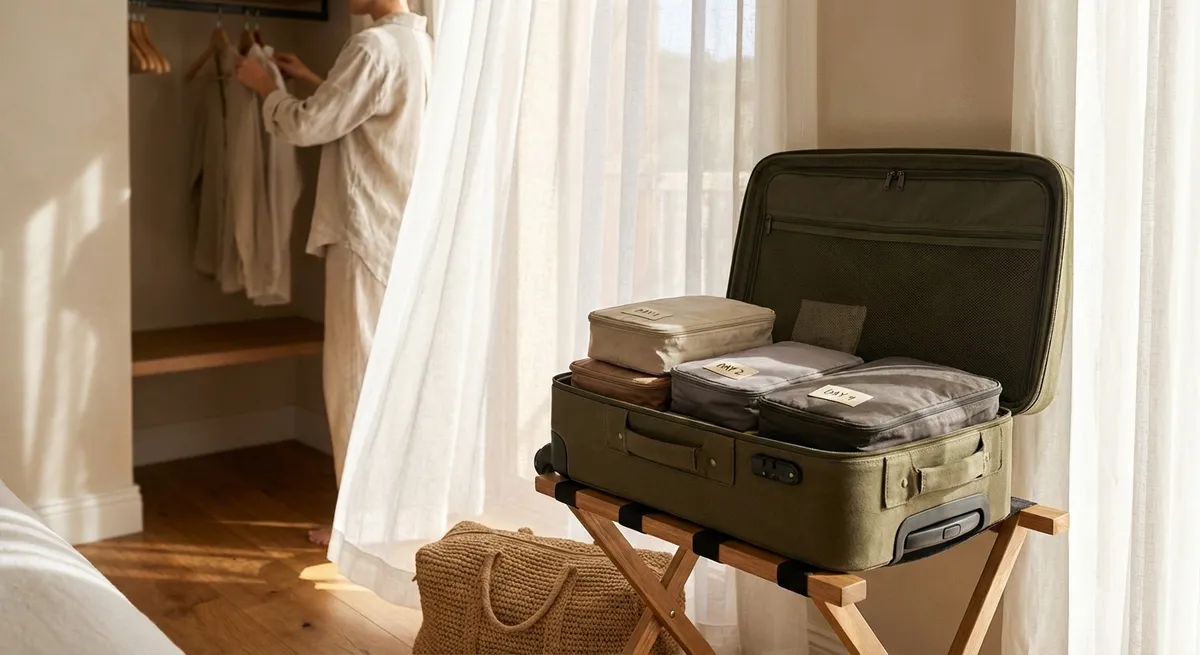
Instead of tossing individual items into your suitcase, think in kits. Each kit serves a single purpose and lives in its own pouch or zip bag.
Create small, dedicated packs like:
- Sleep kit – eye mask, earplugs, melatonin (if you use it), lip balm, travel-size hand cream, and a pair of soft socks. This all comes out in one move at your hotel or on long flights.
- In-transit comfort kit – sanitizer, tissues, gum, a pen, face wipes, and a tiny moisturizer. Keep it in your personal item so you never dig through the overhead bin mid-flight.
- Electronics kit – chargers, universal adapter, cable organizer, USB-C hub if needed, and a small power strip. When you arrive, one bag hits the desk and your devices plug in.
- Health & mini-pharmacy kit – your prescriptions, basic pain reliever, motion sickness tablets if needed, bandages, and any allergy meds.
Why it works: you’re never hunting for “that one thing” at the bottom of your bag. You just grab the kit that matches the problem: tired, cold, charging, or not feeling well. When you repack to move cities, everything has a clear home, so you’re far less likely to leave things behind.
Tip 2: Design an “Arrival Layer” on Top of Your Bag
Your first few hours in a new place are the most chaotic: new time zone, new weather, maybe a long trip behind you. Make that moment as friction-free as possible by building an “arrival layer” at the very top of your suitcase or backpack.
This layer should include the items you’ll want in the first 2–3 hours after landing:
- Fresh change of underwear and socks
- Lightweight t-shirt or top
- Compact toiletry basics (toothbrush, toothpaste, face wipes)
- Deodorant and a hair tie/comb or brush
- Any local transit essentials (folded map, printed hotel address, metro card if you already have one)
At your hotel or even in an airport bathroom, you can do a five-minute reset without exploding your entire suitcase. This is especially powerful when your room isn’t ready and you need to feel human before exploring.
Pro move: If you anticipate very different weather on arrival (leaving winter, landing in a humid city), add your first-day outfit to this top layer so you can change quickly.
Tip 3: Pre-Pack a “Laundry Logic” System
Laundry is where many trips fall apart: socks vanish, dirty clothes mix with clean, and suddenly everything feels gross. Instead of letting laundry “happen to you,” design for it before you leave.
Use a simple, low-maintenance system:
- Dedicated laundry bag: Pack a lightweight, washable drawstring bag or a large packing cube labeled “laundry.” As soon as something is worn, it goes in. No exceptions.
- Two-tier dirty system: Separate “lightly worn” (like a sweater you wore briefly) from “actually dirty” (sweaty workout gear, socks, underwear). Use a second smaller bag or cube for “lightly worn.” This makes re-wearing clean-ish layers much easier.
- Travel detergent or sheets: Slip a few travel detergent packets or laundry sheets into your bag in a sealable pouch. You’ll be ready for hotel sinks or self-service laundromats without hunting for supplies.
- Plan for drying: Pack a slim, foldable hanger or a short bungee/elastic clothesline to turn your bathroom into a mini drying zone.
When you’re ready to do a proper wash, everything’s already separated and ready to go—no sniff test required. You save time, you pack lighter, and your bag feels fresher the entire trip.
Tip 4: Make Your Personal Item a Mobile Command Center
Your personal item (backpack, small duffel, or tote) is prime real estate—it’s the one bag that never leaves your side. Treat it like your in-flight and arrival command center, not an overflow suitcase.
Pack it in functional layers:
- Top quick-access zone: passport, boarding passes, wallet, phone, and a small pouch with essentials (lip balm, pen, hand sanitizer, tissues). This is the “security & check-in” layer.
- Middle productivity/entertainment zone: laptop/tablet, e-reader, noise-canceling headphones or earphones, and a notebook. Use a slim sleeve or organizer so you can slide electronics out easily at security.
- Bottom comfort/support zone: scarf or light layer, compact snack stash (nuts, granola bar), reusable water bottle (empty through security, filled after), and your in-transit comfort kit from Tip 1.
Rules that keep this bag working for you:
- Nothing loose: every category (tech, comfort, documents) lives in its own small pouch or sleeve.
- No “just in case” clutter: if you won’t need it during transit or your first hour off the plane, it goes in your main bag.
- End-of-day reset: before bed, quickly repack your personal item so it’s flight-ready for the next leg. Tomorrow-you will be very grateful.
When your personal item is dialed in, airports feel more predictable and layovers become productive, not stressful.
Tip 5: Pack a Micro “Fix-It” Kit for Everyday Travel Problems
Little annoyances can eat away at your energy: a broken zipper, a loose button, blisters, a glasses screw that pops out. A tiny fix-it kit can turn minor emergencies into 30-second non-events.
Build a compact kit with:
- A few safety pins and a mini sewing kit (thread + needles)
- Moleskin or blister bandages
- A couple of adhesive strips/regular bandages
- A small roll of duct tape or a few wraps of it around an old gift card or pen
- Spare contact lenses or a glasses repair mini-screwdriver (if you wear them)
- A few zip ties or twist ties (great for securing broken straps, loose cables)
Keep this in your suitcase or backpack, not buried at the very bottom. When something goes wrong—bag rips, shoe rubs, shirt button breaks—you’ll have tools to improvise a fix and keep your day on track.
You don’t need a full hardware store in your pack, just enough to patch, secure, or protect until you’re back at your hotel or can find a better solution.
Conclusion
Packing well isn’t about being minimalist for its own sake—it’s about designing a bag that supports the way you actually travel. When you rely on kits, an easy arrival layer, intentional laundry habits, a smart personal item, and a micro fix-it kit, your suitcase stops being a chaos machine and starts feeling like a mobile home base.
Next trip, don’t just ask “What should I bring?” Ask, “How can I set this up so once I arrive, I barely have to think about my stuff at all?” That’s the “unpack once” mindset—and once you feel how smooth it makes your travels, you won’t want to pack any other way.
Sources
- U.S. Transportation Security Administration (TSA) – What Can I Bring? - Official guidance on what’s allowed in carry-on and checked luggage, helpful when building kits and choosing containers.
- Centers for Disease Control and Prevention – Travelers’ Health - CDC recommendations on packing smart for health, medications, and basic safety while traveling.
- U.S. Department of State – Travel Tips - Government advice on documents, security, and essentials to keep accessible in transit.
- Mayo Clinic – Jet lag disorder - Background on jet lag and how comfort items (like sleep kits) can support better rest while traveling.
- REI Co-op – How to Choose Travel Luggage - Guidance on organizing luggage, packing strategies, and choosing the right bags and cubes.
Key Takeaway
The most important thing to remember from this article is that this information can change how you think about Packing Tips.