There’s something deeply satisfying about zipping up a bag that’s organized, light, and ready for anything. Instead of packing from scratch for every trip, you can design a simple, reusable “packing blueprint” that works for weekends away, long-haul adventures, and everything in between. With a few smart moves, your suitcase can go from chaotic catch-all to a calm, reliable travel sidekick.
Below is a practical, traveler-tested framework with five powerful tips you can adapt to your style and destination.
Start with a Personal Packing “Base Layer”
Before you think outfits or gadgets, create a non‑negotiable base layer of items that go on every trip, no matter where you’re headed. This becomes your default checklist, so you’re not reinventing the wheel each time.
Your base layer might include essentials like passport/ID, payment cards, medications, basic toiletries, and a change of clothes. Group these into a small “essentials pouch” that always lives in your travel bag. When it’s time to pack, you’re starting from a reliable foundation instead of a blank page.
This approach reduces decision fatigue and dramatically lowers the risk of forgetting critical items. You can then layer on destination‑specific things (like swimwear, hiking gear, or business attire) without disturbing your core setup. Over time, refine your base by noting what you actually used and what always returns untouched.
Build Outfits Around a Single Color Story
Instead of packing random favorite pieces, think in terms of a color story that makes everything work together. Choose one neutral base (like black, navy, or beige) and 1–2 accent colors. Then, make sure almost every top can pair with every bottom in that palette.
This simple style rule multiplies your outfit possibilities without increasing the number of items you bring. A navy base with white and rust accents, for example, might let you mix three tops with two bottoms, plus one layer, into a surprising number of combinations. Shoes become easier too—one or two pairs that match everything instead of a different pair for every outfit.
The goal isn’t to look the same every day but to create a compact “mini wardrobe” that’s flexible and interchangeable. You’ll spend less time deciding what to wear and more time actually enjoying your trip.
Design a “Travel Core Kit” for Toiletries and Tech
Toiletries and tech accessories are where clutter explodes if you’re not careful. Tame that chaos by designing two small, dedicated kits: one for personal care, one for tech. Keep them pre‑packed and ready between trips.
Your toiletry kit might contain travel‑size toothpaste, a compact toothbrush, mini skincare essentials, solid shampoo or body bar, deodorant, and any must‑have cosmetics. Keep liquids within carry‑on limits so this kit works whether you check a bag or not. For tech, think charging cables, a universal adapter, earbuds, a small power bank, and any device‑specific items (like camera batteries or an e‑reader).
Storing these kits separately from your daily at‑home items means you’re never scrambling the night before a flight. Just restock what runs low, zip, and go. A consistent system also makes it easier at security—pouches are removed, scanned, and repacked with minimal stress.
Use “Zones” Inside Your Bag for Easy Access
Instead of tossing everything into one big compartment, organize your bag into clear “zones” based on when and how you’ll use items. This makes it far easier to find what you need quickly in a crowded airport or dark hostel room.
Common zones might include:
- In‑transit zone: Items you need during travel—headphones, snacks, eye mask, lightweight layer, important documents.
- Daily essentials zone: Wallet, room key, phone charger, small sunscreen, lip balm.
- Clothing zone: Packed using cubes or folded/stuffed to keep outfits together.
- “Just in case” zone: Small first‑aid items, backup meds, sewing kit or tape, stain remover wipe.
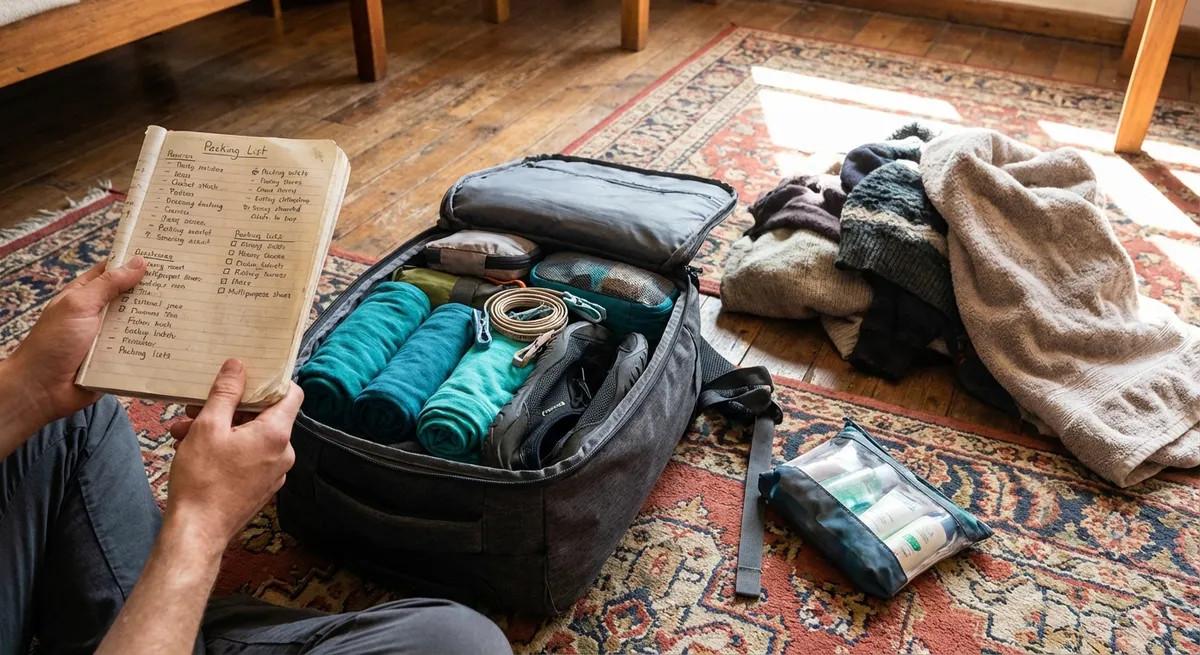
Assign each category to a specific pocket or packing cube and keep that layout consistent across trips. Over time, you’ll know by feel where things live, which is especially helpful when you’re tired or in a rush. This structure also makes repacking easier when you move from place to place; everything has a home.
Pack for Laundry, Not for Every Single Day
One of the biggest space savers is a mental shift: plan for doing a small amount of laundry instead of packing outfit‑for‑outfit. Even on a longer trip, you can often travel with a much smaller wardrobe if you’re prepared to wash and rewear.
Look for quick‑dry fabrics for basics like socks, underwear, and base layers. Pack a tiny laundry kit—such as a flat sink stopper, a small bottle or bar of laundry soap, and a clothesline or a few compact clips. Many hotels, hostels, and rentals have laundry facilities or at least a sink and hanger space; you’re simply making it convenient for yourself.
This strategy isn’t about austerity; it’s about trading a little laundry time for a lighter, more manageable bag. You’ll move more freely, have fewer things to keep track of, and reduce the chance of lost or forgotten items as you go.
Conclusion
Packing doesn’t have to be a frantic, last‑minute chore. By building a personal packing blueprint—your base layer, color‑coordinated wardrobe, travel core kits, bag zones, and a plan for laundry—you create a repeatable system that makes every trip smoother.
The result: less stress, fewer “did I forget…?” moments, and more headspace to actually enjoy where you’re going. Start small, test your system on your next weekend away, and keep refining. Before long, you’ll have a bag that feels like it’s been designed specifically for the way you love to travel.
Sources
- U.S. Department of State – Travel Checklist - Official guidance on essential documents and preparations before international trips
- Transportation Security Administration (TSA) – What Can I Bring? - Up-to-date rules on liquids, electronics, and other items for carry-on and checked bags
- CDC – Travel Health: Pack Smart - Recommendations for health-related items, medications, and safety considerations while packing
- REI Co-op – How to Use Packing Cubes - Practical tips on organizing clothing and gear inside your luggage
- Harvard Health Publishing – Travel and Your Health - Guidance on staying healthy on the road, including medications and hygiene considerations
Key Takeaway
The most important thing to remember from this article is that this information can change how you think about Packing Tips.