Packing doesn’t have to be a last‑minute scramble or a game of suitcase Tetris. With a few smart habits, you can turn your luggage into a mobile closet that actually works for how you travel. Whether you’re heading out for a long weekend or a month across continents, these packing strategies help you stay organized, flexible, and ready for whatever your trip throws at you.
Build a Mini “Travel Uniform” Instead of Random Outfits
Instead of packing isolated outfits, think in terms of a flexible “travel uniform” that you can remix over and over.
Choose 2–3 base colors (like black, navy, or beige) and build around them so almost everything works together. For example, a pair of dark jeans, neutral chinos, and black joggers can all match with the same tops and layers. Aim for clothes that can dress up or down with a small tweak—like adding a scarf, a nicer shirt, or a belt.
Fabrics matter too: look for lightweight, wrinkle‑resistant, and quick‑dry materials. These are easier to wash in a hotel sink and wear again the next day. A simple rule of thumb: every top you pack should work with at least two bottoms, and vice versa. This approach shrinks your packing list while expanding your outfit options, especially on longer trips.
Practical tip #1: Lay everything out on your bed before it goes in the bag and do a “mix-and-match check.” If an item doesn’t work with at least two others, it probably doesn’t earn a spot.
Turn Your Personal Item into a Mobile Command Center
Your personal item (backpack, tote, or small daypack) is prime real estate—it’s the bag that stays with you, and it can make your entire journey smoother.
Think of it as your in‑transit command center. Pack essentials you’ll want quick access to: passport, wallet, phone, headphones, charger, refillable water bottle (empty for security), a light layer, and any medications or valuables. Use small pouches or zip bags to group items—one for tech, one for health/meds, one for snacks, one for documents. This cuts down on rummaging in tight airplane seats or busy train platforms.
If you’ll be exploring cities or taking day trips, choose a personal item that can double as your daily carry, like a lightweight backpack with side pockets and an inner laptop sleeve. That way, you’re not wasting space on an extra bag you’ll only use occasionally.
Practical tip #2: Keep a flat, easy‑to-reach folder or pouch for all travel documents (boarding passes, confirmations, printed visas if needed). When someone asks for a document, you grab one thing—not dig through your entire bag.
Use “Zones” in Your Luggage So You Always Know Where Things Live
Instead of thinking of your suitcase as one big space, divide it into zones by category.
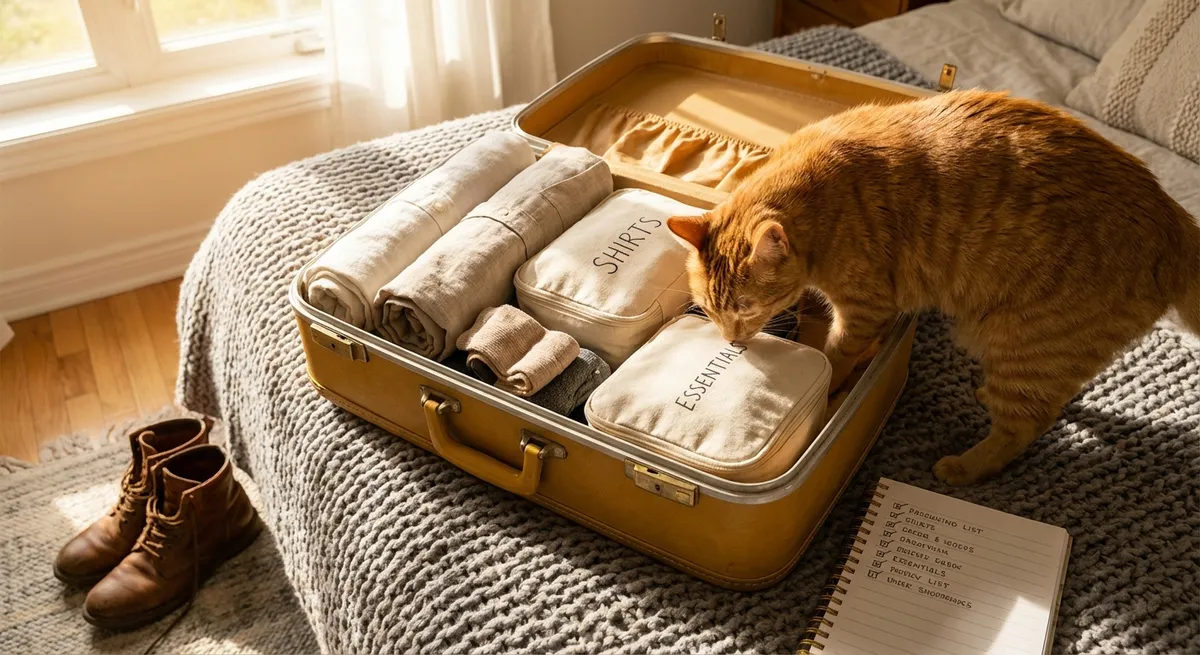
Packing cubes or even simple reusable bags can separate clothing, underwear, tech, and toiletries. Designate one cube for tops, one for bottoms, one for sleepwear/underwear, and one for “extras” like workout gear or swimwear. This makes it much easier to find what you need quickly and repack when you move locations.
Put your heaviest items (like shoes or toiletry kits) closest to the wheels in a rolling suitcase so it doesn’t tip over when upright. Use shoes as storage too—stuff socks or small items inside to save space and help them keep their shape. Keep one small, easily accessible “arrival cube” or pouch with pajamas, a toothbrush, and basic toiletries so you can freshen up fast after a long journey without fully unpacking.
Practical tip #3: Choose one color or pattern for your “clean” cubes and another for “dirty” laundry. When you switch hotels or head home, you instantly know which bag is which—and avoid mixing worn clothes with fresh ones.
Create a Slimmed‑Down Toiletry Kit That Works Anywhere
Toiletries are where bags quietly get heavy and cluttered. The goal is a travel-ready kit that lives in your closet and is always 90% packed.
Start with solid or travel‑size versions of essentials: shampoo, conditioner, soap, deodorant, and sunscreen. Refillable travel bottles let you bring your usual products without lugging full‑size containers. Keep everything in a clear, leak‑resistant bag so it’s easy to pull out for airport security if needed.
Be honest about what you actually use daily. Do you really need five different hair products, or will one multipurpose styling product do? Look for items that do double duty, like a moisturizer with SPF, a tinted balm that works for lips and cheeks, or a light hair oil that doubles as a frizz tamer. Keep a tiny “emergency” section—bandages, pain reliever, a few allergy pills, and blister pads—so you’re not searching for a pharmacy on day one.
Practical tip #4: Store your toiletry kit packed and ready at home. After each trip, refill what’s low and put it straight back in your closet. Next time you travel, you grab it and go—no last‑minute bathroom scavenger hunt.
Pack for the Weather You’ll Actually Feel, Not Just the Forecast
Weather apps give you numbers; packing is about how that weather will feel when you’re walking all day, using public transport, or caught in a sudden downpour.
Instead of just checking daytime highs, look at temperature ranges, rain chances, and wind for your destination. Then think in layers: a breathable base layer, a mid‑layer for warmth, and an outer layer for wind or rain. A light, packable jacket or shell can be a lifesaver in many climates and folds small enough to tuck into your bag or daypack.
Accessories are small but powerful: a compact umbrella, a buff or scarf, a hat, and thin gloves can dramatically change how comfortable you feel in borderline weather. The goal isn’t to be prepared for every extreme—it’s to handle the most likely conditions without overpacking bulky items you’ll never wear.
Practical tip #5: Before you pack, picture a full day in your destination: walking outside, sitting in a café, riding trains, going out in the evening. Ask, “What will I wish I had on me?” That mindset keeps your packing realistic and focused on real‑world comfort.
Conclusion
Packing well isn’t about fitting the most stuff into your bag—it’s about taking what will genuinely make your trip smoother, easier, and more fun. A mix‑and‑match travel uniform, a thoughtfully packed personal item, clear zones in your luggage, a streamlined toiletry kit, and weather‑smart layers all work together to keep you ready without feeling weighed down.
When your bags are organized around how you actually travel, you spend less time digging for things and more time enjoying where you are. That’s the heart of being truly travel ready.
Sources
- U.S. Department of State – Travel Preparation Tips - Official guidance on getting ready for international travel, including documents and essentials
- Transportation Security Administration (TSA) – What Can I Bring? - Detailed rules on carry-on items, liquids, medications, and electronics for flights from U.S. airports
- Centers for Disease Control and Prevention (CDC) – Pack Smart - Health-focused packing recommendations, including travel health kits and medications
- REI Co-op Expert Advice – How to Pack a Suitcase - Practical strategies for organizing luggage, using packing cubes, and balancing weight
- Consumer Reports – Travel Size Toiletries and Packing Tips - Advice on travel-sized products, leak prevention, and streamlining your toiletry kit
Key Takeaway
The most important thing to remember from this article is that this information can change how you think about Packing Tips.