Planning a trip should feel exciting, not exhausting. The difference between a chaotic journey and a smooth, confident one often comes down to a few smart shortcuts you build into your routine long before you board the plane.
This playbook is all about those tiny, powerful moves: easy-to-repeat habits that make every trip simpler, smoother, and more fun—without needing fancy gear or elite status. Use these five practical hacks to cut stress, protect your time, and squeeze more joy out of every adventure.
Hack 1: Turn Your Phone Into a “Travel Command Center” Before You Leave
Most travelers rely on their phones while on the road—but very few fully prep them. A 15-minute setup before you go can save you hours of hassle later.
First, download offline maps for your destination in Google Maps or Apple Maps. Save your hotel, airport, and key spots (train stations, meeting venues, must-see attractions) as favorites so you can navigate even without data or Wi‑Fi. This is especially useful in places where roaming is expensive or coverage is spotty.
Next, organize a “Travel” folder on your home screen with your airline, hotel, ground transport, and language apps (think Google Maps, airline app, Uber/Bolt/Grab, Google Translate, and a currency converter). This keeps you from hunting through your phone at a crowded gate or busy street corner.
Enable critical app notifications like flight status changes and gate updates from your airline, and download your boarding pass to your wallet app or as a PDF for backup. For extra peace of mind, store important documents (passport photo, insurance card, bookings, and emergency contacts) in a secure notes app or cloud drive with offline access.
Finish with a power check: turn on battery saver mode, lower screen brightness, and pack a charged power bank. Your phone becomes less of a distraction and more of a reliable control center for your entire trip.
Hack 2: Use “Time Anchors” to Outsmart Jet Lag and Travel Fatigue
You can’t control time zones, but you can teach your body to adapt faster with a simple “time anchor” strategy. Instead of suffering through jet lag, you gradually nudge your internal clock in the right direction.
As soon as your trip is booked, look up your destination’s time zone. One or two days before your flight (or more for long-haul trips), shift your sleep and meal schedule by 30–60 minutes toward your destination time. It’s a small adjustment, but it makes the eventual jump much less brutal.
On the flight, behave as if you’re already in the new time zone. If it’s nighttime at your destination, skip heavy meals, limit screen time, and use an eye mask and earplugs to simulate nighttime. If it’s daytime there, stay awake, walk the aisle occasionally, and hydrate with water instead of alcohol or excessive caffeine.
Once you land, set three “anchors” to lock in:
- Light: Get outside into natural daylight in the morning at your destination.
- Food: Eat meals at local mealtimes, even if you’re not super hungry.
- Motion: Take a walk instead of collapsing immediately into bed.
These anchors tell your body clock, “This is the new normal,” helping you adjust faster and enjoy more of your first few days instead of just surviving them.
Hack 3: Automate Your Airport Routine So You Stop Rushing and Start Cruising
Airports feel chaotic when you’re making decisions on the fly. Build a simple routine you follow every time, and the process becomes much calmer and faster.
Start before you leave home: check in online, confirm baggage rules, and screenshot or download your boarding pass. Put your passport, wallet, and phone in the same easily reachable pocket on every trip—no more patting every bag in a panic.
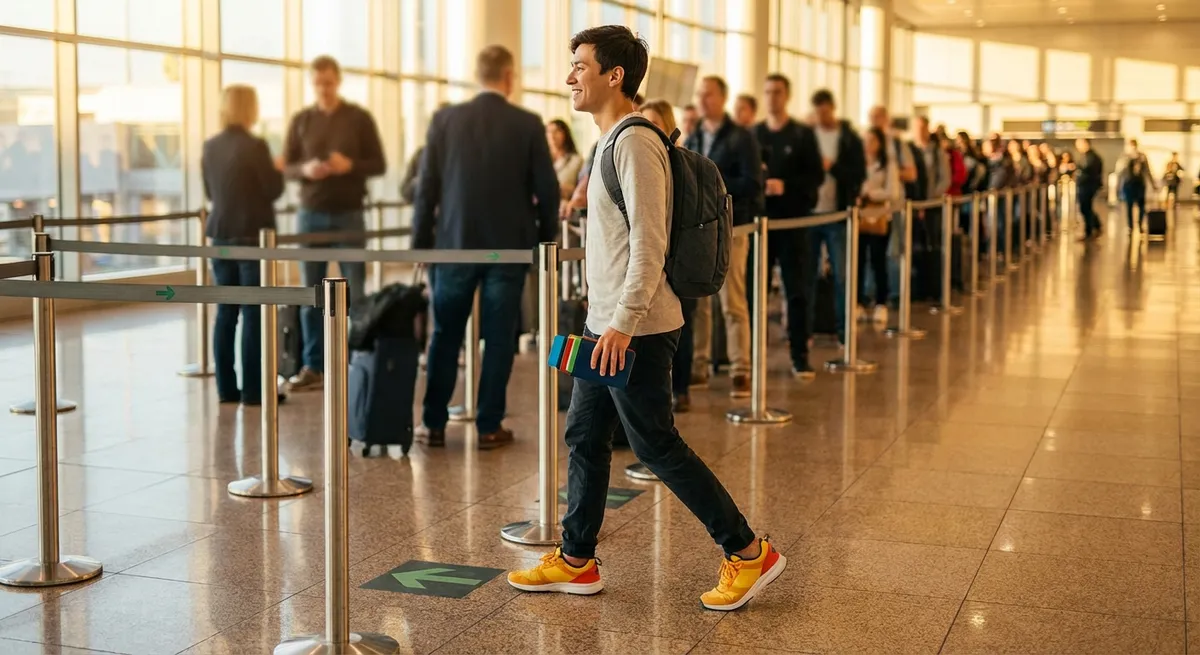
On arrival at the airport, head directly to your check‑in or bag drop, then through security. While in the security line, prep early: empty your pockets, take off belts and metal accessories, and place liquids and electronics where they’re quick to access, following your local airport’s rules. This small bit of forward planning keeps you from fumbling at the bins with a crowd behind you.
If you fly even a couple of times per year from the same country, consider trusted traveler programs like TSA PreCheck, Global Entry, or similar fast-track options if they’re available and within your budget. They often mean shorter lines, fewer security steps, and far less stress, especially during peak travel seasons.
Once you’re through security, pick a “base” near your gate with clear screens, outlets, and a bathroom nearby. Charge your devices, fill your water bottle, and set a timer or use gate alerts on your airline app so you’re not constantly checking the departure board. With a consistent routine, airports shift from overwhelming to manageable.
Hack 4: Create a “Local Life Snapshot” to Navigate Like You Live There
Instead of arriving and feeling lost, build a mini “local life snapshot” that helps you plug into your destination quickly—almost like a cheat sheet to living there, even if it’s just for a few days.
Before you go, search for these three things within walking distance of your accommodation:
- A grocery store or supermarket for snacks, water, and simple meals
- A pharmacy for basic health items and any forgotten essentials
- A cash machine (ATM) attached to a reputable bank
Save each location in your maps app. That way, if you arrive tired or late at night, you already know exactly where to go for the basics.
Next, look up key local norms: tipping customs, common payment methods (cash vs. card, contactless options), and local transit basics (tap cards, tickets, or apps). Bookmark an official tourism site or city transit site for quick reference.
Once you arrive, take a short “orientation walk” around your accommodation. Don’t rush to a big attraction; instead, notice cross streets, nearby cafés, transit stops, and safe walking areas. This low-pressure wander helps you build a mental map so you feel less like a disoriented visitor and more like someone who belongs there—at least temporarily.
With this snapshot prepared, everyday decisions become smoother, and you free up mental energy for the fun stuff: exploring, eating, and connecting.
Hack 5: Use “Buffer Windows” So Delays Don’t Derail Your Whole Trip
Delays happen—but they don’t have to destroy your plans. A simple habit of building “buffer windows” into your schedule lets you travel more confidently, even when things go sideways.
Instead of booking everything back‑to‑back, deliberately leave space around key transitions: flight arrivals, train connections, hotel check‑ins, and any activity with strict timing (like tours, shows, or meetings). For example, avoid scheduling a nonrefundable tour an hour after your plane lands. Give yourself a realistic cushion based on the airport size, immigration lines, and typical traffic.
When you do need a same‑day connection—like a train after a flight—aim for an option that gives you extra time and a backup train if possible. If you’re traveling to a cruise or major event, consider arriving in the city the day before, not the same day.
Use your digital calendar and set alerts for key points: leaving for the airport, boarding time, hotel checkout, and any prepaid experience. If something gets delayed, your buffers mean you’re far more likely to shift plans instead of losing them entirely.
These built-in cushions don’t reduce what you do; they make what you do more resilient. You worry less about “what if” and enjoy more of “what’s happening right now.”
Conclusion
Smooth travel doesn’t depend on luck, elite status, or expensive upgrades. It comes from a handful of intentional moves you repeat trip after trip.
Turn your phone into a travel command center, gently guide your body through time zones, automate your airport routine, arrive armed with a local-life snapshot, and protect your schedule with generous buffer windows. Each hack is simple on its own—but together, they create a travel experience that feels calmer, more flexible, and a lot more fun.
Use these shortcuts on your next journey, adjust them to fit your style, and share them with the traveler in your life who always seems to be running to the gate at the last minute. Your future self—standing relaxed at the airport with everything under control—will be very glad you did.
Sources
- U.S. Department of State – Traveler’s Checklist – Official guidance on documents, health, and safety preparation for international trips
- CDC – Travel Health: Jet Lag – Evidence-based tips on managing and preventing jet lag during air travel
- Transportation Security Administration (TSA) – What Can I Bring? – Up-to-date rules on airport security screening and allowed items in carry-on and checked baggage
- Google Maps Help – Download areas and navigate offline – Step-by-step instructions for saving and using offline maps on your phone
- U.S. Department of Transportation – Fly Rights: A Consumer Guide – Information on flight delays, cancellations, and traveler rights that can help when building buffer time into your itinerary
Key Takeaway
The most important thing to remember from this article is that this information can change how you think about Travel Hacks.