Travel doesn’t have to mean chaos, stress, and “did we remember the passports?” panic. With the right systems, simple tools, and a few mindset shifts, you can turn every trip—from a weekend getaway to a long-haul adventure—into something smoother, cheaper, and a lot more fun. These five practical hacks are designed to work for real travelers with real budgets and busy lives, so you can feel prepared long before you step into the airport.
Build a “Travel-Ready” Kit You Never Unpack
Constantly repacking the same items is where a lot of pre-trip stress comes from. Instead, create a dedicated, pre-packed travel kit that lives in your closet or under your bed so you’re always 80% ready to go.
Start with travel-size versions of your daily essentials: toothbrush, toothpaste, deodorant, basic makeup or skincare, mini hairbrush, razor, and a small pack of tissues. Add a compact first-aid and wellness pouch with bandages, pain reliever, motion-sickness medicine, any prescription copies (or photos), and a few rehydration tablets. Include a universal adapter, a spare charging cable, and a lightweight power bank that stays with this kit at all times.
Keep duplicates of anything you always take and never “borrow” from this bag for home use. That way, when a trip pops up—planned or spontaneous—you only add your clothes and destination-specific items. Refill toiletries as soon as you return so your next departure is nearly friction-free.
Turn Your Phone into a Travel Command Center (Before You Leave)
Your phone can be either your biggest source of travel stress—or your personal assistant in your pocket. The difference is preparation before you go.
Start by creating a dedicated “Travel” folder on your home screen. Add your airline app, accommodation app, map app (download offline maps for your destination), translation app, and a currency converter. Enable two-factor authentication on key accounts (email, banking, cloud storage) and make sure your recovery methods are up to date in case you lose access abroad.
Before departure, take screenshots or download offline copies of your boarding passes, hotel confirmations, train tickets, and important addresses—this saves you if you lose signal or Wi-Fi. Store a digital copy of your passport, ID, and travel insurance confirmation in a secure app or encrypted cloud folder. Turn on “Find My Device” or your phone’s equivalent, and share your live location with a trusted contact during travel days. A few minutes of setup can protect you from some of the most common travel headaches.
Master the “Two-Bag” System for Maximum Flexibility
Instead of obsessing over packing light versus packing everything, focus on how you organize what you bring. A simple two-bag system can make your whole journey smoother.
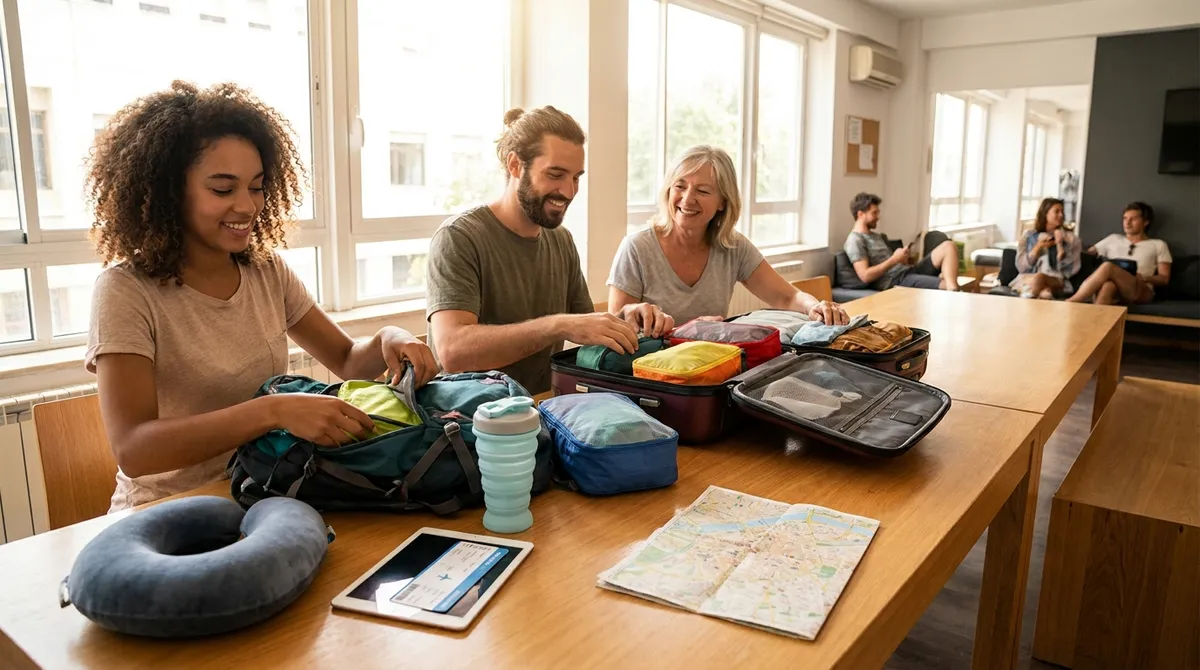
Use one main bag (carry-on suitcase or travel backpack) and one personal item (small backpack or tote). In your personal item, pack anything you absolutely cannot afford to lose or be separated from during the trip: passport, wallet, medication, tech, chargers, a pen, and a compact “comfort kit” (earplugs, eye mask, hand sanitizer, lip balm, snacks). Add a change of underwear and light top so you’re covered if your main bag is delayed.
Your main bag holds everything else: clothing, shoes, bulkier toiletries, and extras. Use packing cubes or simple cloth bags to group outfits or categories, which makes unpacking fast and keeps hotel rooms from exploding into chaos. When you arrive, your personal item becomes your day bag; your essentials are already in it, so getting out the door is quick.
Use Micro-Planning: Plan Anchors, Not Every Minute
Over-planning can make travel feel like work; under-planning can leave you lost, hungry, and wasting time. Micro-planning strikes the balance by focusing on “anchors” instead of rigid schedules.
An anchor is one key plan per part of the day: a breakfast spot, a main midday activity, and an evening idea. For example, you might decide: morning coffee at a well-reviewed cafe, a museum or hike as the day’s centerpiece, and a specific neighborhood to explore plus a short list of dinner options there. That’s it. The “in-between” is left open for wandering, detours, and local recommendations.
This approach keeps you from decision fatigue while still leaving room for spontaneity. It also makes it easier to pivot if weather, closures, or energy levels change. Save your anchors in a simple note or map list so you can glance quickly and choose, rather than scrolling endlessly through reviews when you’re already tired and hungry.
Treat Transit Like Part of the Trip, Not Dead Time
Lines, layovers, and long rides can feel like wasted hours—but with a little intention, they become some of the most useful and enjoyable parts of your journey.
Before you go, download podcasts, playlists, offline shows, or an audiobook you’ve been meaning to start. Keep a “travel reading” list or a digital magazine app handy for airports and train stations. Bring a small “focus task” list: backing up photos, clearing out your email, writing postcards or messages, or planning upcoming days of your trip.
Think comfort too: wear layers, pack a light scarf or hoodie, and choose shoes you can slip off easily in your seat. Keep a water bottle (refill after security), snacks with protein and fiber, and a small bag with your comfort essentials within arm’s reach in your personal item. When you treat transit as a chance to reset, organize, or relax, the journey feels shorter and you arrive feeling more like yourself.
Conclusion
Travel doesn’t get easier just because you do it more often—it gets easier because you build systems that work for you. A ready-to-go kit, a phone that’s set up like a travel hub, smart bag organization, light but intentional planning, and rethinking transit time can transform how every trip feels.
You don’t need complicated hacks or expensive gear—just a few strategic habits. Start with one or two of these ideas on your next trip, notice what reduces your stress the most, and make that part of your personal travel playbook. Before long, you’ll feel genuinely travel ready every time you step out the door.
Sources
- U.S. Department of State – Travel Advisory & Safety Information - Official guidance on travel safety, documentation, and country-specific advisories
- Transportation Security Administration (TSA) – What Can I Bring? - Up-to-date rules on what’s allowed in carry-on and checked baggage
- Centers for Disease Control and Prevention – Travelers’ Health - Health recommendations, vaccines, and preventive tips for international travelers
- UK National Cyber Security Centre – Device Security Advice - Practical tips on securing phones and devices, especially useful when traveling
- Harvard Business Review – How to Make the Most of Your Workday Commute - Insights on turning transit and commute time into productive or restorative time, applicable to travel days
Key Takeaway
The most important thing to remember from this article is that this information can change how you think about Travel Hacks.