Packing doesn’t have to be stressful, overstuffed, or last-minute. With a smart strategy, the same suitcase can flex from city breaks to beach escapes and even work trips with just a few tweaks. Think of your bag as a tiny, mobile closet: intentional, efficient, and ready for almost anything.
This guide walks you through a set of packing moves you can reuse for every trip, plus five practical tips that keep your bag light, your outfits versatile, and your travel days smoother.
Start With a “Travel Uniform” Base
Instead of starting with outfits, start with a base: a small set of mix-and-match pieces that always work together. This becomes your “travel uniform” and dramatically cuts decision fatigue and overpacking.
Choose a neutral palette (black, navy, beige, gray, or olive) and add 1–2 accent colors you love. Focus on pieces that layer easily: a breathable t-shirt, a long-sleeve top, one pair of comfortable pants, and a lightweight sweater or overshirt. These items should be ones you’d happily wear at home, not just “travel clothes.”
Once you nail this base, it stays almost the same from trip to trip. For a city getaway, you might add a blazer; for a beach trip, toss in swimwear and a breezy shirt; for a hiking weekend, swap in quick-dry pants and a performance top. The key is that your base doesn’t change much. That means packing becomes a quick “add-on” process instead of starting from zero every time.
Tip 1: Build a Simple Packing Checklist You Actually Reuse
A reusable checklist beats memory every single time. Instead of rewriting your list (or winging it), build one master list you can tweak slightly per trip.
Divide your checklist into clear categories:
- Essentials: Passport/ID, wallet, phone, charging cables, medication, glasses/contacts
- Clothing: Tops, bottoms, layers, underwear, sleepwear, socks, outerwear
- Toiletries: Toothbrush, toothpaste, skincare, hair products, deodorant, any prescription items
- Tech & work: Laptop/tablet, chargers, adapters, headphones, backup drive, any work documents
- Trip-specific: Swimwear, hiking gear, event clothes, kids’ items, gifts
Save it in your notes app, a travel folder in Google Drive, or a packing app so you can duplicate and adjust for each trip. Over time, refine it: after each trip, take 2 minutes to note what you didn’t use (that you didn’t need as a just-in-case item) and what you wish you had. That feedback loop quickly turns your list into a personal “packing playbook” tailored to how you actually travel.
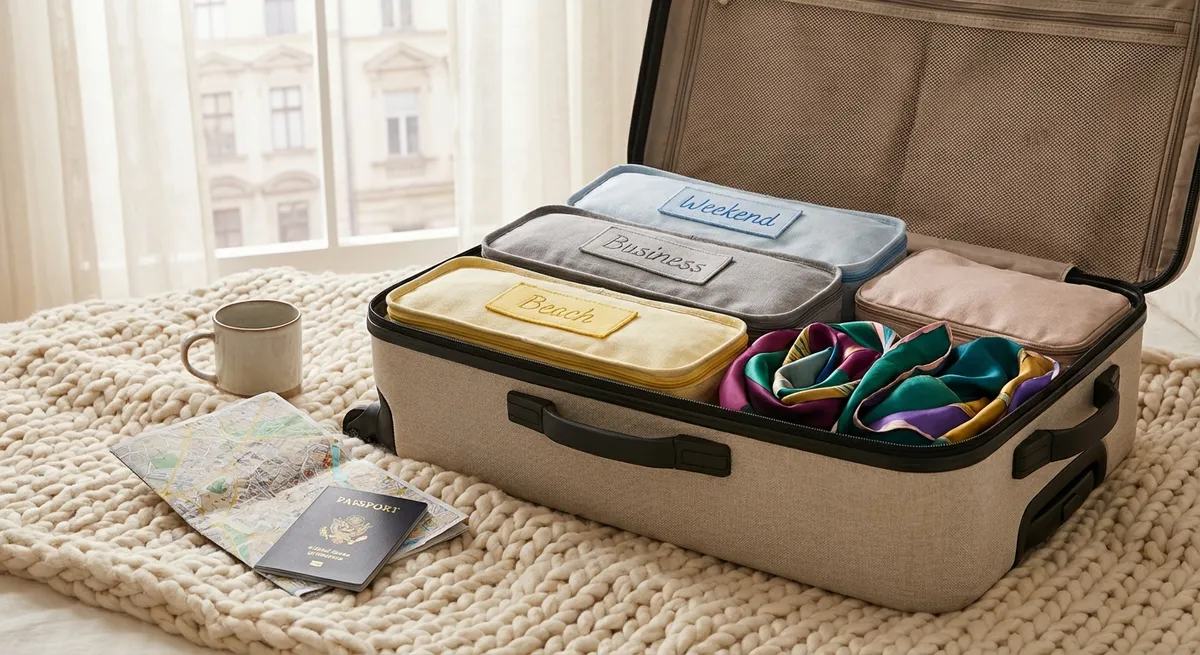
Tip 2: Use Packing Cubes as “Drawers,” Not Just Storage
Packing cubes aren’t just about squeezing more into your bag—they’re about staying organized when you’re living out of a suitcase. Treat each cube like a mini drawer.
You might organize cubes by:
- Type: Tops in one cube, bottoms in another, underwear/socks in a small one
- Day/Use: “Sleep & lounge,” “Daywear,” “Workout/swim”
- Person: If you’re sharing a suitcase, 1–2 cubes per traveler
Roll or fold clothes tightly inside each cube and place the cubes in your bag so that what you need first (like sleepwear and one full outfit) is easiest to reach. This way, you don’t have to explode your entire suitcase just to find pajamas your first night.
Packing cubes also make mid-trip moves easier: switching hotels, hopping on trains, or spending a night at the airport becomes less chaotic when your stuff is already grouped and contained.
Tip 3: Apply the “Rule of Three” for Clothing
A simple rule can keep your wardrobe lean: aim for three of each critical category for trips up to about a week (and slightly more for longer journeys, depending on laundry access):
- 3 tops
- 3 bottoms (or 2 bottoms + 1 dress/jumpsuit)
- 3 pairs of socks
- 3–5 pairs of underwear
- 1–2 pairs of shoes
The trick is that everything should work together. That gives you multiple outfit combinations without extra bulk. For example, 3 tops × 3 bottoms = 9 potential outfits. Toss in one “elevated” piece (like a nicer shirt or dress) that can pull double duty for dinners or events.
If you’re traveling longer, plan to do laundry rather than doubling your entire wardrobe. Many hotels, hostels, and Airbnbs offer laundry facilities or nearby options. Lightweight, quick-drying fabrics are your best friend here; you can wash a few items in the sink and hang them overnight if needed.
When it comes to shoes, prioritize comfort and versatility: one casual/comfortable pair for walking and one pair that can handle nicer settings or specific activities. Pack the smaller or lighter pair; wear the bulkier shoes in transit.
Tip 4: Make a Compact, Flight-Ready Essentials Kit
Think beyond your checked or main bag—your personal item or small backpack should be a mini survival kit in case your flight is delayed, your luggage is late, or you just need to freshen up.
Include:
- Travel-sized toothbrush and toothpaste
- Lip balm and moisturizer (cabin air is dry)
- Hand sanitizer and a few wipes
- Earplugs and an eye mask
- A pen (for forms and quick notes)
- Any daily medications (never check them)
- A change of underwear and an extra top
- Charging cable and a small power bank
Store it all in a small, clear pouch in your under-seat bag. If your suitcase gets delayed or you’re stuck on a long layover, you’ll still feel human and prepared. This kit also saves you from digging around your bag in tight spaces on the plane.
Bonus: keep this essentials kit pre-packed at home. After each trip, top it up and store it in your suitcase or travel drawer, so it’s always ready to go.
Tip 5: Pack Toiletries With Security and Spills in Mind
Toiletries can be the messiest, most time-consuming part of packing—and the most likely to cause chaos if something leaks. Simplify with two goals: minimize and contain.
First, minimize:
- Use travel-size containers or solid versions of shampoo, conditioner, and soap
- Bring multi-use products (e.g., a moisturizer with SPF, a 2-in-1 cleanser)
- Skip “nice to haves” you rarely use at home; travel days are about function
Then, contain and stay security-friendly:
- Place all liquids in a clear, resealable quart-size bag if you’re carrying on
- Tighten caps and add a small strip of tape to lids that tend to leak
- Pack the liquid bag in an easy-to-access spot for security screening
- If checking luggage, keep liquids in a separate pouch so if a bottle leaks, it doesn’t hit your clothes
You can also create two versions of your toiletries:
- Carry-on kit: TSA-compliant sizes and absolute essentials
- Full kit (optional): In checked luggage for longer trips where you want full-size items
This makes airport security smoother and prevents that dreaded moment when you open your bag to find shampoo all over everything.
Conclusion
Packing well isn’t about cramming more into your suitcase—it’s about trusting that what you brought will actually work for the way you travel. With a simple checklist, a neutral “travel uniform” base, smart use of packing cubes, the Rule of Three, a ready-to-go essentials kit, and streamlined toiletries, you can turn packing from a stress point into a quick, confident step before every adventure.
The more you repeat your own smart suitcase strategy, the easier it gets. Over time, you’ll spend less energy on what to bring and more on where you’re going—and that’s exactly how travel should feel.
Sources
- U.S. Transportation Security Administration (TSA) – What Can I Bring? - Official guidelines on liquids, electronics, and other items, essential for planning carry-on toiletries and gear
- U.S. Department of State – Traveler’s Checklist - Government-backed pre-trip planning checklist, including documents, health, and safety considerations
- Centers for Disease Control and Prevention (CDC) – Traveler’s Health - Up-to-date travel health recommendations that can inform what medications and health items you pack
- Mayo Clinic – Travel and Health: Jet Lag Disorder - Guidance on managing jet lag, useful when planning in-flight essentials and comfort items
- REI Co-op Expert Advice – How to Pack a Suitcase - Practical advice on packing techniques, organization, and choosing travel-friendly clothing and gear
Key Takeaway
The most important thing to remember from this article is that this information can change how you think about Packing Tips.