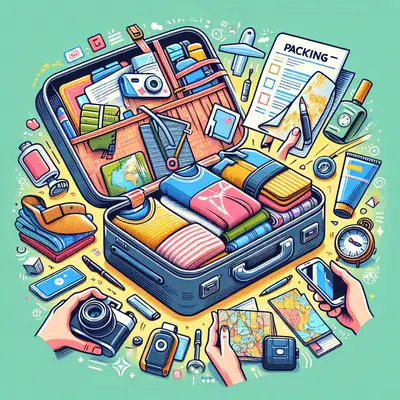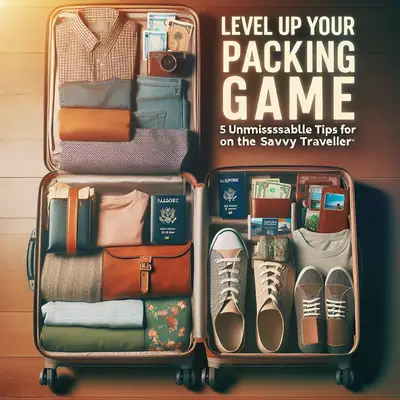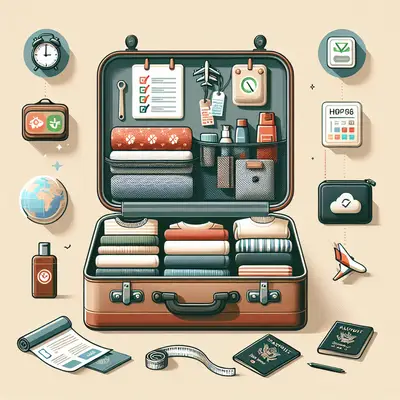
Packing doesn’t have to be a last-minute chaos sprint where you sit on your suitcase and hope the zipper closes. With a few smart habits and a bit of strategy, you can pack faster, fit more, and still know exactly where everything is when you land. Think of your bag as a mini travel HQ where every item has a purpose and a “home.”
Below are five practical, field-tested packing tips to help you travel lighter, smarter, and way less stressed.
Build a Personal “Go Kit” So You Can Pack on Autopilot
Instead of reinventing your packing list for every trip, create a permanent “go kit” of essentials you never travel without.
Start with a dedicated pouch or small toiletry bag that always stays in your suitcase or backpack. Stock it with travel-sized versions of your must-haves: toothbrush, toothpaste, deodorant, mini shampoo/conditioner, basic meds (like pain relievers and motion sickness tablets), bandages, and any prescription medications in labeled containers. Add a universal adapter, a short charging cable, and a compact power bank so you’re never hunting for cords at the last minute.
Keep a digital checklist in your notes app or a dedicated packing app and refine it after each trip—add what you missed, remove what you never touched. Over time, your list becomes a dialed-in system tailored to you, not a generic template. When it’s time to go, most of your bag is already “pre-packed,” and you’re just adding trip-specific clothes and gear.
This single habit can cut your packing time from hours to minutes and drastically reduce the chance you forget something important.
Use “Zones” in Your Bag Instead of Just Filling Space
Most people pack by stuffing items wherever they fit. A smarter way: pack by zones so you can grab what you need in seconds without unpacking your entire life on the hotel floor.
Mentally divide your bag into three main zones:
- Daily Access Zone – Things you’ll reach for often: toiletries, sleepwear, chargers, one change of clothes, a light layer. Place these near the top of your suitcase or in the easiest-to-reach compartment of your backpack.
- Core Clothing Zone – Folded or rolled clothes you won’t need until you’ve checked in: tops, bottoms, dresses, extra layers. Keep similar items together (all shirts in one area, pants in another).
- Backup & “Just in Case” Zone – Items you might need but not daily: extra shoes, backup outfit, packable rain jacket, laundry kit, spare cables. These can go deeper in the bag.
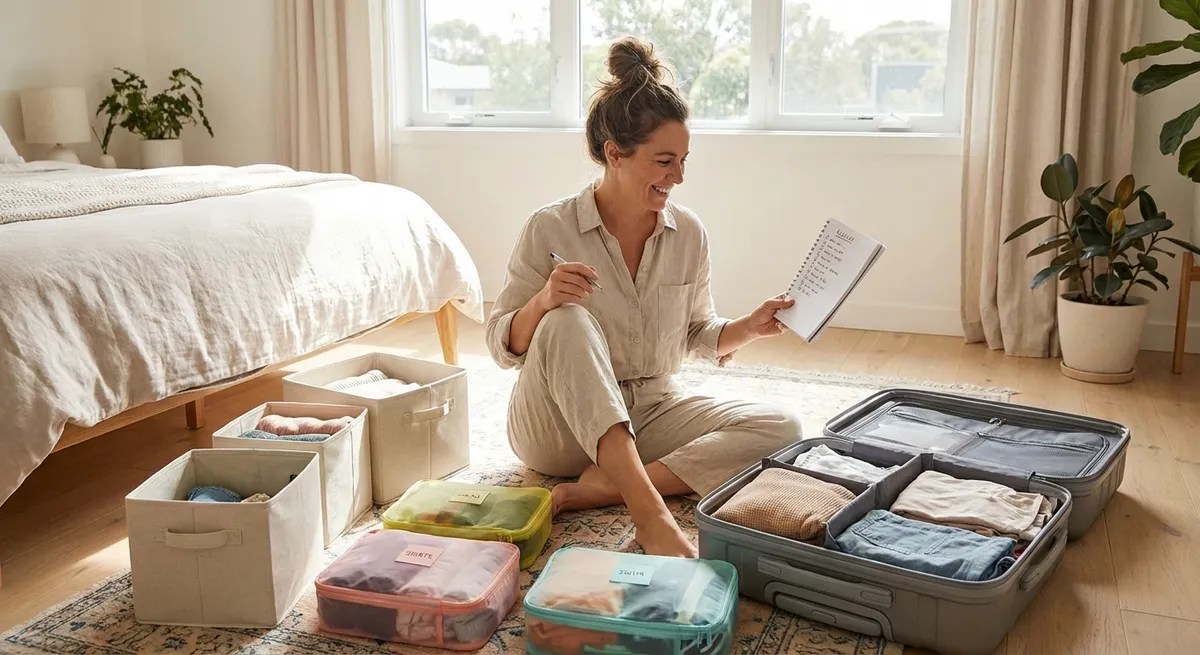
Within each zone, use small pouches, zip-top bags, or packing cubes to keep like items together—socks and underwear in one cube, workout clothes in another, electronics in a tech pouch. Label cubes or use different colors for quick visual cues.
This zone-based system makes you feel instantly “moved in” anywhere—you’re not tearing apart your bag for one charger or a clean T-shirt. You know exactly what lives where.
Choose Versatile Clothing That Multiplies Outfits, Not Bulk
The secret to packing lighter without feeling like you’re wearing the same thing every day is versatility, not volume.
Start by picking a simple color palette—two main neutrals (like black and beige, or navy and gray) plus one or two accent colors you love. When everything works together, each item can be mixed and matched into multiple outfits. That one neutral sweater goes with three shirts and two bottoms instead of just one look.
Prioritize:
- Layerable pieces – Thin long-sleeve tops, lightweight sweaters, and a packable jacket give you temperature flexibility without bulk.
- Dual-purpose items – A scarf that doubles as a blanket on planes, leggings that work for both workouts and lounging, a simple dress that can be dressed up or down.
- Quick-dry fabrics – Synthetic or merino-blend materials dry faster than cotton, making sink-washing and overnight drying much easier.
Before you pack, lay everything out on your bed and ask: Can this item be worn at least two or three different ways? If the answer is no, reconsider. Aim for a small wardrobe that “multiplies” into many outfits, not a stuffed suitcase full of one-off pieces.
Treat Your Personal Item as Your In-Transit Survival Kit
Your carry-on suitcase is important, but your personal item (backpack, tote, or under-seat bag) is your real lifeline during transit. Treat it as your mini travel command center for the journey itself.
Pack it with what you’d want if your main suitcase disappeared or ended up delayed—because sometimes it does. Include:
- A full change of clothes (or at least underwear and a fresh shirt)
- Essential medications and a small toiletry kit that complies with liquid rules
- Important documents: passport, ID, printed confirmations, and a backup copy stored digitally
- Tech essentials: phone, chargers, headphones, power bank, and any adaptors you may need immediately
- Comfort items: lightweight scarf or hoodie, empty reusable water bottle, snacks
Organize this bag in layers: travel documents and tech in front or in easily accessible pockets, comfort items in the middle, spare clothes at the bottom. That way, you’re never that person blocking the aisle digging for a boarding pass.
If a delay hits or your checked bag takes the scenic route, you’re still functional, comfortable, and ready to roll.
Pack a Mini “Fix-It” Kit for Common Travel Annoyances
Tiny problems can derail a travel day—blisters, a broken zipper, a lost button. A compact “fix-it” kit can save your trip more often than you’d expect.
In a small pouch, tuck in:
- A few adhesive bandages and blister patches
- A couple of safety pins and a mini sewing kit (or just a needle, neutral thread, and a few buttons)
- Travel-size stain remover wipes or pen
- A small roll of tape (or fold some duct tape onto an old gift card)
- A few resealable plastic bags (for wet items or organizing odds and ends)
- Earplugs and a basic eye mask
These items barely take up any space, but they can rescue shoes, clothes, bags, and your sanity. Suddenly, a ripped seam or muddy shirt is a quick fix instead of a mini disaster that sends you hunting for a store in an unfamiliar city.
When you know you can handle little mishaps, you relax more—and that’s what being truly travel ready feels like.
Conclusion
Packing well isn’t about being a minimalist wizard or owning special gear—it’s about building a repeatable system that works for you. A ready-to-go essentials kit, clear zones inside your bag, versatile clothing, a thoughtfully packed personal item, and a tiny fix-it kit can transform your packing experience from stressful to almost automatic.
The payoff: less time wrestling with zippers, more time actually enjoying your trip.
Sources
- Transportation Security Administration (TSA) – What Can I Bring? - Official guidance on what’s allowed in carry-on and checked luggage, including liquids and medications
- U.S. Department of State – Travel Checklist - Government-backed pre-trip checklist for documents, safety, and preparation
- Mayo Clinic – Travel Health Tips - Practical advice for staying healthy on the road, including medications and first-aid considerations
- CDC – Traveler’s Health - Up-to-date health recommendations and packing considerations based on destination
- REI Co-op – How to Build a Travel Capsule Wardrobe - Guidance on choosing versatile, layerable clothing and fabrics ideal for travel
Key Takeaway
The most important thing to remember from this article is that this information can change how you think about Packing Tips.