Packing doesn’t have to be a stressful race against the zipper. With a bit of strategy, your suitcase can become the MVP of your trip—flexible, organized, and ready for anything. Instead of cramming in “just in case” items, you’ll build a travel kit that actually matches how you move through the world.
Below are five practical, road-tested tips to help you pack smarter, stay lighter, and feel more “travel ready” from departure to touchdown.
Start With Your Days, Not Your Stuff
Before you touch your suitcase, plan your days, not your outfits.
Picture your trip as a timeline: airport, city walking, beach afternoon, museum day, dinner out, hiking trail, coworking space. Now match clothing and gear to those specific scenarios instead of pulling random favorites from your closet.
Ask yourself for each day:
- What’s the weather actually like (morning vs. night)?
- How active will I be—lots of walking, mostly sitting, swimming, or hiking?
- Are there cultural or dress expectations (covered shoulders, no shorts, etc.)?
- Do I need a “transition” outfit that works day-to-night?
Write a quick list or notes in your phone like:
- “Arrival: comfy layers, easy shoes, light jacket”
- “City day: breathable top, comfy pants, crossbody bag”
- “Evening: one ‘nice’ outfit that works multiple nights”
Once you see that list, you’ll naturally select items that multitask across several days instead of packing separate outfits for each moment. This single step almost always cuts your packing pile in half while making your wardrobe more useful.
Choose a Color Story Your Whole Bag Follows
One of the simplest ways to pack smarter: commit to a small color palette and stick to it.
Think of your suitcase like a mini capsule wardrobe. Pick:
- 1–2 base neutrals (black, navy, gray, tan)
- 1–2 accent colors (rust, olive, blue, pastel, etc.)
Everything should mix and match with those base tones. That means your tops work with all your bottoms, your layers go with every outfit, and your shoes don’t clash with anything.
Why this works:
- You need fewer shoes—usually 2–3 pairs max
- You can remix the same pieces into new outfits (great for photos)
- Getting dressed when jet-lagged becomes almost automatic
Example color story for a week in Europe:
- Base: black + tan
- Accent: olive + white
- Pieces: black pants, tan shorts, black dress, white tee, olive shirt, tan sweater, black sandals, white sneakers
Everything plays nicely together. You’ll feel like you have options without hauling a second closet across the ocean.
Build Micro-Kits Instead of Loose Items
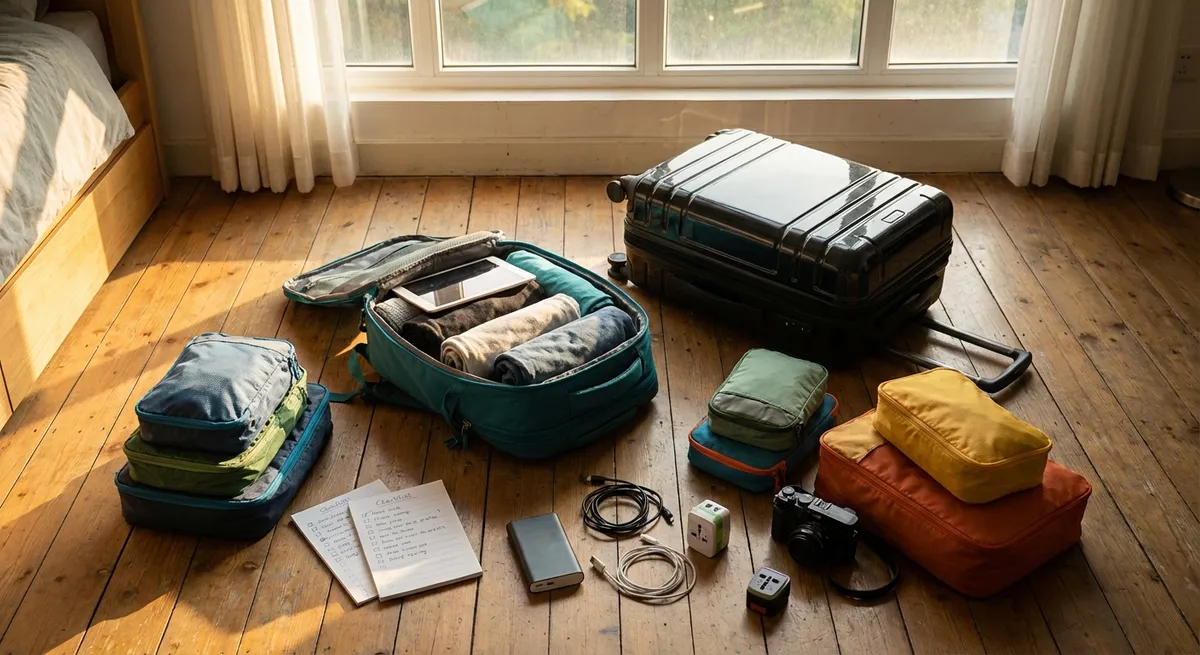
Instead of tossing in random “bits and pieces,” pack in mini-systems—small kits that solve specific problems. This keeps your bag organized and makes it easy to find things when you’re tired, rushed, or in a tiny hotel room.
Here are a few micro-kits that make a big difference:
- Health kit: basic meds (pain reliever, allergy pills, motion sickness if needed), bandages, blister pads, any prescriptions in original packaging, plus a small hand sanitizer
- Sleep kit: earplugs, eye mask, travel-size face wash, mini moisturizer or lip balm, and maybe a small packable pillowcase if you’re sensitive
- Tech kit: universal adapter, charging cables, power bank, earbuds, USB stick, and a spare charging cable in case one fails
- Plane kit: toothbrush, toothpaste tablet or mini tube, wipes, compression socks for long flights, and a pen for customs forms
Use small pouches or zip bags and label them (“Health,” “Tech,” etc.). When you arrive at your hotel or change seats on a train, you’re not hunting through your bag—you’re just pulling out the exact kit you need.
Pack for Laundry, Not for Every Day
Instead of packing a full outfit for every single day, assume you’ll wash a few things along the way. This mindset shift is huge for staying light while still feeling clean and put together.
A simple approach:
- Aim to pack 4–5 days’ worth of clothes, even for a longer trip
- Focus on quick-dry, breathable fabrics whenever you can
- Pack a small, sealable bag with a few laundry detergent sheets or liquid-free detergent
- Hang-dry items overnight in your room (many synthetic or blended fabrics will be ready by morning)
For underwear and socks, you can:
- Bring slightly more (these take little space but make you feel fresh), or
- Wash them every couple of days in the sink or shower
If you’re traveling for more than a week, plan at least one intentional laundry stop: a self-service laundromat, hotel laundry service, or a local wash-and-fold. You’ll save space and avoid overpacking “just to be safe.”
Give Every Item a Job (or Two)
Before something earns its spot in your suitcase, make it pass a quick test: Does this have a clear job—and ideally more than one?
That might look like:
- A light scarf that works as a blanket on the plane, a shawl in religious sites, and a style boost in city photos
- A packable rain jacket that doubles as a windbreaker and compresses into its own pocket
- A pair of sneakers that are comfortable enough for walking all day but clean and neutral enough to wear to a casual dinner
- A small foldable tote bag that becomes your grocery bag, beach bag, or overflow carry-on for the flight home
Conversely, watch out for single-purpose “what if” items:
- Extra pair of heels you’ll maybe wear once
- Bulky sweaters for a mildly cool climate
- Gadgets that seem clever but don’t solve a real problem for your style of travel
Lay everything out before it goes in your bag. For each item, say its job out loud (or write it down): “These pants work for planes, city exploring, and casual dinners.” If you can’t easily name a job—or more than one—leave it behind.
Conclusion
Packing well isn’t about owning special gear or memorizing a thousand hacks. It’s about designing a bag around your real trip: your days, your climate, your comfort, and your style.
When you:
- Plan around your daily activities
- Stick to a tight color story
- Use small kits instead of loose items
- Expect to do a bit of laundry
- And give every item a clear job
…you end up with a suitcase that feels intentional, not accidental. You move more freely, dress more confidently, and spend less time wrestling with your stuff and more time actually enjoying the journey.
That’s a bag that’s truly travel ready.
Sources
- U.S. Department of State – Travel Preparation Tips - Official guidance on preparing for international travel, including health and documentation considerations
- CDC – Travelers’ Health - Up-to-date health advice, recommended medications, and destination-specific guidance that can inform your health and first-aid packing
- Mayo Clinic – Jet Lag Disorder - Information on managing jet lag, useful when planning sleep and comfort items for your carry-on
- REI Co-op – How to Build a Travel Capsule Wardrobe - Practical advice on selecting versatile, mix-and-match travel clothing
- Transportation Security Administration (TSA) – What Can I Bring? - Official rules on what you can pack in carry-on and checked luggage, especially for liquids and electronics
Key Takeaway
The most important thing to remember from this article is that this information can change how you think about Packing Tips.