Packing isn’t about how much you can fit into a suitcase—it’s about making every single item earn its place. When you plan outfits like a flexible “matrix” instead of random piles of clothes, you travel lighter, dress better, and stress less. This guide walks you through five practical, packing-smart moves that turn your bag into a wardrobe that works on the road.
Build an Outfit Matrix, Not a Pile of Clothes
Instead of starting with “What do I like?” start with “What will I wear, together, in real situations?” Think in terms of an outfit matrix: tops, bottoms, and layers that can mix and match into multiple combinations.
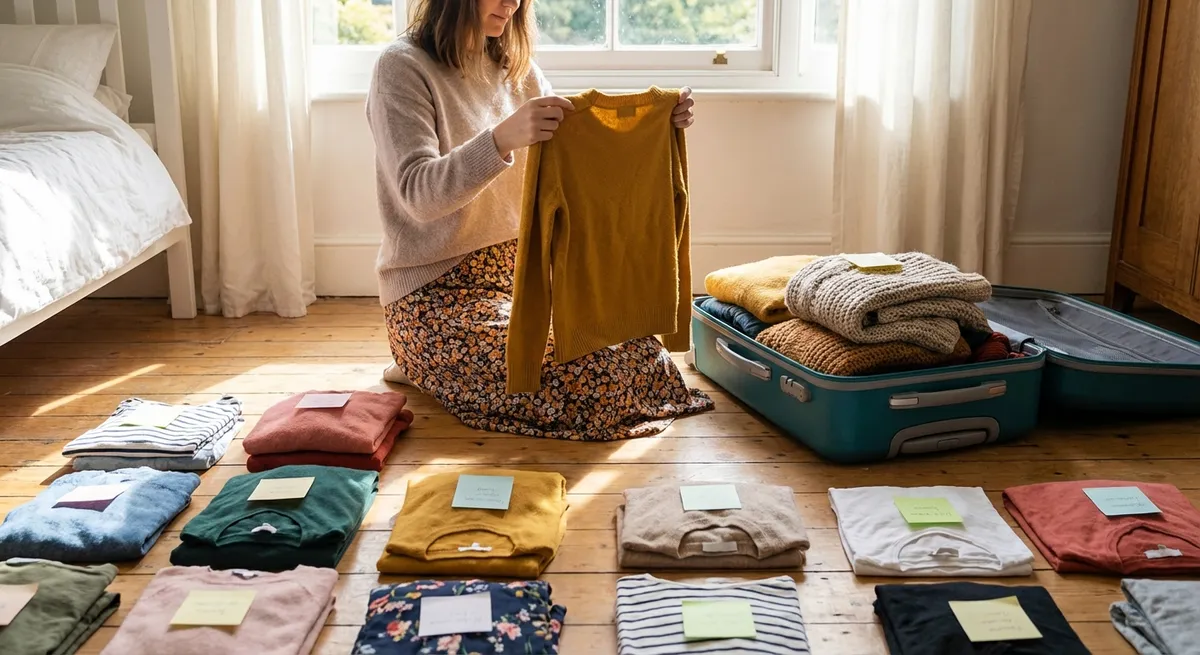
Lay everything out on your bed and build complete looks for the kinds of days you’ll actually have: travel days, active days, dressier evenings, lazy mornings. Every top should match at least two bottoms, and every bottom should work with at least three tops. If an item only works in a single outfit, reconsider it—especially if it’s bulky.
Stick to a simple color palette: one base (black, navy, or tan), one neutral (white, gray, cream), and one accent color. This makes it much easier to remix pieces without clashing. Snap photos of each outfit on your phone before you pack; this becomes your on-the-road lookbook and helps you get dressed quickly each morning.
Switch to “Modules” Instead of Overpacking “Just in Case”
The phrase “just in case” is responsible for countless overweight bags. Replace it with small, intentional “modules” built around what you’ll be doing, not vague what-ifs.
Think in compact kits: a “city walking” module (comfortable shoes, breathable socks, crossbody bag), a “water” module (swimsuit, packable towel, flip-flops), or an “evening” module (one nicer outfit, lightweight shoes, compact grooming items). Each module should fit in a packing cube or pouch and be usable on multiple days—not just for one hypothetical scenario.
Be realistic about your trip. If you’ve only booked one fancy dinner, you likely need one smart outfit that can be dressed up or down, not three. When you feel tempted to add an item, ask: “What specific plan or module does this support?” If you can’t answer, it stays home.
Use Fabrics That Work Harder (and Smell Better)
Fabric choice can cut your clothing count dramatically. Prioritize pieces that are breathable, quick-drying, and wrinkle-resistant, so you can rewear them without looking rumpled or feeling uncomfortable.
Merino wool, technical synthetics, and some performance blends excel at temperature regulation and odor resistance, making them ideal for socks, base layers, and tees. These pieces can often be worn multiple times before washing. Lightweight blends that dry quickly let you wash items in the sink at night and wear them again the next day—eliminating the need for backups.
Check labels before you pack: avoid 100% heavy cotton for items you’ll need to wash and dry quickly, and skip pieces that wrinkle the moment you touch them. A small, travel-size fabric refresher or a bar of gentle laundry soap gives you more mileage out of fewer garments, especially on longer trips.
Pack a Micro “Care Kit” to Keep Clothes Trip-Ready
A tiny clothing care kit can rescue outfits and reduce how much you need to bring. Instead of extra clothes, bring tools that keep what you packed wearable.
Include a compact stain-removal pen or wipes, a few safety pins, a travel-size lint roller, and a couple of spare buttons or a small sewing kit. These barely take up space but can save a favorite shirt or dress from being retired mid-trip. A thin, folding hanger or two helps with overnight air-drying and keeping key outfits ready to wear.
Use your shower steam to release wrinkles: hang clothes in the bathroom while you shower, then smooth them by hand. For especially important items, a palm-sized travel steamer can be worth the weight if you have several dressy events. Caring for what you pack means you can do more with less—and still feel polished.
Arrange Your Bag for “Access, Not Just Space”
Efficient packing isn’t only about fitting everything in; it’s about how quickly you can get to what you need. Structure your bag so your travel day feels seamless instead of like a suitcase excavation.
Keep the first 24 hours of outfits and essentials near the top or in a separate cube: underwear, sleepwear, one full outfit, and basic toiletries. If your bag gets gate-checked or you arrive exhausted, you can function without unpacking everything. Use packing cubes or compression bags to group clothes by type (tops, bottoms, layers) or by use (sleep, active, city), whichever matches how you get dressed.
Designate one small pouch as your “daily drawer” for undergarments, socks, and sleepwear so you’re not digging through your whole bag every morning. Keep a flat, empty foldable bag or tote accessible for day trips or souvenirs. When everything has a place and purpose, you spend less time wrestling zippers and more time actually enjoying your destination.
Conclusion
Thoughtful packing is less about rigid rules and more about making intentional choices. When you build an outfit matrix, rely on multipurpose modules, choose smart fabrics, carry a tiny care kit, and arrange your bag for access, your suitcase becomes a powerful travel tool—not a burden. Next time you pack, treat every item like it needs a job description before it earns a spot. Your future, on-the-move self will be very glad you did.
Sources
- U.S. Department of State – Travel Preparation Tips – General guidance on preparing for trips, including what to bring and how to think ahead.
- Transportation Security Administration (TSA) – What Can I Bring? – Official rules on what’s allowed in carry-on vs. checked baggage, especially useful when planning your packing list.
- Mayo Clinic – Travel and Your Health – Covers staying comfortable and healthy while traveling, which can inform what you pack (like fabrics and personal care items).
- REI Co-op Expert Advice – How to Choose Travel Clothing – Detailed breakdown of fabrics, quick-dry materials, and clothing features ideal for travel.
- Consumer Reports – Packing Tips for Air Travel – Practical, tested advice on organizing luggage, using packing cubes, and avoiding common packing mistakes.
Key Takeaway
The most important thing to remember from this article is that this information can change how you think about Packing Tips.