Packing doesn’t have to be stressful, chaotic, or last‑minute. With the right mindset and a few smart habits, your bag can become a streamlined “travel basecamp” that works for weekend escapes, work trips, or long adventures. Instead of stuffing your suitcase and hoping for the best, you can build a flexible system that you tweak for each new journey.
This guide walks you through five practical, real‑world tips that make packing faster, lighter, and a whole lot calmer—while still bringing what you actually need.
Start With Your “Always Pack” Core
Before you even think about outfits, build a tiny, repeatable packing core that lives in your bag (or is ready to toss in at any moment). This is your set‑and‑forget travel toolkit, and it saves you from starting from zero every time you pack.
Your “always pack” core might include a compact toiletry kit, a small first‑aid pouch, a universal power adapter, charging cables, a lightweight tote or packable day bag, and basic medications you commonly use. Keep these in dedicated pouches so you’re not hunting through drawers at 11 p.m. the night before your flight. If you travel frequently, you can even keep duplicate items—like a toothbrush, deodorant, and charger—permanently in your travel kit.
This approach turns packing into a simple checklist: your core kit plus trip‑specific clothes and gear. It also lowers the chance you forget essentials because your baseline setup never changes much. Over time, refine this core by removing what you never touch and adding the things you always wish you had.
Build Outfits Around a Simple Color Story
Instead of packing “pieces,” pack “outfits” that work together. The easiest way to do this is to pick a simple color story and stick to it so almost everything can mix and match. Think of one or two base colors (like black, navy, or khaki) plus one or two accent colors you enjoy wearing.
For example, if you choose navy as your base, you might pack navy pants, dark jeans, and a navy skirt or shorts. Then add tops in white, gray, and a single accent color—maybe rust or green. This way, nearly every top goes with every bottom, giving you more combinations from fewer items. You reduce those “this only goes with that one shirt” pieces that clog up your bag.
Also think in layers rather than single heavy items. A light sweater, packable jacket, and breathable base layer can adapt across different climates better than one bulky coat. When you prioritize versatility over variety, your bag gets lighter without feeling repetitive—because you can still create different looks from your color‑coordinated pieces.
Use the “Reach Once” Strategy for Bag Organization
An organized bag isn’t just about looking tidy; it’s about reducing friction in transit. A simple way to think about this is the “reach once” rule: for your most-used items, you should only need to reach into one place to get them. If you constantly dig through multiple pockets for the same things, your system needs a reset.
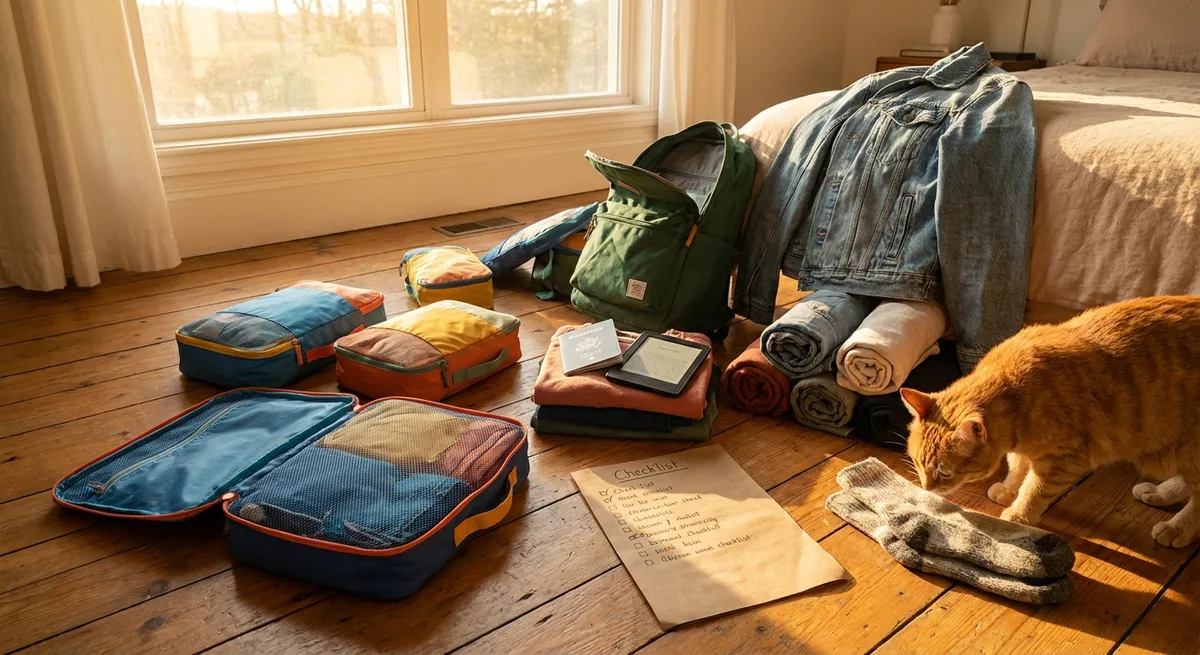
Use packing cubes or pouches to group items by how and when you use them, not just by category. For example, your “in‑transit” pouch might hold headphones, a pen, a small snack, lip balm, a sleep mask, and a phone charger—everything you’ll want on a plane or train. That pouch lives in your personal item where it’s easy to grab without opening the main suitcase.
Similarly, create a “night one” cube with sleepwear, toiletries, and a fresh set of clothes. If your checked luggage is delayed or you arrive exhausted, you can access everything you need for the first night from a single cube in your carry‑on. When every item has a specific “home,” repacking for the next leg of your trip is faster and less stressful.
Pack for Laundry, Not for Every Single Day
One of the biggest packing mindset shifts is this: you don’t have to pack an outfit for each day of your trip. Instead, pack for a shorter “laundry cycle”—often 4–6 days—and plan to wash and rewear. This is where fabric choice becomes just as important as style.
Prioritize quick‑dry, breathable materials like merino wool blends, performance synthetics, or lightweight cotton. These fabrics can be washed in a sink or hotel basin, hung overnight, and be ready by morning. Underwear, socks, and base layers are especially good candidates for quick hand‑washing. Many accommodations offer laundry services or have nearby laundromats, and some cities have wash‑and‑fold services you can drop off in the morning and pick up later.
By approaching your packing list as a repeatable “capsule” plus access to laundry, you can dramatically shrink the number of items you bring, even on longer trips. The result: less weight, easier movement between locations, and more flexibility if plans change—without feeling like you’re compromising on comfort or cleanliness.
Weigh and Test Your Bag Before You Leave Home
The final step in smart packing is a reality check: actually test the bag you plan to travel with. It’s tempting to assume “it will be fine,” but a quick trial run at home can reveal issues before they become airport headaches.
First, weigh your luggage with a digital luggage scale while it’s fully packed. Compare this against your airline’s weight limits for both checked and carry‑on bags. This helps you avoid surprise fees or last‑minute repacking at the check‑in counter. If you’re over, remove the least useful or least versatile items first—things that only serve one purpose or duplicate what you already have.
Next, do a mini “mobility test.” Walk around your home, up and down stairs if you can, or along your street with your fully packed bags. Pay attention to pressure points, awkward handles, or straps that dig into your shoulders. If rolling your suitcase feels clumsy or too heavy, that’s a sign you need to lighten the load or reconsider what you’re bringing. This quick test boosts your confidence that once the trip starts, your luggage will move with you, not against you.
Conclusion
Packing well is less about secret hacks and more about building a simple, repeatable system that fits how you travel. When you rely on an “always pack” core, choose flexible outfits around a color story, organize your bag for easy access, plan around laundry instead of endless outfits, and test your setup before departure, each trip feels smoother than the last.
Over time, your bag becomes a trusted travel companion—light enough to carry with ease, organized enough to find anything in seconds, and tailored enough that you actually enjoy living out of it. That’s when packing stops being a chore and starts feeling like the exciting first step of every new adventure.
Sources
- U.S. Department of State – Traveler’s Checklist – Official pre‑trip planning and documentation guidance
- Centers for Disease Control and Prevention – Travel Health – Recommendations for medications, health kits, and destination‑specific advice
- Transportation Security Administration – What Can I Bring? – Rules on packing liquids, medications, and other items in carry‑on and checked luggage
- BBC Travel – The Art of Packing Light – Insights and examples from experienced light travelers
- REI Co‑op – How to Choose Luggage – Guidance on selecting and using different luggage types for various trips
Key Takeaway
The most important thing to remember from this article is that this information can change how you think about Packing Tips.