Packing isn’t just about what you bring—it’s about how well your stuff can flex when plans change, weather shifts, or you say yes to a surprise adventure. When you pack with layers and intention, the same bag can handle city walks, mountain views, business dinners, and beach sunsets without feeling like a suitcase explosion.
This guide shows you how to pack a bag that adapts instead of overwhelms—using smart layers, small systems, and choices that work hard in multiple situations.
Start With a Flexible Clothing Core
Think of your clothes like a travel “toolkit” instead of full outfits for each day. Your goal is a small set of pieces that combine into many looks and handle different temperatures.
Choose a simple color palette (for example: black, white, and one accent color) so almost everything works together. Prioritize breathable, quick-dry fabrics you can wash in a sink and wear again. A lightweight base layer (like a thin tee or tank) can be worn solo on warm days, then under a sweater or button-down when it cools off.
Build around a few core items: one comfortable bottom for transit days, one that looks polished for going out, and one that’s activity-focused (like hiking or workouts) if needed. Aim for tops that can handle both casual and slightly dressy settings just by changing shoes or adding a layer. This way, a small lineup of clothes gives you many combinations—and your bag stays lean.
Treat Accessories Like “Travel Upgrades”
Accessories cost almost no space but radically change how your outfits and comfort feel on the road. A thin scarf, for example, can be a plane blanket, improv pillow, light shawl for modest sites, or a pop of color in photos. A simple belt can instantly sharpen a basic dress or oversized shirt.
Think of three categories: comfort, function, and style. For comfort, a soft eye mask and earplugs can turn a noisy hostel or flight into a decent rest. For function, pack one compact hat (foldable sun hat or beanie depending on climate) and sunglasses. For style, choose one or two items that work with everything—small jewelry set, a watch, or that one scarf that pulls your look together.
By leaning on accessories instead of bulky extra outfits, you stay ready for different dress codes and climates without overpacking.
Use Micro-Organizing to Avoid the “Black Hole” Bag
Even a well-packed bag can feel chaotic if everything is loose. Micro-organizing stops that “I know it’s in here somewhere…” rummaging that wastes time and creates mess.
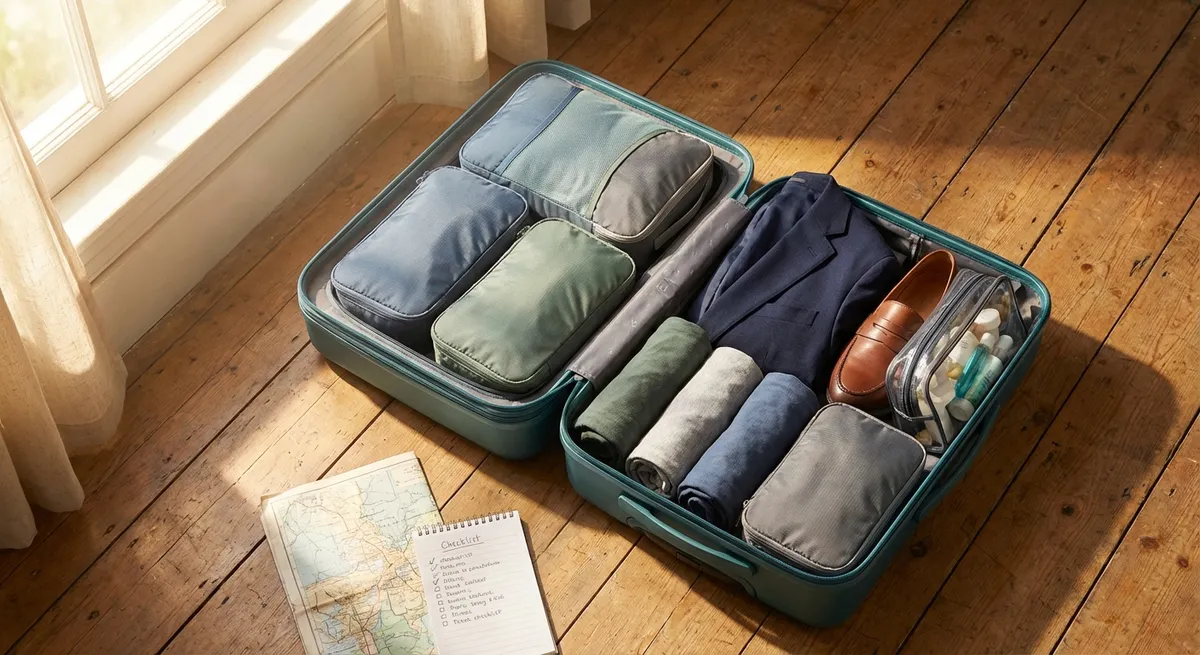
Use packing cubes or small fabric pouches to group items by function: one for tops, one for bottoms, one for underwear and sleepwear. A separate pouch for “getting ready” items—like toiletries, medications, and small grooming tools—makes your daily routine smoother. Transparent or mesh pouches are especially helpful because you can see what’s inside instantly.
For cables, chargers, and tech, dedicate a small zip case so they never tangle in your clothes or get left behind in a hotel outlet. When everything has a home, unpacking becomes optional—you can just open your bag and grab what you need, keeping your space tidy even in tiny rooms or shared hostels.
Design a Compact “Clean & Care” Kit
A small care kit keeps your clothes wearable for longer and your health on track, which means you can pack less overall. Aim for travel-sized items and multi-use products so the kit stays light.
For clothing, include a tiny stain-removal pen or wipes, a travel-size laundry detergent (or solid laundry bar), and a few clothespins or a folding travel clothesline. This lets you refresh shirts, socks, and underwear instead of packing duplicates. A lint roller sheet or small fabric brush helps revive outfits that need to look neat.
For personal care, pack only what you actually use daily: sunscreen, toothbrush and paste, a basic skincare routine, and any prescription meds in labeled containers. Add just a couple of “emergency” items like pain relievers and bandages. Keeping this kit compact and consistent across trips also means you can grab it quickly for any journey without rethinking every item.
Make a “Day Mode” Setup You Can Grab in Seconds
Within your main bag, plan for a quick switch into “day mode”—the setup you carry when you’re out exploring. Instead of repacking every morning, build a small system you can reload in under a minute.
Use a lightweight daypack, sling, or foldable tote as your daily bag. Inside it, keep a mini core: a refillable water bottle, small packable shopping bag, tissues, hand sanitizer, and a tiny pouch with your essentials (ID, one card, some cash, hotel card, and a backup transportation card if needed). Add a compact, packable layer (like a light jacket or foldable windbreaker) that lives in this bag when not in use.
At the end of each day, restock anything you used—snacks, wipes, sunscreen—and put it back in the same spot in your main bag. This routine turns mornings into a quick grab-and-go instead of a full repack, and helps you avoid forgetting important items when you’re excited to head out.
Conclusion
Packing doesn’t have to mean choosing between “prepared” and “overloaded.” When you build smart layers, rely on small but powerful accessories, and organize your bag into clear mini-systems, your stuff starts working for you instead of against you.
The payoff: you move faster, feel lighter, adapt easily to surprise plans, and spend less mental energy hunting through your bag. That extra freedom is exactly what makes your trip feel smoother, more spontaneous, and way more fun.
Sources
- U.S. Department of State – Travel Tips - Official guidance on preparing for international travel, including practical considerations for what to bring.
- Transportation Security Administration (TSA) – What Can I Bring? - Detailed rules on liquids, electronics, and other items to help you pack a carry-on that clears security smoothly.
- Mayo Clinic – Travel and Health - Advice on personal care, medications, and staying healthy while traveling, useful for building a smart “clean & care” kit.
- REI Co-op – How to Use Packing Cubes - Explains the benefits of packing cubes and strategies for organizing luggage efficiently.
- CDC – Pack Smart for Travel - Recommendations on health-related packing, from first-aid items to medications and hygiene supplies.
Key Takeaway
The most important thing to remember from this article is that this information can change how you think about Packing Tips.