Packing isn’t just about getting everything into a bag—it’s about setting the tone for your entire trip. Those last few decisions before you zip your suitcase can be the difference between feeling calm and prepared… or rummaging through chaos in a hotel lobby. This guide focuses on the smart little moves travelers often overlook—the final 10% that makes 100% of your packing feel intentional, lighter, and easier to live out of.
Build a “Hotel Top Drawer” Kit You Can Grab in Seconds
Instead of sprinkling small items all over your bag, build one zip pouch that becomes your instant “top drawer” the moment you arrive.
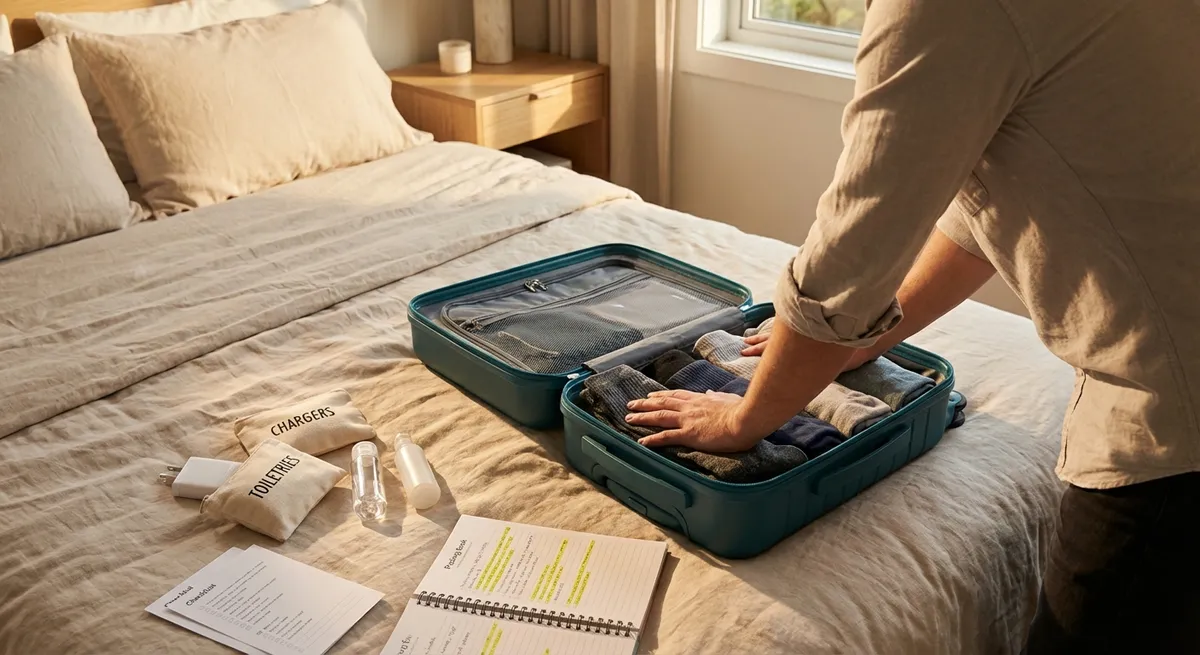
Pack a medium-sized pouch with everything you usually wish you had within arm’s reach: sleep mask, earplugs, lip balm, hand cream, pain reliever, a few bandages, travel-size tissues, microfiber cloth, spare charging cable, and any nightly medications (labeled). When you reach your room, drop this pouch right on the nightstand—no digging through packing cubes at midnight.
This tiny habit keeps your essentials organized in transit and gives you an instant sense of home base in any hotel, hostel, or guest room. If you’re flying long-haul, keep this kit in your personal item so you can access it in-flight, then transfer it to the bedside when you land. Over time, keep a dedicated pouch pre-packed at home so you’re always 80% ready for the next trip.
Pre-Pack “Day-One” Clothes in a Visible, Easy-Grab Bundle
The most stressful rummaging usually happens right when you arrive. Solve it before you even leave home.
Choose one head-to-toe outfit for your first full day (top, bottom, underwear, socks, plus any must-have accessory like a belt or scarf). Fold or roll that entire outfit together into a single bundle, then pack it in the very top of your suitcase or in its own packing cube. Make it visually distinct—use a bright-colored cube or a different folding style—so you can locate it instantly.
When you arrive tired, jet-lagged, or late at night, you won’t have to make decisions or explode your suitcase to find something wearable. You just grab your “Day-One” bundle and go. This trick is especially helpful if you’re arriving somewhere with a different climate than home—make sure that outfit is weather-appropriate so you can adjust quickly.
Turn Your Personal Item Into a “Mini Version” of Your Main Bag
If your checked or overhead bag disappears for a few hours (or days), your personal item becomes your entire world. Treat it like a scaled-down version of your main bag, not just a random catch-all.
Pack a slim backup set that would let you function for 24–48 hours if your luggage was delayed: one change of underwear, one extra top (ideally something that can layer), travel-size toiletries that pass security (toothbrush, mini toothpaste, deodorant, face wipes, any essential skincare), and any non-negotiable meds in original labeled containers. Add a foldable tote or packable backpack so you can carry extras if you need to rearrange on the go.
Include a small laundry bag or ziplock for dirty items so your backup outfit doesn’t get mixed with used clothes mid-trip. Use a simple internal structure—like one pouch for tech, one for personal care, one for documents—so you always know where things live. That mental map will save you time every time you go through security, board, or move between hotels.
Design a Micro Laundry Setup Instead of Overpacking Clothes
One of the easiest ways to pack lighter is to plan on doing tiny, strategic laundry rather than bringing a fresh outfit for every single day.
Before traveling, check whether your accommodation offers laundry (machines, paid service, or at least a sink and drying rack). Then build a palm-sized laundry kit: a few single-use detergent sheets or travel-size liquid in a leak-proof bottle, a flat sink stopper if you’ll handwash, and a thin, quick-dry clothesline or a few foldable hangers with clips. Focus on packing fabrics that dry overnight: synthetics, merino wool, and light cotton blends.
Plan to wash light items like underwear, socks, and base layers mid-trip instead of packing a fresh set for every day. This trades a few minutes of rinsing for a massively lighter suitcase. For trips longer than a week, this is often the difference between carry-on only and checking a bag. Bonus: you’ll always have something clean to change into, even if plans change or weather surprises you.
Use “Exit Packing” to Avoid the End-of-Trip Scramble
Most travelers pack thoughtfully on the way there and then shove everything in randomly at the end. Exit packing flips that script.
On your second-to-last day, take five minutes to reorganize your bag as if you were about to head home. Put dirty clothes together (ideally in a washable laundry bag), roll or fold clean items back into packing cubes, and bring your liquids and souvenirs into a configuration that will definitely pass security. If you’ve bought anything fragile or bulky, decide where it lives in your bag before checkout morning.
This mini reset does two things: it reveals if your bag has become heavier or more awkward (so you can wear bulkier items home or ship something), and it makes your last morning feel calm and efficient. You’ll know exactly where your passport is, which outfit you’re wearing home, and that your toiletries are sealed and flight-ready. The final zip will feel like closing a chapter, not fighting a suitcase.
Conclusion
Packing well is less about owning perfect gear and more about making thoughtful, repeatable moves that support how you actually travel. By building a simple “hotel top drawer,” staging your Day-One outfit, upgrading your personal item, planning micro laundry, and practicing exit packing, you turn your bag into a tool that works with you rather than against you.
Experiment with these five tweaks on your next trip and adjust them to fit your style. Over time, you’ll build your own packing rhythm—one that lets you land, settle, and start exploring faster, with less weight on your back and your brain.
Sources
- U.S. Department of Transportation – Baggage Tips – Guidance on carry-on, checked luggage, and handling delayed bags
- Transportation Security Administration – Travel Checklist – Official rules on liquids, medications, and what you can bring in your personal item
- Mayo Clinic – Jet Lag Disorder – Helpful for planning clothing and in-flight essentials with time-zone changes in mind
- REI Co-op – How to Wash Clothes While Traveling – Practical advice on sink washing and quick-dry fabrics
- CDC – Traveling with Medication – Official recommendations for packing and carrying essential medicines while abroad
Key Takeaway
The most important thing to remember from this article is that this information can change how you think about Packing Tips.