Packing isn’t just about what goes into your bag—it’s about how quickly you can find what you need, adapt to surprises, and stay comfortable on the move. Once you’ve got the basics down, it’s the last 10% of decisions that make the biggest difference: what you put in your personal item, how you handle laundry, and which tiny tools save entire days of your trip.
This guide focuses on five often-overlooked, ultra-practical packing moves that turn “good enough” into “wow, that was smooth.”
Build a “First Hour” Pouch You Can Reach Without Unzipping Your Bag
The moment you board a plane, train, or bus is when you’ll feel the effects of your packing choices the most. Instead of digging through your suitcase in a cramped seat, create a dedicated “first hour” pouch you can grab and stash in your seat pocket.
Include items you typically want in the first 60–90 minutes of any journey:
- Refillable water bottle (empty for airport security, then filled after)
- Noise-cancelling headphones or earplugs
- Lightweight scarf or hoodie (doubles as a blanket)
- Lip balm and small hand lotion (travel-sized to comply with rules)
- A pen for customs forms
- Sleep mask if you’ll be napping
- Phone charging cable and compact power bank
Pack this pouch last so it’s right at the top of your personal item. Once seated, pull it out in one motion. No rummaging, no holding up the aisle, and no realizing your charger is buried in the overhead bin.
Make Laundry Part of the Plan, Not an Emergency Fix
Most people either overpack “just in case” or assume they’ll “figure out laundry” once they arrive. Instead, decide your laundry strategy before you pack; it will dramatically shrink your clothing pile and lighten your bag.
Choose one of these approaches:
- Hotel or professional laundry: If your hotel offers laundry service or there’s a laundromat nearby, plan to do a mid-trip wash. Pack enough clothes for half the trip plus one extra outfit.
- Sink-wash system: For light packers, bring a small stash of powdered or liquid travel detergent, a universal sink stopper, and a thin travel clothesline or a few foldable hangers. Choose quick-dry fabrics (synthetic blends, merino wool, or athletic wear) so items dry overnight.
- Hybrid method: Wash underwear, socks, and base layers yourself, and send heavier items like jeans or sweaters to a service if needed.
This simple choice ahead of time determines the number of outfits you actually need. You’ll save space, reduce checked-bag fees, and have fresher clothes throughout your trip.
Create “Single-Use” Kits So You Never Unpack Everything at Once
Instead of one big toiletry bag and a tangled mess of cables, organize your essentials into small, activity-based kits you can grab instantly. This keeps your stuff organized and minimizes disruptions when you’re sharing a room or arriving late at night.
Try these mini-kits:
- Overnight kit: Toothbrush, toothpaste, face wipes or cleanser, deodorant, small moisturizer, lip balm. Keep it in a clear pouch so you can go from door to bed in minutes.
- Tech kit: Charging cables, universal adapter, small power strip or multi-port USB charger, earbuds, and a tiny roll of tape or cable ties.
- Health kit: Basic meds (pain reliever, anti-diarrheal, antihistamine), a few bandages, blister patches, and any prescriptions in original labeled containers.
- Day-out kit: Sunscreen, mini hand sanitizer, tissues, reusable shopping bag, and a small packable tote or crossbody if you like.
When you arrive, you only unpack what you need for the moment: grab the overnight kit on late arrivals, or the tech kit when you find an outlet. That way your luggage stays mostly organized the entire trip.
Pack “Zone by Zone” Instead of Category by Category
Most people pack by category: all shirts, then all pants, then all toiletries. A smarter way is to pack by zones of your day—sleep, transit, exploring—so you never have to disassemble your entire bag just to find one thing.
Break your bag into zones:
- Sleep zone: Pajamas, earplugs, sleep mask, any nightly medication, and a pair of soft socks. Keep this together in one packing cube or fabric bag.
- Transit zone: Travel pillow (if you use one), entertainment (Kindle, paperback, or downloaded shows), chargers, and the “first hour” pouch. These live in your personal item.
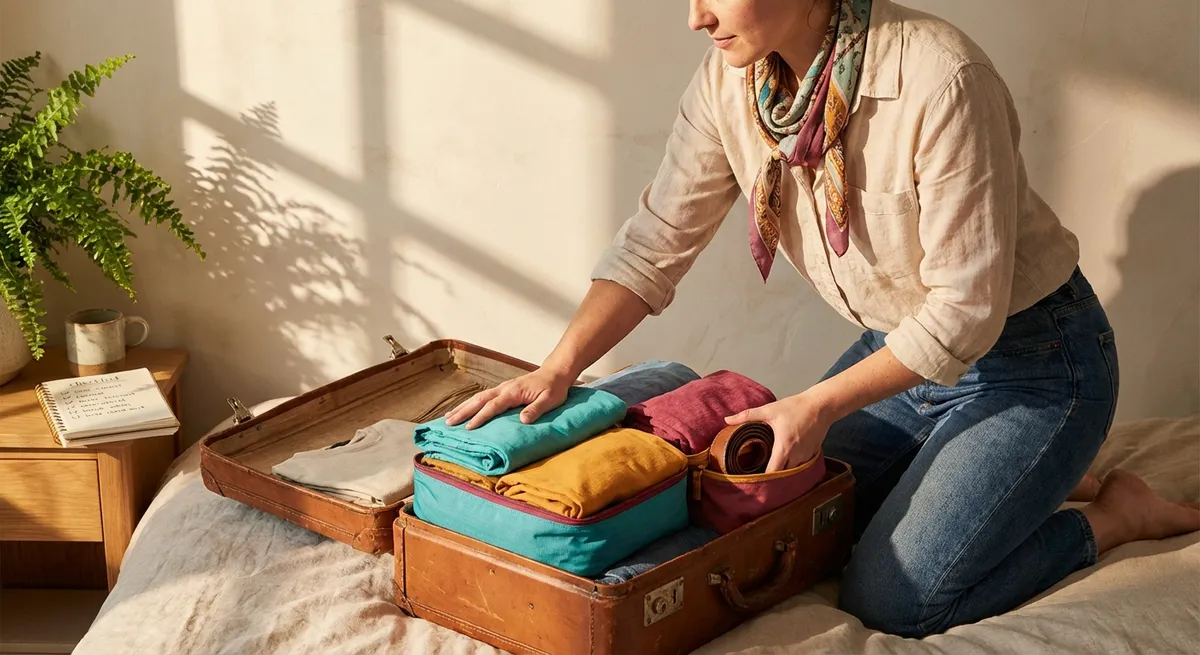
- Explore zone: Daywear, small umbrella or packable rain jacket, sunglasses, hat, and your day bag. Keep this wardrobe in one or two cubes (tops in one, bottoms in another), placed in the same area of your suitcase every time.
- Weather-override zone: Layers and wild-card items—lightweight puffer, compact rain shell, gloves, or a foldable sun hat—live together in one easy-to-access corner or cube.
When you think in zones, your bag becomes intuitive. You’ll know exactly where to reach depending on the time of day or situation, instead of upending everything on the hotel bed to find a single T-shirt.
Add “Tiny Tools” That Solve Big Problems on the Road
A handful of small, lightweight items can prevent annoyances that derail your day. They take up almost no space but dramatically increase your comfort and flexibility.
Consider adding:
- Foldable tote or packable backpack: For groceries, day trips, or overflow on the way home.
- Carabiner and a few safety pins: Hang items to dry, clip a hat or water bottle to your bag, or temporarily fix broken zippers or straps.
- Compact microfiber towel: Useful for hostels, beach days, unexpected rain, or makeshift picnic blankets.
- Reusable cutlery set or spork: Handy for picnics, airport snacks, or markets where you grab food to-go.
- Mini flashlight or headlamp: Great for power outages, early hikes, and dorm-style rooms where you don’t want to wake others.
These “micro upgrades” don’t replace your main gear—they prevent the constant “I wish I had…” moments that make travel more stressful than it needs to be.
Conclusion
Smart packing isn’t about having the lightest bag—it’s about setting yourself up for easy decisions, quick access, and fewer travel frustrations. By planning your first hour, deciding on laundry in advance, using single-use kits, organizing by zones, and carrying a few tiny problem-solving tools, you transform your suitcase into a streamlined support system for your entire trip.
Next time you pack, don’t reinvent everything. Keep your usual essentials, then focus on improving that last 10%. Those small tweaks are where the real travel magic lives.
Sources
- Transportation Security Administration (TSA) – Travel Tips - Official guidance on what you can bring in carry-on and checked luggage, including liquids and personal items
- U.S. Department of State – Traveler’s Checklist - Comprehensive pre-trip planning resource, including documents and health considerations that can influence how you pack
- Centers for Disease Control and Prevention (CDC) – Travelers’ Health - Up-to-date health advice and packing considerations for medicines and health kits based on destination
- Mayo Clinic – Travel and Health - Practical information on staying healthy while traveling, useful when planning a medical or first-aid kit
- REI Co-op – How to Pack a Suitcase - Expert advice on organizing luggage, packing cubes, and optimizing space, which supports many of the strategies discussed above
Key Takeaway
The most important thing to remember from this article is that this information can change how you think about Packing Tips.