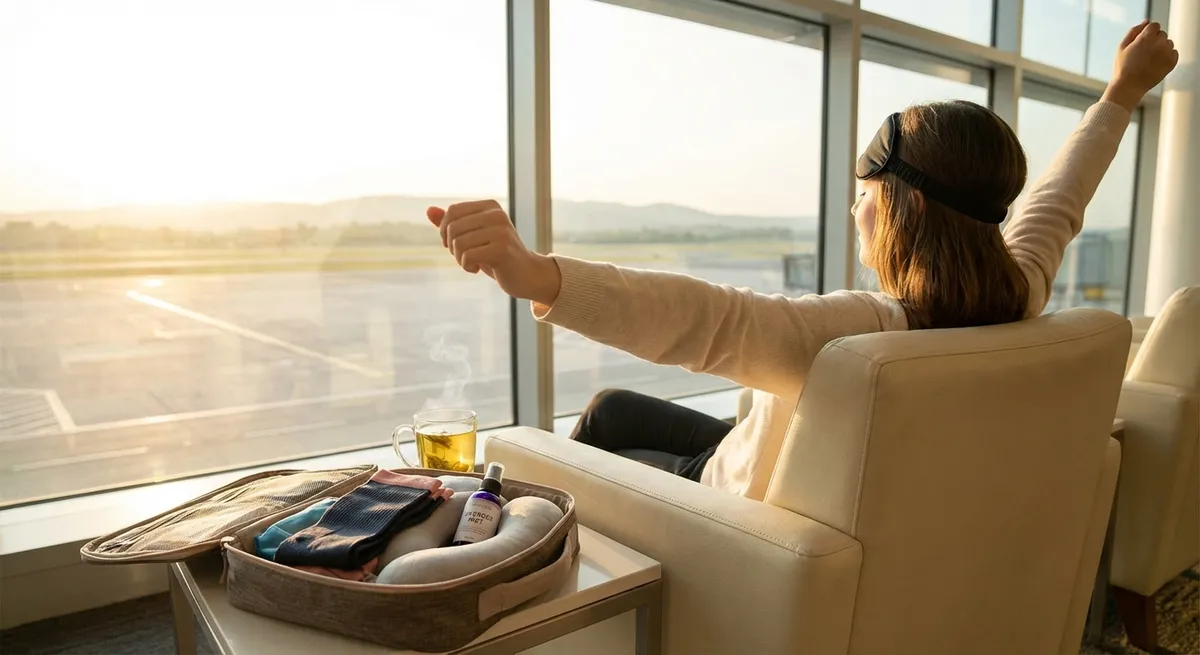
Travel days don’t have to feel like an endurance test. With a few smart habits before, during, and after your journey, you can land feeling far more human, waste less time recovering, and start actually enjoying your destination sooner. These travel hacks focus on small, realistic actions that add up—no complicated routines, just practical moves you can repeat trip after trip.
Think in Time Zones Before You Even Book
Most travelers only start worrying about jet lag the day before they fly—but you can make the whole trip gentler just by being strategic when you book.
If you’re crossing more than three time zones, look for flights that land in the late afternoon or early evening at your destination. It’s easier to push through a few tired hours and then sleep at a normal local bedtime than to land at 8 a.m. and fight all‑day exhaustion. In the days leading up to the trip, shift your sleep and meal times by 30–60 minutes toward your destination time each day; even a small adjustment reduces the “shock” to your body clock.
Red‑eye flights can be useful if you’re traveling east, but only if you can realistically sleep on planes. If you never sleep on board, a red‑eye just guarantees you’ll arrive wrecked, so prioritize daytime flights and arrive with at least some energy in the tank. When booking connections, aim for 90–150 minutes between flights—enough cushion for delays without forcing you into long, body‑clock‑destroying layovers.
Finally, check sunrise and sunset times at your destination for your arrival week. Knowing when it gets light and dark helps you plan that critical first day: when to seek sunlight, when to avoid it, and when to schedule a low‑effort activity versus a nap.
Turn Your First Flight Hour Into a “Body Reset” Window
That first hour after takeoff is gold. Use it deliberately to give your body the best possible start instead of mindlessly diving into movies and snacks.
Once the seatbelt sign is off, stand up, gently stretch your calves, hips, and shoulders, and walk the aisle at least once. This boosts circulation, reduces stiffness, and can lower your risk of deep vein thrombosis on longer flights. Back in your seat, adjust your posture so your lower back is supported—use a rolled‑up sweater or the airline pillow if needed—to avoid that hunched “airplane” position that makes you feel wrecked when you land.
Hydrate early and on purpose. Drink a full glass of water in the first 30–45 minutes, then keep a refillable bottle handy the rest of the flight. Airplane cabins are extremely dry, and mild dehydration worsens headaches, jet lag, and grogginess. Caffeine and alcohol both interfere with sleep quality and hydration, so if you have them, balance each drink with at least the same amount of water.
Finally, set your watch or phone to your destination time as soon as you sit down and mentally “enter” that time zone. Start planning your in‑flight routine around when you should be awake or asleep there rather than what time it is at home.
Treat Sleep Like a Mini Mission, Not a Maybe
Sleep on travel days doesn’t have to be perfect; it just needs to be good enough to help your body adjust. Instead of hoping you’ll eventually drift off, set yourself up with a simple, repeatable sleep “mission.”
Begin with comfort cues: an eye mask, soft earplugs or noise‑canceling headphones, and layers you can add or remove easily. Cabins tend to be warmer during boarding and cooler at cruise altitude, so having a light layer you can pull on prevents that cold‑bone fatigue that ruins sleep. If you’re using a neck pillow, experiment at home beforehand—some people sleep better with it backwards to support the chin.
Time your sleep to match your destination night as closely as possible. If you’re flying east and it’s already night at your destination, eat lightly, skip the in‑flight movie, and go straight into your “sleep routine”: dim your screen, mask on, calming playlist or white noise, eyes closed for at least 60–90 minutes even if you don’t fall fully asleep. If you’re flying west and it’s still daytime where you’re headed, resist long naps; opt for short 20–30 minute “power rests” so you can stay awake later at your destination.
Avoid relying on heavy sleep medications unless prescribed by a doctor; they can leave you groggy and impair circulation because you move less. If you use over‑the‑counter options like melatonin, test your dose at home on a normal night first so you know how your body responds.
Use Light and Movement to “Tell” Your Body Where You Are
Jet lag is essentially your body clock arguing with local time. Light and movement are your strongest tools to settle that argument quickly.
On arrival, get outside within your first 1–2 hours if it’s daylight. Natural light is far more powerful than indoor lighting for resetting your internal clock. If you’ve flown east and arrive in the morning, prioritize at least a 30–60 minute walk outside rather than crashing in your room. If you arrive late at night, keep light exposure low—dim hotel lights, avoid bright screens, and head to bed as soon as is reasonable.
Plan gentle movement breaks into your first day instead of marathon tours. A short walk after each meal improves digestion, helps fight that heavy “airplane body” feeling, and cues your brain that this new schedule is real. If you’re tempted to nap, set a strict alarm for 20–30 minutes; longer naps increase sleep inertia and make it harder to adjust.
At night, treat your sleep environment seriously even if you’re only staying a couple of nights. Close curtains fully, cover any bright indicator lights, and keep screens off at least 30 minutes before bed. If your room faces a busy street or you’re in a lively nightlife area, white noise (from an app or a small travel sound machine) can mask unfamiliar sounds that might wake you repeatedly.
Build a “Recovery‑Ready” First 24 Hours Instead of a Perfect Itinerary
Your first 24 hours don’t need a packed schedule; they need just enough structure to keep you moving and just enough flexibility to adjust if fatigue hits harder than expected.
Anchor your day around three things: a solid meal at normal local times, one low‑intensity activity, and an early, screen‑light bedtime. Choose a simple, nearby attraction that doesn’t demand intense focus—like a local market, neighborhood stroll, or easy museum visit—rather than a complicated, pre‑paid excursion. This way you’re out in daylight, moving, but not stuck somewhere if you hit a wall.
Keep your first meal simple and familiar enough that your body doesn’t also have to process unusually heavy or very spicy food on top of jet lag. Drink more water than you think you need and consider an electrolyte packet if you’re prone to headaches or travel fatigue. If you like caffeine, use it strategically: a modest amount in the local morning can help you sync up, but avoid it in the local afternoon and evening so it doesn’t sabotage your first real night of sleep.
Finally, give yourself permission to “waste” a little time that first evening: an early shower, a short wind‑down stretch, maybe a quick journal entry or plan for tomorrow. Treat it as an investment. The more you respect your body’s adjustment on day one, the more fully you can enjoy every day that follows—without feeling like you’re constantly trying to catch up.
Conclusion
Feeling genuinely ready to explore when you land isn’t about being a perfect traveler; it’s about stacking a few smart habits before, during, and after your flight. When you book with time zones in mind, use that first flight hour as a reset, approach sleep intentionally, lean on light and movement, and give your first 24 hours room to breathe, you turn long travel days into a softer landing for your body and brain. The payoff is huge: more energy, better moods, and extra hours of vacation that used to disappear into jet lag.
Sources
- Centers for Disease Control and Prevention – Jet Lag - Overview of jet lag, strategies to reduce symptoms, and medical considerations
- Mayo Clinic – Jet Lag Disorder - Medical explanation of causes, symptoms, and treatment options for jet lag
- Sleep Foundation – How to Prevent & Treat Jet Lag - Practical, research‑based advice on adjusting to new time zones
- Harvard Health Publishing – Resetting Your Body Clock - Discussion of circadian rhythms, light exposure, and strategies to adapt sleep schedules
- National Institute of General Medical Sciences – Circadian Rhythms - Scientific background on how internal body clocks work and why time changes affect us
Key Takeaway
The most important thing to remember from this article is that this information can change how you think about Travel Hacks.