Packing doesn’t have to be a chaotic, last‑minute game of suitcase Tetris. With a few intentional choices, your bag can become a calm, organized travel HQ that makes every day on the road smoother. This guide focuses on practical, real‑world tips so you can move through airports, stations, and new cities with confidence—and without feeling like you’re dragging your entire closet behind you.
Build a “Daily Outfit Formula” Before You Touch Your Suitcase
Instead of packing individual pieces at random, start with a simple outfit formula that you’ll repeat in different variations. Think: “comfortable bottoms + breathable top + one layer + walking shoes.” This framework keeps you focused on what you actually wear, not what you might wear in a fantasy version of your trip.
Look at your itinerary and weather, then ask: What do I need for walking, sitting, eating, and maybe a bit of surprise weather? Choose 2–3 bottoms that all match the same 4–5 tops, and one or two light layers that go with everything. Neutrals make this easier, but you can add personality with one or two standout pieces (like a patterned shirt or bright scarf) so you don’t feel stuck in a uniform.
By planning around a repeatable “formula wardrobe,” you reduce decision fatigue each morning and avoid packing single‑use items (like that one shirt that only works with one pair of pants). The result: fewer clothes, more combinations, and a bag that still feels versatile for both casual days and slightly dressier nights.
Turn Your Personal Item Into a Mobile “Command Center”
Your under‑seat personal item is prime real estate—it’s the gear you can actually reach without standing up. Treat it like a command center rather than a catch‑all dump bag. Start by dividing it into zones: tech, comfort, essentials, and “just in case.”
Tech covers anything you’ll need in transit: phone, chargers, power bank, headphones, and a small pouch for cables. Comfort might include a lightweight scarf (blanket + shawl + pillow), earplugs or noise‑canceling headphones, an eye mask, lip balm, and a reusable water bottle (empty through security, filled afterward). Essentials are your passport, wallet, medications, a pen for forms, and any documents or confirmations you might need offline.
Use small pouches or slim packing cubes to separate categories so you can grab what you need without rummaging. Put the most important items (passport, boarding pass, medications) in the easiest‑to‑reach pocket. This setup not only keeps you organized but also reduces stress in security lines, boarding queues, and sudden “please show your documents” moments.
Pack a “First 24 Hours” Kit in Case Your Luggage Goes Off Script
Even if you’re checking a bag, you can still travel with peace of mind by assuming your main suitcase might show up late. The solution: a compact “first 24 hours” kit in your personal item or carry‑on. Think of it as your emergency fallback that keeps your trip running smoothly, even if your checked bag takes a detour.
Include: a full change of underwear, one extra top, a small toothbrush and toothpaste, travel‑size deodorant, face wipes or cleanser in a travel container, and any essential medication (never check meds). If your destination is colder or rainy, add a packable layer like a thin down jacket or a small rain jacket. Toss in a small Ziploc or reusable bag for wet or dirty items.
This kit also helps if your room isn’t ready yet, or you arrive exhausted and don’t want to dig through your suitcase. You can freshen up, change, and feel human again without unpacking everything. It’s a tiny bit of extra planning that can save a lot of stress—especially on long‑haul or international trips.
Use “Layered Organizing” Instead of Over‑Stuffed Packing Cubes
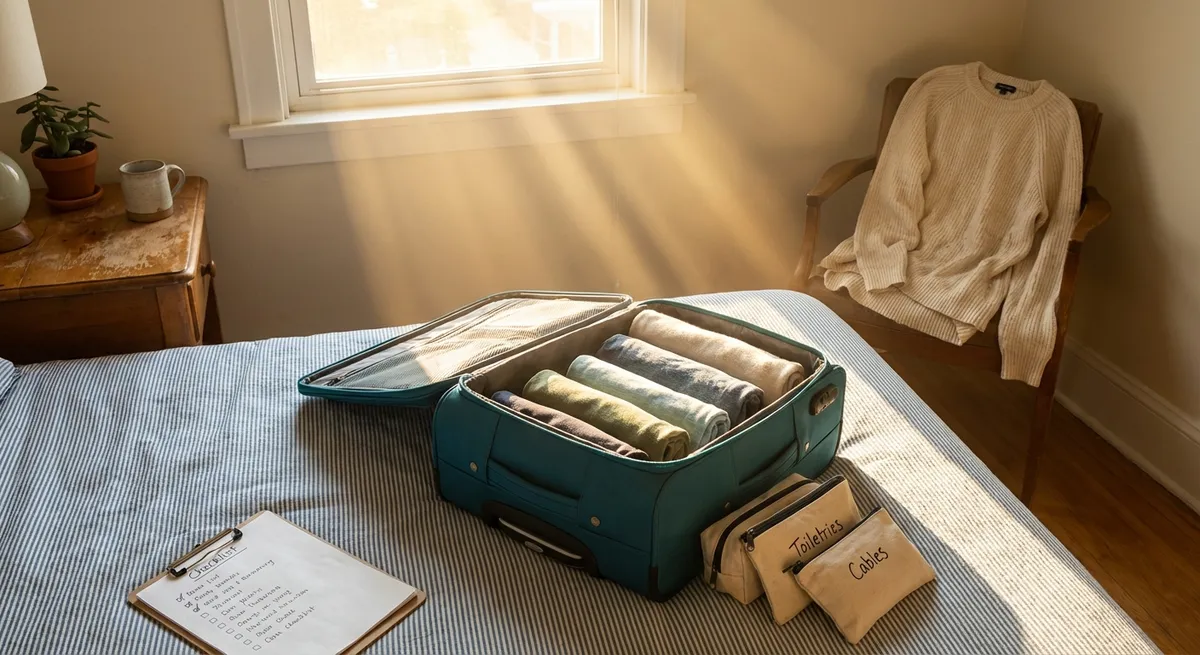
Packing cubes are useful, but they can also tempt you to cram in more than you actually need. Instead of treating cubes as compression bags, think in layers: what you use daily, what you use occasionally, and what you almost never need during the trip.
Daily items—like pajamas, underwear, and your most‑worn tops—belong in the most accessible cube or section. Place that cube on the side of the suitcase that opens first or on top so you’re not digging for basics every night. Less‑frequent items (like dressier clothes or backup outfits) can go in a separate cube at the bottom of the bag or on the opposite side.
Create a small “tiny items” kit for things that love to disappear: jewelry, hair ties, nail clippers, travel‑size stain remover, sewing kit, and a few safety pins. Keep this in a bright, easy‑to‑spot pouch so you’re not hunting through side pockets. This layered approach means you’re unpacking sections, not your entire life, every time you move to a new hotel or rental.
Design a Mini Health & Comfort Pouch You Never Unpack
Travel throws curveballs—dry air, new foods, long lines, and unfamiliar environments. A small, always‑ready health and comfort pouch can help you handle most of them without a pharmacy run. The trick: build it once, then restock it after each trip so it lives in your suitcase, ready to go.
Include: basic pain relievers (following local regulations), motion sickness tablets if you’re prone to it, a few bandages, blister patches, hand sanitizer or wipes, tissues, and any personal essentials (like allergy meds or digestive aids). Add a few rehydration packets or electrolyte powders for long flights, hot destinations, or days when you walk more than expected.
Keep everything in a clear, resealable bag or small pouch so it’s easy to find and easy to check at security if needed. Because this kit is pre‑packed and lives with your luggage, you eliminate one more thing to remember before each trip. Plus, when something goes wrong—a headache mid‑flight, a blister after day one of sightseeing—you’ll be glad you have your mini pharmacy right where you need it.
Conclusion
Packing well isn’t about perfection or owning special gear—it’s about setting up your bag to support the way you actually travel. A simple outfit formula, a smart personal‑item command center, a first‑day safety net, layered organization, and a ready‑to‑go health pouch can turn packing from a stressful chore into a reliable routine. The more you refine your system, the less you’ll think about your stuff—and the more attention you can give to the trip itself. That’s when travel really starts to feel easy.
Sources
- U.S. Transportation Security Administration (TSA) – What Can I Bring? - Official guidance on what is allowed in carry‑on and checked baggage
- U.S. Department of State – Traveling With Medications - Advice on managing prescriptions and health needs while traveling
- Centers for Disease Control and Prevention (CDC) – Pack Smart - Evidence‑based health and safety packing recommendations for travelers
- Mayo Clinic – Jet Lag Disorder - Background on jet lag and why hydration, medications, and comfort items matter
- REI Co‑op Expert Advice – How to Use Packing Cubes - Practical overview of packing cube strategies and organization ideas
Key Takeaway
The most important thing to remember from this article is that this information can change how you think about Packing Tips.