Packing shouldn’t feel like a puzzle you’re doomed to lose. With a few smart habits and a bit of strategy, you can walk into any trip—weekend getaway or long-haul adventure—knowing everything you need is exactly where it should be. This isn’t about perfection; it’s about packing in a way that keeps you relaxed, flexible, and ready for anything.
Below are five practical, traveler-tested tips to help you pack faster, carry less, and enjoy the journey more.
Tip 1: Build a Repeatable Packing “Template”
Instead of starting from zero before every trip, create a simple packing template you reuse and tweak.
Begin with three categories: essentials, situational items, and nice-to-haves. Essentials are non-negotiables: passport/ID, payment methods, medications, phone, chargers, underwear, and basic toiletries. Situational items are tied to the trip: swimwear for a beach escape, a blazer for work travel, hiking socks for the mountains. Nice-to-haves are comforts or extras: a paperback, a mini tripod, or a silk sleep mask.
Write this template down (or keep it in your notes app) and refine it after each trip. Did you never wear that second pair of jeans? Cross it off. Desperately wish you’d packed a foldable tote? Add it. Over time, your template becomes a personalized cheat sheet that slashes decision fatigue and reduces forgotten items.
Tip 2: Design a “First 24 Hours” Kit
Lost luggage, tight connections, or unexpected delays hit much harder if your immediate needs are buried in a checked suitcase.
Pack a small “First 24 Hours” kit in your personal item that covers you from arrival through the first night. Include travel-size toiletries (toothbrush, toothpaste, face wipes, deodorant), one spare set of underwear and socks, any daily medications, a phone charger, and a compact change of shirt or base layer. If you wear contacts, add a lens case and small solution bottle; if you have allergies, keep your meds here too.
This kit isn’t just for emergencies—it’s a stress reliever. Land late? You can wash up and change without ripping open your main bag. Luggage delayed? You’re comfortable and functional while the airline sorts it out. The key is to keep it small yet complete so you’re never stranded without the basics.
Tip 3: Think in “Outfits,” Not Single Items
Most overpacking comes from thinking in terms of individual pieces: “I might need these shoes,” “I’ll throw in this top, just in case.” Instead, plan in complete outfits built around a limited color palette.
Choose 2–3 base colors (like black, navy, and white or beige) and ensure most pieces work with each other. Assemble outfits mentally (or literally lay them out): travel day look, sightseeing outfits, one slightly dressier option, and a comfortable lounge/sleep outfit. As you build, ask, “How many ways can I wear this?” A cardigan that works on the plane, as a light jacket at night, and layered over a dress earns its spot. Shoes are bulky, so aim for two pairs: one comfortable, all-day walking shoe and one versatile alternate (nice sneaker, sandal, or ankle boot depending on the trip).
By packing in outfits, you avoid “orphan” items and still feel put-together each day, without hauling your whole closet.
Tip 4: Use Purposeful Compartments Instead of Random Piles
You don’t need fancy gear to be organized—you just need consistent zones inside your bag.
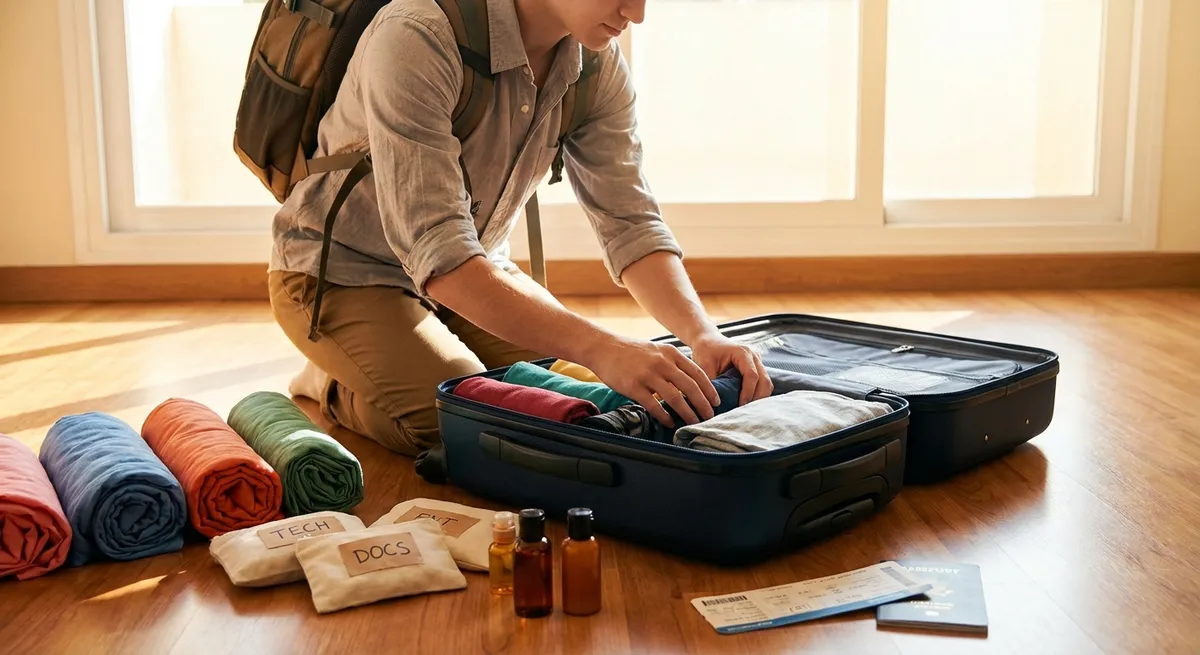
Decide what each space is responsible for: one packing cube or section for tops, one for bottoms, one for underwear and sleepwear. Reserve a dedicated pouch for cords and electronics (chargers, adapters, earbuds, power bank), and another for health and hygiene (medications, bandages, pain reliever, hand sanitizer, tissues). Keep a flat, easily accessible pocket for documents: passport, printed confirmations, and boarding passes where applicable.
The goal is to know, without thinking, where something lives. When you’re jet-lagged or rushing through security, you don’t want to dig through a chaotic jumble to find your headphones or passport. Purposeful compartments also make repacking a breeze—you just put each category back into its zone and zip.
Tip 5: Pack for Security & Comfort, Not Just Aesthetics
Your bag should be easy to navigate during the moments that matter most: airport security, boarding, and your first hour at your destination.
When packing, imagine yourself at the security line. Liquids need to be under the legal limit and placed in a clear, easily removable bag near the top of your carry-on or personal item. Electronics like laptops and tablets should be packed so they can slide out quickly if required. Keep your passport/ID, boarding pass, and payment methods together in one small, secure wallet or travel organizer.
For comfort, place in-flight essentials where you can grab them without fully opening your bag: a lightweight layer, neck pillow or scarf, lip balm, earplugs or noise-cancelling headphones, and a refillable water bottle (empty before security, refill after). Packing for these “transition moments” keeps your journey smoother, faster, and far less stressful than if you only focus on how your suitcase looks when it’s open on the hotel bed.
Conclusion
Smart packing isn’t about complicated hacks—it’s about a few thoughtful systems you can reuse for every trip. A reliable packing template, a “First 24 Hours” kit, outfit-based planning, clear compartment zones, and security-minded organization all work together to protect your time, energy, and sanity on the road.
The more you travel, the more you’ll refine what you really need. Start with these five tips, adjust after each trip, and you’ll quickly find yourself packing lighter, moving faster, and feeling genuinely ready for whatever your travels throw your way.
Sources
- U.S. Transportation Security Administration (TSA) – What Can I Bring? - Official guidance on items allowed in carry-on and checked luggage, including liquid rules.
- U.S. Department of State – Travel Checklist - Government checklist to help ensure you have essential documents and preparations in place.
- Centers for Disease Control and Prevention (CDC) – Traveler’s Health - Advice on medications, health prep, and what to pack to stay healthy while traveling.
- Mayo Clinic – Travel Health Tips - Guidance on packing health essentials and staying well on the road.
- SmarterTravel – Carry-On Packing Strategies - Practical insights into organizing carry-ons and navigating airline rules.
Key Takeaway
The most important thing to remember from this article is that this information can change how you think about Packing Tips.