Travel feels completely different when you’re not dragging half your closet behind you. With a smart packing plan, you move faster, spend less time stressing over your stuff, and more time actually enjoying where you are. This guide is all about helping you pack with confidence—whether it’s your first international trip or your tenth weekend getaway.
Below are five practical, traveler-tested tips that turn packing from “Ugh, where do I start?” into “I’ve got this.”
Build a Simple Outfit Formula (So You Pack Less Without Looking Boring)
Instead of planning individual outfits, plan a formula that you repeat with small variations. This instantly cuts down on overpacking and decision fatigue.
Choose one “base” color (black, navy, or beige usually works best) and build everything around it. That means your bottoms, shoes, and jacket all play nicely together. Then add 2–3 accent colors for tops or accessories so you still feel like yourself in photos.
For example, your formula might be:
- 2 bottoms (one casual, one slightly dressier)
- 4 tops (all matching both bottoms)
- 1 layer (cardigan, light jacket, or overshirt)
- 1 pair of go-with-everything shoes, plus optional sandals or sneakers
With this setup, a 4–7 day trip is covered by items that all mix and match. You get tons of outfit combos without stuffing your bag. The bonus? Getting dressed each morning becomes a 30-second decision instead of a floor covered in clothes.
Create a “Travel Core Kit” You Never Unpack
Think of your travel essentials like a go-bag that lives in your closet, always ready for the next adventure. You assemble it once and then just top it up before each trip.
Your travel core kit might include:
- Travel-sized toiletries that stay in a clear, TSA-ready pouch
- A slim first-aid/health pack (pain relievers, bandages, any meds, motion sickness tablets)
- A small, dedicated tech pouch (charging cables, universal adapter, tiny power strip, SIM tool)
- A reusable, packable tote or lightweight day bag
- Earplugs and an eye mask
By keeping this kit always packed, you eliminate last-minute scrambling and reduce the risk of forgetting something important. Before each trip, you simply:
- Check what needs refilling (toothpaste, sunscreen, etc.)
Toss the kit into your suitcase or backpack
Walk out the door feeling ridiculously prepared
This habit turns packing from “start from zero every time” into “just add clothes and go.”
Use Smart Compression (Without Creating a Wrinkled Brick of Clothes)
Compression is a game-changer—when you do it thoughtfully. The goal is to reduce bulk while still being able to live out of your bag easily once you arrive.
Here’s a simple system:
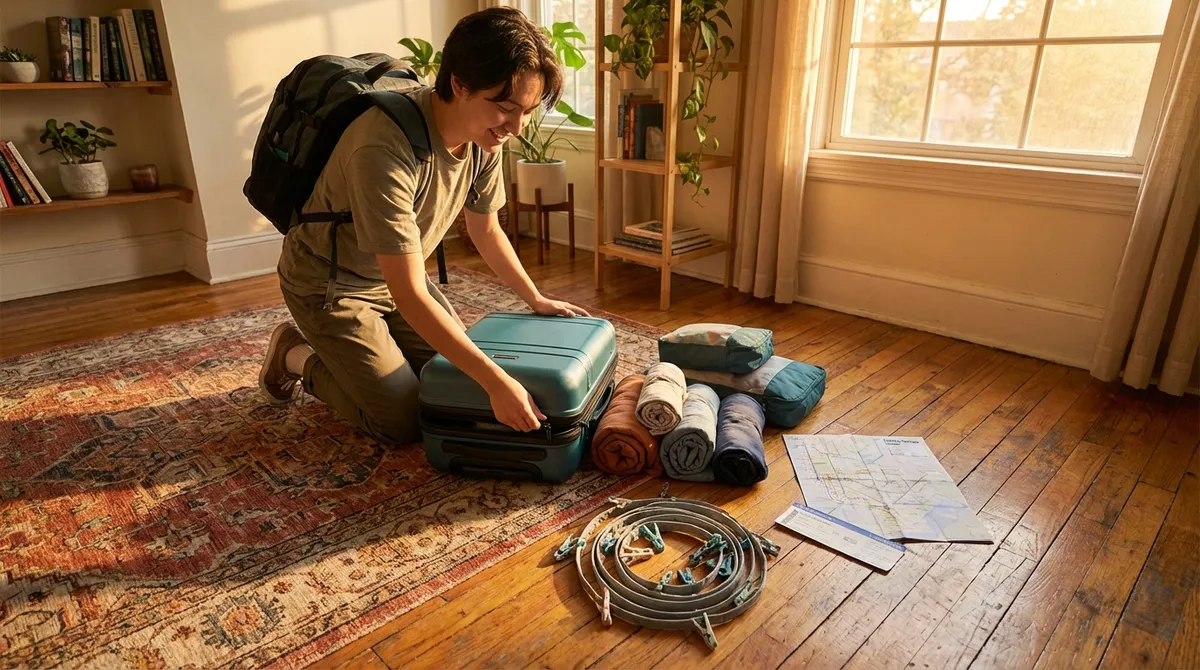
- Packing cubes for organization: Assign one cube for tops, one for bottoms, one for underwear/sleepwear. This keeps your bag tidy and makes unpacking (or “living out of your suitcase”) manageable.
- Compression cubes or bags for bulky items only: Use them for sweaters, puffer jackets, or hoodies—not everything. Over-compressing all your clothes can cause extreme wrinkles and make it harder to find things.
- Roll or flat-pack based on fabric: Roll softer fabrics (t-shirts, leggings) to save space and reduce wrinkles; fold stiffer fabrics (jeans, button-downs) neatly in stacks.
Place the heaviest, densest items closest to the wheels of your suitcase or closest to your back in a backpack. This makes your luggage easier to maneuver and carry, especially when you’re racing through transit or up apartment staircases.
Treat Your Personal Item Like a Mini Survival Kit
Your “personal item” (backpack, tote, or under-seat bag) is your in-flight lifeline and your safety net if your main bag gets delayed. Pack it like it needs to get you through 24 hours comfortably.
Make sure it includes:
- A complete change of clothes (lightweight and versatile)
- Essential toiletries in travel size (toothbrush, mini toothpaste, facial wipes, deodorant)
- Any medications and valuables (passport, wallet, tech, jewelry)
- A compact power bank and charging cables
- Snacks that travel well (nuts, granola bars, crackers)
- A scarf or light layer that doubles as a blanket
Keep this bag organized with a couple of small pouches so you’re not digging for your lip balm or charger mid-flight. When you pack your personal item intentionally, delays, missed connections, and lost luggage become inconveniences—not full-blown crises.
Pack With Security & Checkpoints in Mind
One of the easiest ways to make your travel day smoother is to pack as if you’re already at airport security. A few small tweaks can shave minutes off your time in line and lower your stress.
Use this approach:
- Keep your liquids in a single clear, quart-size bag at the top or in an outer pocket for quick removal.
- Put electronics (laptop, tablet, large camera) near the top of your bag if they need to come out, or use a “TSA-friendly” laptop sleeve compartment.
- Wear slip-on shoes or shoes with simple closures, and avoid excessive metal jewelry or belts on travel day.
- Store your passport and boarding pass (or phone with your digital pass) in an easily reachable yet secure pocket—no fumbling at every checkpoint.
This style of “checkpoint-aware” packing really adds up over a lifetime of trips. Instead of being the person unpacking half their bag in the security tray, you’re through in a few quick motions, ready to grab a coffee on the other side.
Conclusion
Packing well isn’t about having the “perfect” suitcase or a closet full of travel-specific gear. It’s about making a few smart decisions before you zip your bag: a simple outfit formula, a ready-to-go core kit, thoughtful compression, a strategic personal item, and security-friendly organization.
With these five tips, your luggage becomes a tool—not a burden. You move faster, feel calmer, and step into each trip already in that “I’ve got this” mindset that makes travel so much more fun.
Sources
- Transportation Security Administration (TSA) – What Can I Bring? – Official guidelines on liquids, electronics, and other items to streamline packing for airport security
- U.S. Department of State – Travel Checklist – Government-backed pre-trip planning and documentation tips that inform what you should keep in your personal item
- Mayo Clinic – Jet lag disorder – Background on jet lag and why strategic packing of comfort items (layers, sleep mask, etc.) can make long flights easier
- Harvard Health Publishing – The importance of sleep and travel – Explains how sleep affects health, reinforcing the value of packing items that support rest while traveling
- Consumer Reports – How to Choose the Right Luggage – Independent guidance on luggage types and features that pair well with smart packing strategies
Key Takeaway
The most important thing to remember from this article is that this information can change how you think about Packing Tips.