Packing doesn’t have to be a chaotic, night-before scramble or a game of suitcase Tetris. With the right strategy, you can walk into any trip knowing exactly what to bring, what to skip, and how to fit it all into a carry-on without feeling like you left half your life at home. This guide gives you five practical, traveler-tested tips that will help you pack with confidence, stay organized on the road, and actually enjoy the process.
Start With a “Non‑Negotiables First” Layout
Instead of pulling everything you might want, begin with what you absolutely need. This flips the usual packing mindset and instantly cuts clutter.
Lay everything out on a bed or table in four zones: essentials, clothing, tech, and “nice-to-haves.” Put your non-negotiables in place first—passport or ID, cards and cash, medications, chargers, and any must-have documents. Then add core clothing pieces appropriate for your destination’s weather and culture. Only after those are set should you consider extras like accessories, backup shoes, or travel “gadgets.”
This approach keeps your suitcase focused on function instead of fear-based “just in case” items. If space starts getting tight, you can clearly see which “nice-to-haves” are actually expendable. It also makes last-minute double-checking easier: you can scan your zones to confirm you’ve got all the essentials before you zip up and head out.
Build Outfits, Not Items
Most travelers overpack because they think in single items—“one more shirt, just in case”—instead of complete outfits. Shift your planning from “What else should I bring?” to “How many complete outfits do I realistically need?”
Choose a simple color palette that mixes and matches easily: one dark neutral (like black or navy), one light neutral (like beige, gray, or white), and one accent color. Then build outfits around versatile pieces that can be dressed up or down: a plain tee that layers under a blazer, pants that work with sneakers and flats, or a dress that works for both day sightseeing and dinner.
Lay outfits out by day or activity (travel days, city exploring, beach, hiking, dinners). As you do this, you’ll quickly see duplicate items and can remove them. Aim for repeatable items (like a single pair of comfortable walking shoes) and let accessories—scarves, jewelry, or a belt—do the styling work instead of packing multiple bulky clothing options.
Make Every Item Do Double (or Triple) Duty
Multi-use items are the secret to packing light without feeling like you’re sacrificing comfort. As you choose what goes into your bag, ask, “Can this do at least two jobs?” If the answer is no, see if there’s a smarter alternative.
A large scarf or light wrap can be a plane blanket, makeshift pillow, temple cover, or beach sarong. A compact, packable tote can serve as a grocery bag, beach bag, or extra daypack. A lightweight rain jacket with a hood might replace both an umbrella and an extra layer. Even toiletry choices can multitask: a solid all-in-one soap bar that works for body, hands, and laundry in a pinch; a tinted moisturizer that replaces foundation and sunscreen (as long as it has broad-spectrum SPF).
This multi-use mindset is especially helpful for shoes and outerwear, the bulkiest items in your bag. If one pair of neutral, supportive shoes can work for city walking and casual dinners, that often means you can leave a second or third pair at home—and free up a surprising amount of space and weight.
Pack With a Road-Ready Organization System
How you pack matters almost as much as what you pack. A simple, repeatable system keeps you from rummaging through your suitcase every morning and turning it into chaos by day two of your trip.
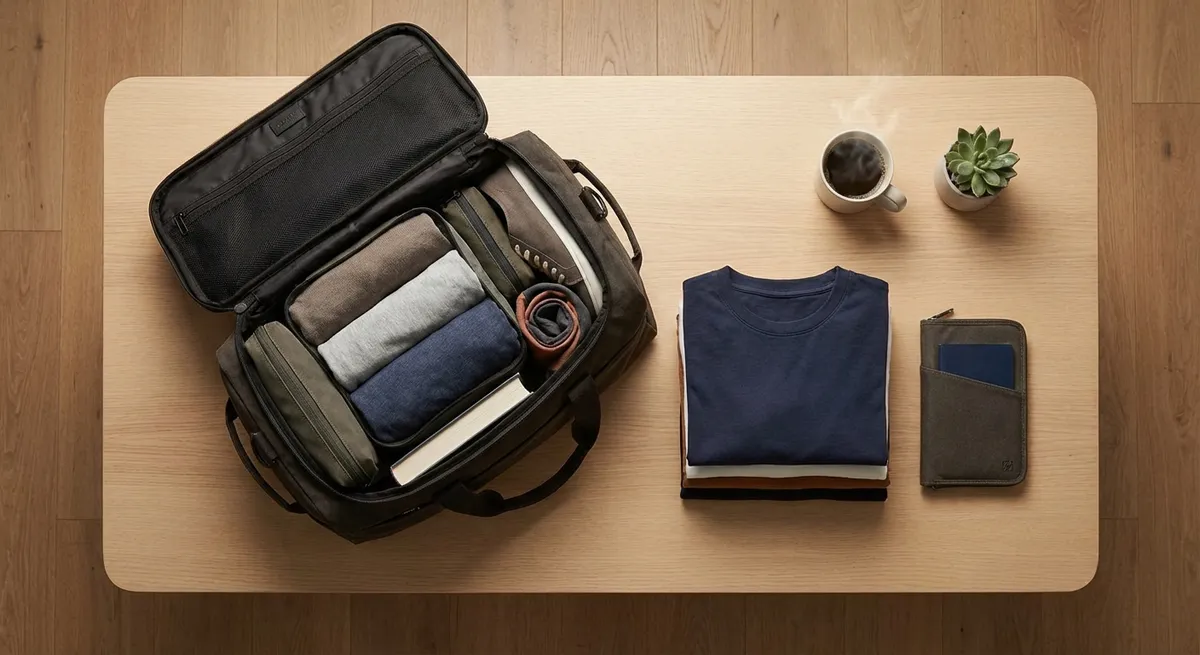
Use packing cubes or lightweight fabric pouches to divide your bag into clear categories: tops, bottoms, undergarments and sleepwear, and “extras” like swimwear or workout clothes. Dedicate one small cube or pouch to a “first-night kit”—pajamas, toothbrush, basic skincare, and medication—so you can grab it immediately after arrival without digging through everything.
For tech and small essentials, a zipper pouch or small organizer for chargers, adapters, cables, and earphones keeps cords from tangling and makes airport security smoother. Keep liquids in a transparent, TSA-compliant bag you can quickly remove. Always place anything you need in transit (snacks, a hoodie, headphones, a pen, hand sanitizer) in your personal item, not your main suitcase, so you’re not fighting overhead bins mid-flight.
The goal is simple: you should be able to find any item in under 10 seconds. When everything has a defined “home,” packing back up between hotel moves becomes quick and stress-free.
Plan for Laundry Instead of Overpacking
One of the most effective, overlooked packing tricks is planning to do a small amount of laundry instead of packing a completely fresh outfit for every single day. Even one quick wash mid-trip can cut your clothing load dramatically.
Before your trip, check whether your accommodation offers laundry service, has machines on-site, or if there are laundromats or wash-and-fold services nearby. In many cities, you can drop laundry off in the morning and pick it up clean and folded by evening. For shorter or more minimalist trips, a tiny “sink laundry” kit—travel-size detergent or laundry sheets and a universal sink stopper—lets you wash socks, underwear, and a few tops in your room.
Choose quick-drying fabrics like synthetics or blends that will air-dry overnight. Hang them in the bathroom or near a window and rotate outfits so you’re not waiting on one key item. When you plan for laundry from the start, you aren’t caught off-guard by limited clothing options—and you avoid the heavy, overstuffed suitcase that comes with packing a separate outfit for every day.
Conclusion
Packing confidently isn’t about being hyper-minimalist or buying a bunch of new gear—it’s about making smarter decisions before anything goes in your suitcase. When you start with non-negotiables, plan actual outfits, lean on multi-use items, organize with intention, and factor in laundry, your bag gets lighter while your options on the road actually feel bigger. The payoff is real: easier airport days, faster hotel check-ins, less decision fatigue in the morning, and more energy left for the part you actually care about—enjoying the trip. With a clear system, every journey can start with that carry-on confidence feeling.
Sources
- U.S. Department of State – Travel (Documents & Preparation) - Guidance on essential documents and pre-trip preparation
- Transportation Security Administration (TSA) – What Can I Bring? - Official rules for carry-on items, liquids, and screening
- Mayo Clinic – Travel and Your Health - Advice on medications and health-related essentials to pack
- Harvard Health Publishing – Sun Protection and SPF Basics - Information useful for choosing multi-use skincare and sunscreen products
- Rick Steves Europe – Packing Light Tips - Practical strategies for light packing and organizing luggage
Key Takeaway
The most important thing to remember from this article is that this information can change how you think about Packing Tips.