Packing doesn’t have to feel like a puzzle you’re always solving at the last minute. With a few smart habits and a clear strategy, you can turn your suitcase into a calm, organized command center—whether you’re flying across the world or heading away for a long weekend. This guide focuses on five practical, real-world tips that will make packing faster, lighter, and way less stressful, so you can focus on the fun part: actually traveling.
Build a Reusable “Core Kit” You Never Unpack
One of the biggest packing time-wasters is starting from zero every single trip. Instead, create a dedicated “core kit” that lives in your suitcase or carry-on so you’re always halfway packed.
Stock a small pouch or dopp kit with travel-sized essentials you only use on the road: toothbrush and cover, mini toothpaste, deodorant, solid or refillable toiletries, basic makeup, razor, small comb or brush, lip balm, and a tiny first-aid kit (bandages, pain reliever, a few meds you commonly use). Add a spare phone charging cable, a universal adapter, and a copy of your key travel documents (stored digitally and printed).
The key is this: when you get home, restock and refresh that kit immediately before you put your luggage away. That way, your next trip starts with the essentials already packed. Over time, you’ll fine-tune what stays in this kit so it matches your personal travel style perfectly.
Choose a Simple Color Palette to Unlock More Outfits
Instead of stuffing your bag with “options,” build a mini wardrobe that actually works together. A simple color palette is the easiest way to get more outfits from fewer items.
Pick one dark neutral (like black, navy, or charcoal), one light neutral (white, beige, or light gray), and one accent color you love. Every clothing item you pack should fit within that scheme. This means your tops and bottoms will naturally mix and match, so four pieces can easily create multiple outfits.
Opt for layers instead of bulky single-purpose items: a lightweight sweater instead of a heavy hoodie, a packable jacket instead of two different coats. Prioritize fabrics that resist wrinkles and dry quickly—ideal if you need to handwash something in a hotel sink and wear it again the next day. With a smart palette and good fabrics, your bag feels lighter, and your outfits feel more intentional.
Pack by “Activity Blocks,” Not by Days
Instead of thinking “I need one outfit per day,” think “I need clothes for what I’ll actually be doing.” This mindset alone can cut your packing in half.
Break your trip into activity blocks: travel days, city exploring, hiking or outdoor time, evenings out, beach/pool time, or business meetings. Then decide what’s the minimum set of clothes that can cover each block if you re-wear and mix pieces. For example, one pair of versatile pants might work for both a daytime walking tour and a casual dinner, just by changing your top and shoes.
This approach keeps you focused on function rather than “just in case” items. You’ll pack outfits that earn their space in your bag and skip the guilt-inducing pieces that come home untouched. As a bonus, it’s easier to do a quick mental double-check right before you zip up: “Do I have something for flights? For walking? For dinner? For sleep?” If each block is covered, you’re genuinely ready.
Use a Layered Packing System Inside Your Bag
The inside of your suitcase should feel like an organized drawer, not a laundry basket. A simple layered system makes it easier to find what you need without exploding your whole bag on the hotel floor.
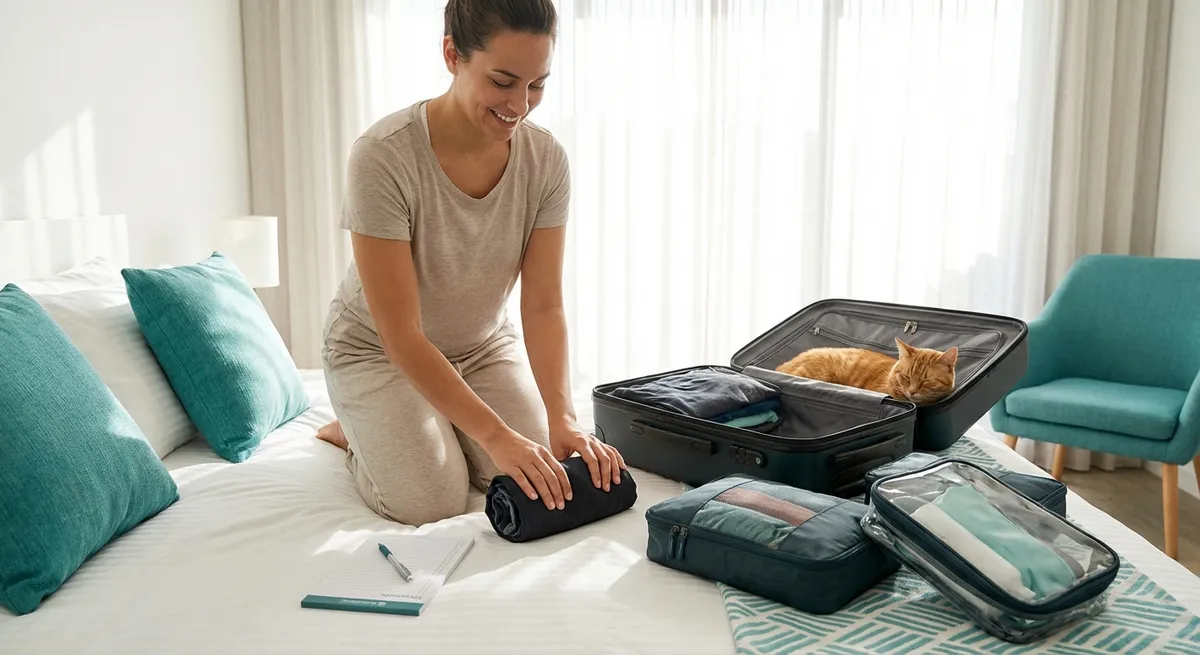
Start with heavier items—shoes, toiletry bag, and any gear—toward the bottom near the wheels (for rolling suitcases), so the weight is evenly distributed. Use packing cubes or lightweight organizers to group clothes by type or by outfit (e.g., tops in one cube, bottoms in another, underwear and sleepwear in a smaller one). Roll softer items to reduce wrinkles and save space, and lay more structured pieces flat.
Designate a quick-access zone near the top or in an outer pocket for items you might need in transit: a thin sweater, snacks, headphones, a pen, and your liquids bag if flying. When everything has a “home,” repacking between hotels becomes a 5-minute task instead of a frustrating scavenger hunt.
Create a Tiny “In-Transit Survival Kit” for Every Journey
No matter how well you pack your main bag, your experience during the actual travel hours can make or break the first day of your trip. A compact in-transit kit keeps you comfortable, hydrated, and functional even if flights are delayed or you’re stuck on a long bus ride.
Use a small pouch or zippered case and include: a refillable water bottle (empty for airport security), healthy snacks (nuts, granola bar, dried fruit), earplugs, an eye mask or light scarf, hand sanitizer or wipes, a few tissues, lip balm, and a small pack of gum or mints. Add any must-have personal medications and a pair of socks if you tend to get cold.
Keep this kit in your personal item or the top of your carry-on so it’s always within reach. When travel days are smoother and more comfortable, you arrive fresher and less frazzled—which makes everything else about your trip feel better from the very first hour.
Conclusion
Smart packing isn’t about memorizing a giant checklist—it’s about setting up systems that remove stress and guesswork. A ready-to-go core kit, a simple color palette, activity-based planning, a layered suitcase setup, and a thoughtful in-transit kit can turn even last-minute packing into a calm, confident routine. Use these five tips as your new baseline, then adjust and personalize them with every trip. Over time, you won’t just pack faster—you’ll travel lighter, more comfortably, and with a lot more headspace for the adventures that actually matter.
Sources
- U.S. Department of Transportation: Traveling with Carry-On Bags - Official guidance on carry-on rules and size considerations
- Transportation Security Administration (TSA): What Can I Bring? - Up-to-date rules on liquids, medications, and other items in hand luggage
- Mayo Clinic: Jet lag disorder - Explains how to manage comfort and health on long travel days
- Harvard Health Publishing: Travel and your health - General guidance on staying healthy and prepared while traveling
- CDC Travelers’ Health - Advice on medications, health kits, and preparation for international trips
Key Takeaway
The most important thing to remember from this article is that this information can change how you think about Packing Tips.