Packing isn’t just about what fits in your bag—it’s about how easily you can live out of it. When your carry-on is organized like a “basecamp,” everything you need is within reach, stress drops, and your trip instantly feels smoother. Let’s turn that bag into a command center you actually enjoy using.
Build a “Day-Use Layer” at the Top of Your Bag
Think of the top of your carry-on as your instant access zone—the things you’ll want in the next 12–24 hours should live here, not buried at the bottom.
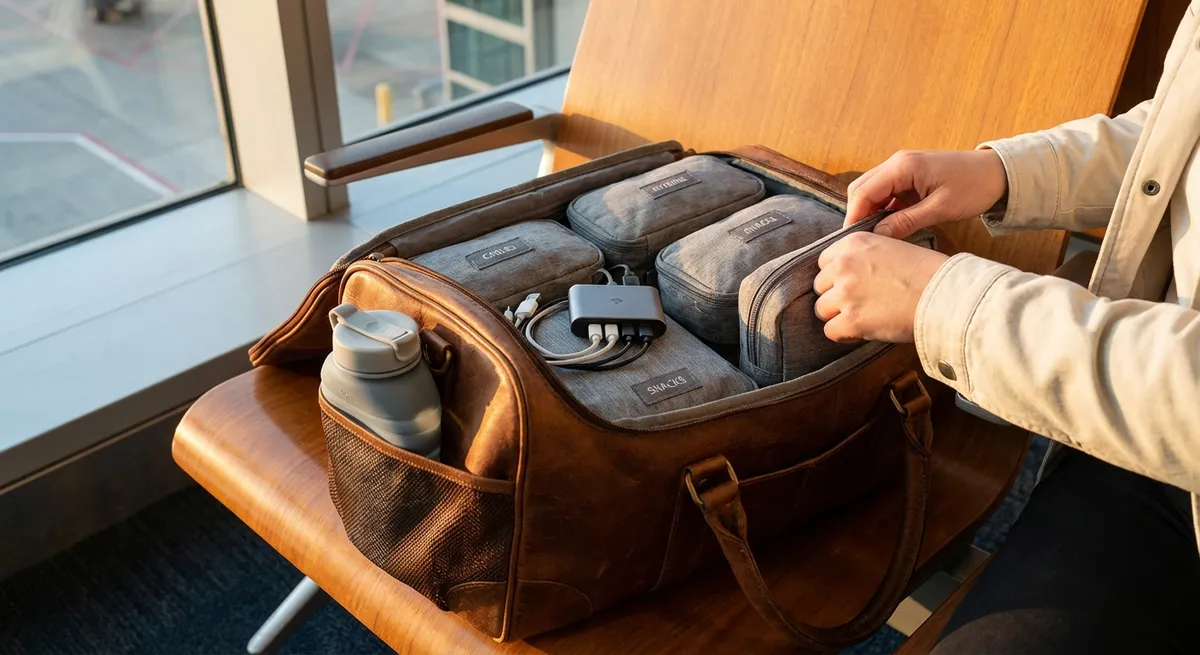
Keep this layer slim but strategic. Items to stage on top might include: a light layer (hoodie or scarf), a compact toiletry pouch with toothbrush and face wipes, a change of underwear, meds, and a small “comfort kit” (lip balm, hand cream, earplugs, sleep mask). Add a zip bag for essentials you’ll pull out at security (liquids, electronics).
This setup pays off when flights are delayed, luggage space is tight, or you end up separated from checked bags. You can freshen up, change a layer, or grab what you need without fully unpacking in an airport seat. Treat the top of your bag like your “travel glove compartment”—quick access, zero digging.
Use Packing Cubes as “Rooms,” Not Just Storage
Packing cubes are more powerful when you stop treating them like random containers and start treating them like rooms in a small apartment.
Assign each cube a clear purpose: a “sleep cube” (pajamas, sleepwear, cozy socks), a “daywear cube” (shirts and bottoms that mix and match), and an “activity cube” (workout clothes, swimwear, or specialty gear). Label them or use different colors so you can grab the right “room” without guessing.
This is especially helpful if you’re hotel-hopping or staying with friends. Instead of exploding your entire suitcase to find pajamas, you pull out one cube. It keeps shared spaces tidy, speeds up getting ready, and makes repacking almost automatic—each “room” just goes back where it came from.
Pre-Pack a Refillable “Essentials Kit” You Never Fully Unpack
Create one small pouch that basically lives in your travel bag year-round. The goal: you’re always 80% packed for your next trip before you even book it.
Fill it with duplicates or travel-sized versions of things you hate forgetting: a universal adapter, charging cable and plug, compact power strip, spare headphones, tiny first-aid basics (bandages, pain reliever, antihistamines), stain wipes, nail clippers, and a couple of backup meds you commonly use (following storage and label rules). Include a tiny pen and a few folded sticky notes or a small notepad—shockingly useful for forms, quick directions, or leaving details at a hotel desk.
After each trip, restock anything you used (painkillers, bandaids, wipes) and put the kit straight back into your carry-on instead of a drawer. Over time, this kit becomes your personal travel “toolbox,” cutting down on pre-trip errands, last-minute stress, and forgotten chargers.
Design One Go-To “Travel Uniform” You Can Repeat
Instead of reinventing your outfit every travel day, design a simple, comfortable “travel uniform” and stick to it. This saves decision fatigue and makes packing more predictable.
Choose breathable, wrinkle-resistant layers: soft pants or jeans with stretch, a neutral top, a light cardigan or hoodie, and a scarf or shawl that can double as a blanket. Wear your bulkiest shoes (usually sneakers or boots) on the plane, and pack the lighter pair. Stick to a simple color palette so everything in your bag mixes and matches.
By standardizing your travel outfit, you automatically know how much space your clothes will take, where to stash your ID and phone, and how warm you’ll feel in airports and planes. You can still switch things up with accessories, but the core stays the same—one less thing to worry about when you have an early flight.
Pack for “Functions,” Not Just Days
Instead of packing “five outfits for five days,” pack by functions you know you’ll need: sleeping, walking a lot, one nicer dinner, maybe swimming, maybe workout. This shift helps you avoid overpacking single-use items that never leave your suitcase.
Make a quick list: “Sleep, walk, warm layer, 1 dressy option, rain plan, lounge.” Then choose items that can handle more than one role. For example, a merino wool sweater can be a plane layer, evening layer, and chilly-morning top. Lightweight joggers might work for sightseeing, flights, and lounging in your hotel.
By focusing on what you’ll actually do rather than how many calendar days you’ll be gone, you build a smaller, more flexible wardrobe. Your bag stays lighter, but you still feel prepared for the trip you’re actually taking—not the imaginary one in your head.
Conclusion
When you treat your carry-on like a command center instead of a chaotic cube of clothes, travel days start to feel calmer and more in your control. A smart top layer, “room-based” packing cubes, a permanent essentials kit, a repeatable travel uniform, and function-based packing all work together to make your bag do more with less.
The next time you pack, try implementing just one of these ideas. Then layer on another for your next trip. Before long, your suitcase won’t just be packed—it’ll be ready.
Sources
- Transportation Security Administration (TSA) – What Can I Bring? - Official guidance on what’s allowed in carry-on and checked bags, including liquids and medications
- U.S. Department of State – Travel Preparation Tips - Government recommendations on documents, medications, and essentials to prepare before international trips
- CDC – Travelers’ Health: Pack Smart - Health-focused packing advice including travel health kits, medications, and hygiene items
- Mayo Clinic – Jet Lag: Self-Care - Information on staying comfortable and managing sleep, which informs comfort-focused packing choices
- REI Co-op – Travel Packing Tips - Practical guidance on packing systems, cubes, and layering strategies for travelers
Key Takeaway
The most important thing to remember from this article is that this information can change how you think about Packing Tips.