Packing isn’t just about what fits in your suitcase—it’s about how easily your bag works with you from the moment you lock your front door to the second you crash in your hotel bed. When your carry-on is dialed in, you move faster, feel calmer, and have more energy for actual fun instead of digging through zippers and pockets.
This guide walks you through five practical, traveler-tested packing moves that turn a regular bag into a reliable travel “system” you can use for almost any trip.
Design Your Bag in “Zones,” Not Piles
Instead of throwing items in your suitcase by category (all shirts here, all socks there), think in zones based on when and how you’ll need things.
Create a top-access zone (or outer pocket) for anything you’ll reach for frequently: passport, phone, boarding pass, headphones, lip balm, pen, and a small snack. This keeps you from opening your whole suitcase in lines or cramped airplane aisles.
Build a “settle-in” zone with what you need for the first hour after arrival: pajamas, toiletries, charger, and a fresh T-shirt. Pack this close to the zipper so you can get ready for bed without fully unpacking when you’re tired.
Use a “rarely used” zone deep in your bag for backups: extra shoes, spare outfit, extra medicine, or accessories you don’t need en route. Keeping these out of the way reduces rummaging.
Thinking in zones turns your suitcase into a predictable layout you can reuse trip after trip—you’ll know where everything lives without even looking.
Use One Compression Tool Strategically, Not Everywhere
Compression cubes and bags are game changers—but overusing them can work against you. If you compress everything, your bag becomes a dense brick that’s hard to manage, and wrinkle-prone clothes can come out worse.
Choose one category to compress aggressively: usually bulkier items like sweaters, hoodies, jeans, or puffer jackets. Place this compressed bundle at the bottom or “back” of your suitcase to create a firm base.
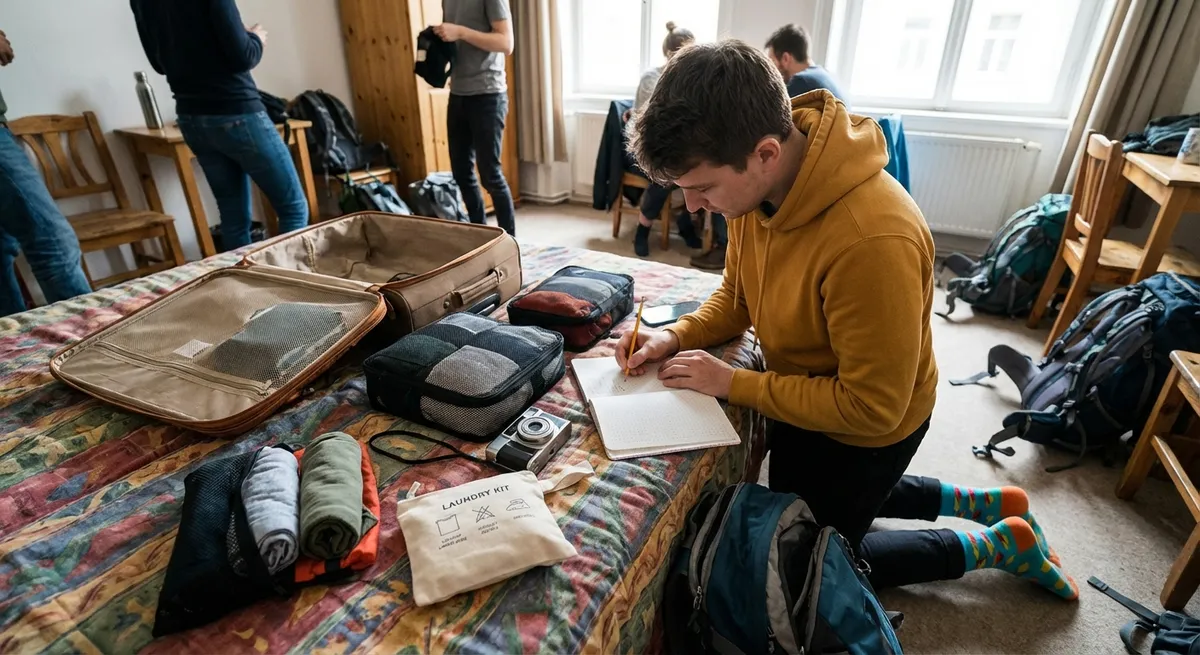
For everyday clothes like T-shirts, underwear, or dresses, use light packing cubes instead of heavy compression. They keep things organized without turning your bag into a solid block.
This combo approach gives you the space-saving benefits where it matters most while keeping your bag flexible and easier to repack during the trip. It also keeps your most-worn clothes more accessible so you’re not unpacking your entire suitcase every time you change.
Build a “Travel Core Kit” You Never Unpack at Home
Standard packing checklists are useful, but the move that really saves time (and mental energy) is creating a permanent travel kit that lives in your luggage between trips.
Use a small pouch or Dopp kit and stock it with travel-only items: a dedicated toothbrush, small toothpaste, razor, solid bar soap or shampoo, tiny deodorant, nail clippers, travel-sized medications, and a spare set of earplugs. Add a compact charging setup: a universal adapter, a small power strip or multi-port USB charger, and one or two high-quality cables.
The rule: you never borrow from this kit for everyday life. When a product runs low, refill it, then put it straight back in your suitcase. That way, when it’s time to pack, you’re grabbing one ready-to-go kit, not assembling tiny items from around your house.
This habit slashes “night-before” stress, reduces the chance of forgetting essentials, and makes last-minute or spontaneous trips far easier to pull off.
Pack a Micro “Contingency Outfit” in Your Personal Item
Lost luggage, surprise spills, sudden weather shifts—none of that feels quite as stressful if you’ve got a small backup outfit at arm’s reach.
Slip a full change of clothes into a thin packing cube or gallon bag and keep it in your under-seat personal item: underwear, socks, a lightweight shirt, and either leggings/soft pants or quick-dry shorts. Add a compact toothbrush, travel-size toothpaste, and facial wipes or a tiny cleanser.
This isn’t about a second wardrobe—just a reset button if your checked bag goes missing, your coffee ends up on your shirt mid-flight, or your layover becomes an unplanned overnight. Aim for quick-drying, neutral pieces that can mix with anything else you packed.
You’ll feel instantly more relaxed knowing that no matter what happens, you can get clean, comfortable, and presentable without waiting on your suitcase.
Treat Cords, Docs, and Liquids as “High-Risk Items”
The things most likely to create chaos at security or on the plane aren’t your clothes—they’re cords, documents, and liquids. Handle these as a special category, not just “little extras.”
For cords and tech, use a slim organizer or zipper pouch. Coil each cable separately and group: phone charger, laptop charger, headphones, and any special cables. Keep this in an easy-access section of your bag so you’re not fishing around under pressure when your battery hits 10%.
For documents, even if most of your travel is digital, keep a small, flat folder with: your passport, printed or downloaded copies of reservations, any visa/entry paperwork, and emergency contacts. Put it in a safe but reachable pocket (not in the seat-back pocket where it can be forgotten).
For liquids, pre-pack a clear, compliant bag and keep it at the top of your suitcase or in an outer pocket. That way, if you need to remove it at security, you can do it in one motion without unpacking layers.
By treating these small items as “high risk” for delays or stress, you prevent the most common bottlenecks and keep your travel day flowing smoothly.
Conclusion
A smartly packed bag isn’t about fancy gear—it’s about choices that reduce friction at every stage of your trip. When your luggage is zoned, your bulky items are tamed, your core kit is always ready, your contingency outfit is close, and your small “problem items” are under control, you move like someone who travels all the time—even if you don’t.
Use these five strategies as a base, tweak them to match your style and destinations, and you’ll quickly build a packing system that feels like it was custom-designed for the way you travel.
Sources
- Transportation Security Administration (TSA) – What Can I Bring? - Official guidance on what’s allowed in carry-on and checked bags, plus liquid rules and special items.
- U.S. Department of State – Travel Documents - Overview of passport requirements, renewals, and essential travel documentation.
- Mayo Clinic – Travel and Your Health - Practical advice on travel health, including medications and what to consider when packing health-related items.
- CDC – Travelers’ Health - Up-to-date health recommendations and destination-specific guidance that can influence what you pack.
- AAA – Luggage and Packing Tips - General packing and luggage advice from a major travel organization.
Key Takeaway
The most important thing to remember from this article is that this information can change how you think about Packing Tips.