Packing isn’t just about what fits in your suitcase—it’s about setting yourself up for a smoother, more confident trip. Instead of tossing random “just in case” items into your bag at midnight, you can use a simple plan that keeps your luggage light, your outfits flexible, and your essentials exactly where you need them. This guide focuses on five practical, real-world packing moves that travelers actually use—and actually keep using once they try them.
Map Your Days, Then Match Your Bag
Before you even touch your suitcase, plan your trip in broad strokes: not every minute, just the shape of your days. Are you walking 20,000 steps exploring a city? Splitting time between museums and restaurants? Hiking during the day and grabbing casual dinners at night? That “day shape” determines what earns a spot in your bag.
Write a quick outline: Day 1–2 (city exploring), Day 3 (day trip), Day 4 (travel day), etc. Then choose outfits and shoes that comfortably fit those scenarios instead of packing vague extras “just in case.” You’ll instantly spot overpacking traps like three fancy outfits for one potential nice dinner or four pairs of jeans for a beach trip. Use this map to double-check your choices: does every item have a job? If not, it probably doesn’t need to come. This simple step keeps your packing focused on reality, not anxiety.
Build a “Core Layer” System Instead of Single-Use Outfits
Instead of packing complete outfits that only work one way, think in layers and “cores” that can adapt to different temperatures and settings. Your core might be: breathable base layers (T-shirts or tanks), one lightweight long-sleeve, a mid-layer (like a thin sweater or fleece), and a packable outer layer (like a rain shell or light jacket). These can combine in multiple ways to handle everything from chilly airplane cabins to breezy evenings.
Choose fabrics that are comfortable, easy to wash, and quick-drying—like merino wool, performance synthetics, or cotton blends. A neutral color palette makes it easier to mix and match without thinking. Add one or two “personality” pieces (a patterned shirt, bright scarf, or fun dress) so you don’t feel like you’re wearing the same thing every day in photos. With a core system, you’re not guessing at the weather; you’re prepared to layer up or down without needing five different jackets.
Give Every Cable and Tiny Item a Dedicated Home
The fastest way to feel chaotic on a trip is digging through your bag for a charger, lip balm, or adapter while your phone hits 3%. The fix: assign a permanent, obvious spot to every small essential before you leave. Think of it like giving each item its own “apartment” in your bag.
Use a small tech pouch for cables, chargers, earbuds, and adapters, and always return them there—on the plane, in the hotel, at a café. Keep an easy-access pocket (like an outer backpack pocket) for reach-right-now items: hand sanitizer, tissues, lip balm, a pen, and a tiny pack of meds you might need in transit. Toiletries go in a clear, leak-proof bag that can move from suitcase to bathroom without rearranging everything. When everything has a home, you don’t just save packing space—you save mental energy every single day of your trip.
Pre-Pack a Mini “Arrival Kit” for the First 12 Hours
Think about how you usually feel when you land: a little tired, maybe dehydrated, possibly arriving late or in dim light. That’s not when you want to be rummaging for pajamas, toiletries, or a clean shirt buried at the bottom of your suitcase. Instead, pre-pack a small arrival kit that covers your first 12 hours on the ground.
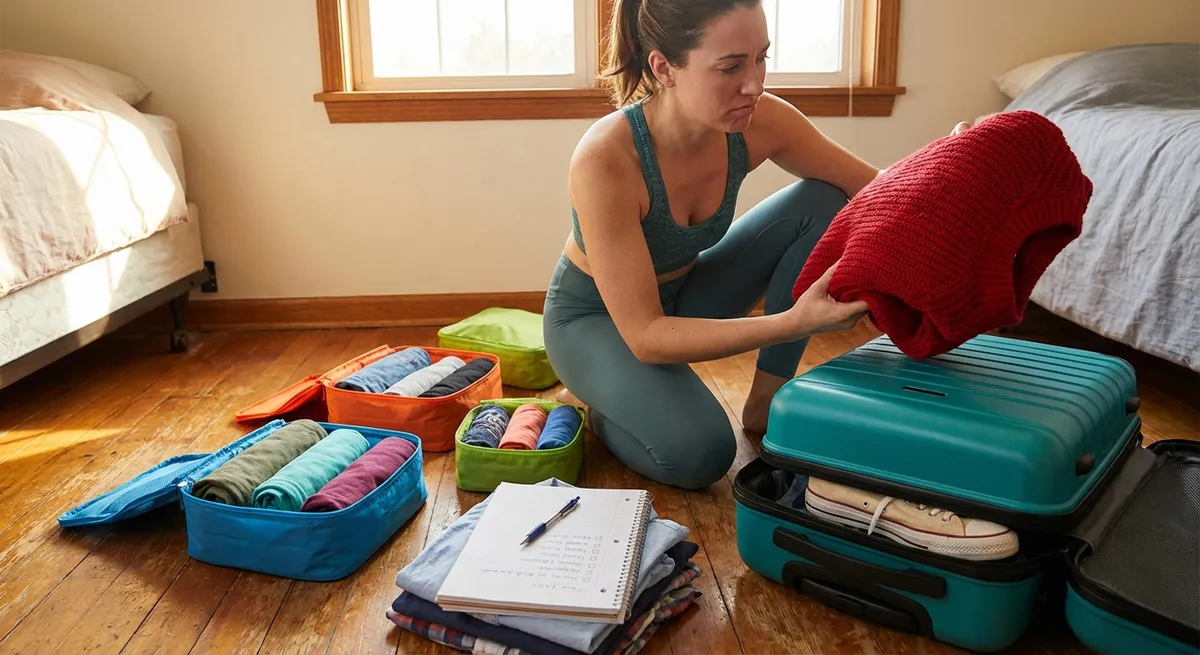
This kit might include a change of underwear, fresh socks, a lightweight T-shirt, basic toiletries (toothbrush, travel-size toothpaste, face wipes, mini moisturizer), and any must-have nighttime items (like lenses case, medications, or a simple sleep mask). Put this in a small packing cube or pouch near the top of your main bag or in your personal item. If your checked bag is delayed, you’re still comfortable. If you’re too tired to fully unpack at your accommodation, you still get a hot shower, clean clothes, and a reset without tearing your luggage apart.
Create a Reusable “Grab-and-Go” Packing Checklist
The most underrated packing tool isn’t a new gadget—it’s a reliable checklist you actually use every trip. Instead of starting from scratch (and risking forgetting something crucial like a charger or swimsuit), create a master list once and then lightly tailor it for each journey.
Break it into categories: Documents & Money (passport, ID, cards, local currency), Tech (phone, chargers, adapters, headphones), Clothing (core layers, underwear, sleepwear, weather-specific items), Toiletries & Health (prescription meds, basic first aid, hygiene items), and Trip-Specific Gear (swimsuit, hiking gear, formal wear, baby items, etc.). Save it in your notes app or as a printable template. Each time you travel, update it based on what you didn’t use or what you wished you’d brought. Over time, your checklist becomes a personal packing blueprint tuned specifically to your style of travel.
Conclusion
Packing doesn’t have to be a last-minute scramble or a game of suitcase Tetris. When you start with your actual travel days in mind, build flexible layers, give small items clear “homes,” prep your first-12-hours kit, and rely on a repeatable checklist, your bag shifts from cluttered container to reliable travel tool. The goal isn’t to pack the least—it’s to pack with intention so you have what you need, know where it is, and can spend your energy on the trip itself, not your luggage. The next time you’re getting ready to go, try just one of these strategies; you might find it quickly becomes part of your routine for every adventure that follows.
Sources
- Transportation Security Administration (TSA) – Travel Tips - Official guidance on packing and organizing items for airport security, including liquids and electronics
- U.S. Department of State – Before You Go - Key pre-trip prep info, including documents and safety considerations that inform what to pack
- Mayo Clinic – Travel and Health - Advice on medications, health-related items, and comfort strategies to consider when packing
- REI Co-op – How to Pack a Suitcase - Practical tips on layering, packing systems, and using organizers effectively
- Harvard Health Publishing – Travel Health Tips - Guidance on staying healthy in transit and on the road, helpful for planning a smart health and toiletry kit
Key Takeaway
The most important thing to remember from this article is that this information can change how you think about Packing Tips.