Packing doesn’t have to mean sitting on your suitcase, praying the zipper holds. With a little strategy, you can pack lighter, stay organized, and still feel like you have options every single day of your trip. This guide walks you through five practical, zero-fluff tips that help you build a bag that’s flexible, travel-ready, and stress-free—no packing cubes obsession required (unless you’re into that).
Start with a “Trip Uniform” Instead of Single Outfits
Most people pack by planning daily outfits. Smart travelers pack by building a flexible “trip uniform.”
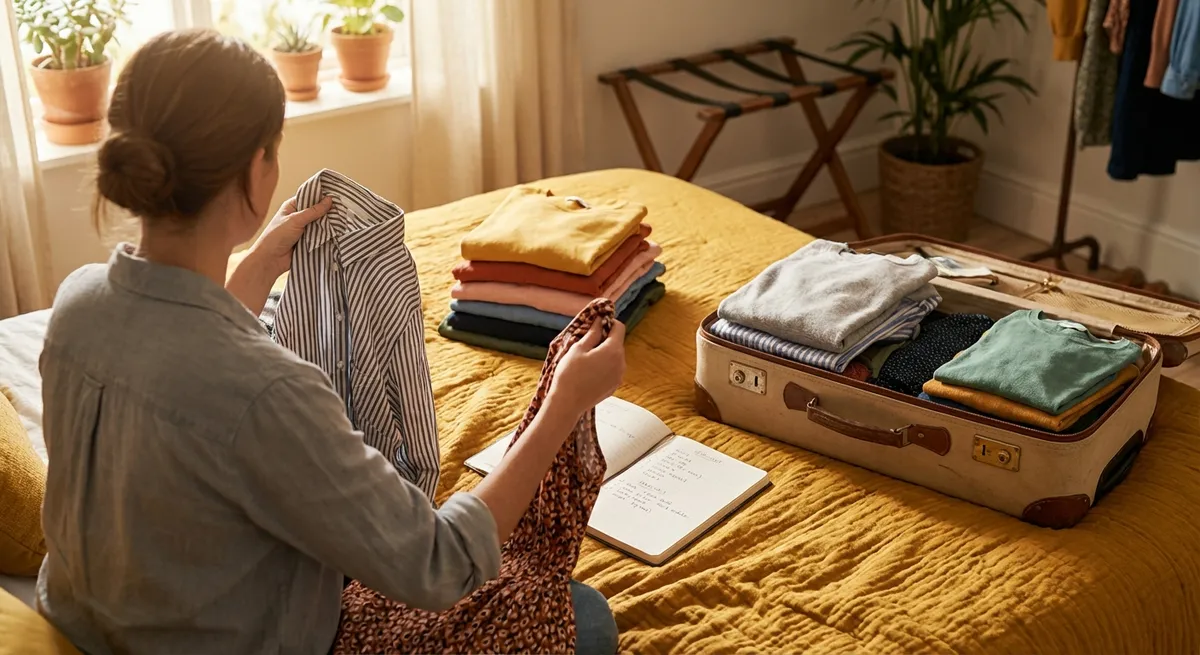
A trip uniform is a small set of mix-and-match pieces that work together in almost any combo. Think: two neutral bottoms (like black jeans and lightweight chinos), three to four tops that all match those bottoms, and one layer (a cardigan, denim jacket, or light sweater). The magic is in the color palette—stick to 2–3 main colors and 1 accent so your clothes all play nicely together.
This doesn’t mean you wear the same thing every day; it means every piece you pack has at least three potential combinations. Suddenly, 8–10 items can create 15+ outfits without stuffing your suitcase. Bonus: a simple uniform lowers decision fatigue in the morning, leaving you more energy for actual exploring, not standing in front of a hotel mirror debating shirts.
Pack by “Zones” of Your Day, Not by Category
Instead of separating “shirts,” “pants,” and “toiletries,” pack based on how you actually move through a day on your trip—morning, out-and-about, and wind-down.
For example, create:
- A Morning Zone: sleepwear, basic toiletries, face wash, toothbrush, meds you need right after waking.
- A Day Zone: walking shoes, main outfit pieces, sunscreen, hat, small crossbody bag or daypack.
- An Evening Zone: nicer top or dress shirt, light accessories, compact grooming items, maybe a travel-sized fragrance.
Group and pack items by these zones so they live in consistent parts of your bag (or in specific pouches). That way, when you arrive tired or jet-lagged, you don’t have to unpack everything to find pajamas or your toothbrush—you know exactly where your “first night” and “first morning” gear lives. This reduces that “exploded suitcase” phenomenon and makes quick hotel changes or overnights incredibly easy.
Make Every Item Earn Its Place with a “Rule of Three”
Before anything goes into your bag, apply the Rule of Three: each item must be able to serve at least three uses, three outfits, or three situations.
Some examples:
- A large scarf can be a blanket on the plane, a shawl for evenings, and a cover-up for visiting religious sites.
- Lightweight sneakers can work for walking tours, casual dinners, and travel days.
- A button-down shirt can be worn alone, over a tee like a light jacket, or tucked in for a more polished evening look.
- Travel-sized solid soap can be used for body, hands, and quick sink laundry in a pinch.
If an item is “one-event only” (like shoes that only match one dress or a gadget you’ll probably use once), reconsider it. The Rule of Three forces your bag to be full of hard-working MVPs instead of space-stealing “just in case” items. This can easily cut 20–30% of your usual packing load without feeling deprived.
Build a Tiny “Travel Fix-It Kit” for Common Annoyances
A small, smartly packed fix-it kit can save your outfits, your gear, and sometimes your sanity. It doesn’t need to be elaborate—just a few high-impact items in one small pouch:
- A couple of bandages and blister patches
- Mini sewing kit or a few pre-threaded needles and safety pins
- A strip of double-sided fashion tape (fix hems, gaps, or loose straps)
- A few zip ties or twist ties (quick bag repairs, cable wrangling)
- Fold-flat reusable bag for groceries, laundry, or overflow items
- A few resealable plastic bags for wet clothes, leaky toiletries, or organizing receipts
This kit isn’t about packing more—it’s about avoiding emergency purchases and clothing disasters. When a strap breaks, a seam pops, or your sandals start rubbing on day two of a long trip, you’ll be thrilled you sacrificed a tiny bit of space for a lot of backup power.
Pre-Pack a “Ready-to-Roll” Essentials Pouch You Never Unpack
The most underrated packing hack is something you only build once: a permanent travel essentials pouch that lives in your suitcase or backpack, ready for every future trip.
Stock it with:
- Travel-sized toothbrush and toothpaste
- A small deodorant
- Travel-sized face wash and moisturizer
- Basic meds: pain reliever, allergy pill, anti-diarrheal, motion sickness tab (in clearly labeled packets or a small pill organizer)
- Earplugs and/or a basic sleep mask
- Phone charging cable and a spare plug, plus an international adapter if you travel abroad
When it’s time to pack, this pouch goes straight into your bag—no bathroom scavenger hunt, no last-minute “Did I pack my toothbrush?” panic. After each trip, quickly refill anything that ran out so it’s ready for next time. Over time, you’ll refine it, but even a simple version can shave 15–20 minutes off every packing session and help ensure you never forget the basics again.
Conclusion
Packing well isn’t about becoming a minimalist or buying a bunch of fancy organizers. It’s about being intentional: choosing pieces that work hard, structuring your bag to match how you actually live on the road, and setting up little systems that make every trip easier than the last. With a trip uniform, daily “zones,” the Rule of Three, a compact fix-it kit, and a ready-to-roll essentials pouch, your suitcase becomes less of a stress trigger and more of a reliable sidekick.
The next time you pack, try implementing just one or two of these strategies—and notice how much calmer and more confident you feel heading out the door.
Sources
- U.S. Department of State – Travel Packing & Preparation Tips - Official guidance on preparing for international trips, including essentials and documentation to pack
- Transportation Security Administration (TSA) – What Can I Bring? - Up-to-date rules on what you can pack in carry-on vs. checked luggage, especially for liquids and electronics
- Mayo Clinic – Travel Health Tips - Advice on medications, first-aid items, and health-related essentials to consider when packing
- CDC – Travelers’ Health: Pack Smart - Guidance on building a travel health kit and packing items to stay safe and healthy abroad
- National Health Service (NHS UK) – Travel Health Checklist - Practical checklist for medical and hygiene items to include when preparing for trips
Key Takeaway
The most important thing to remember from this article is that this information can change how you think about Packing Tips.