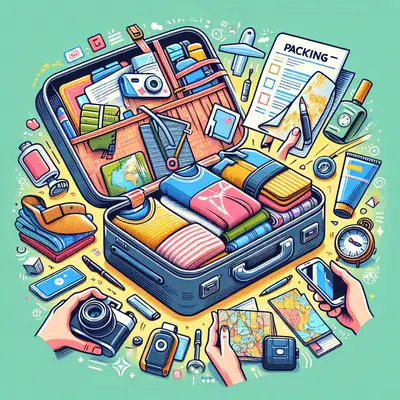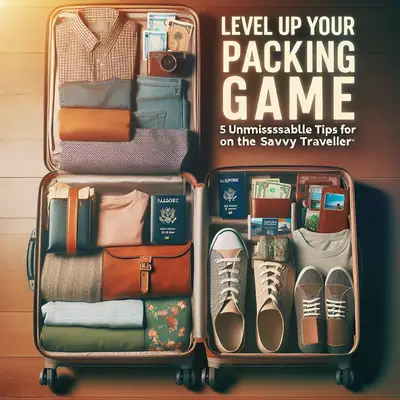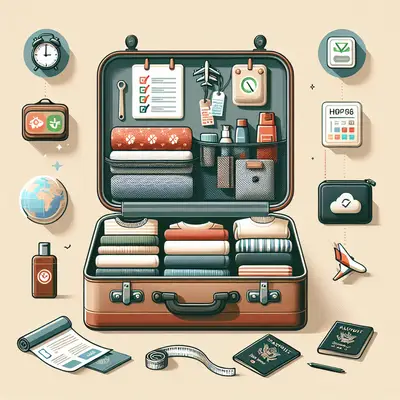
When your bag is dialed in, your whole trip feels easier. No overthinking outfits, no digging for that one charger at the bottom of your suitcase, no “uh-oh, I forgot…” moments at the airport. Smart packing isn’t about being ultra-minimalist; it’s about building a travel kit that’s flexible, lightweight, and ready for whatever your trip throws at you.
Below are five practical, road-tested packing tips that help you move faster, stay organized, and enjoy the fun parts of travel more.
Tip 1: Plan Outfits, Not Items
Instead of starting with a pile of “maybe” items, build your bag around complete outfits. Think in terms of “days” and “situations” (travel days, city walking, nice dinner, hiking, beach, work meetings).
Start by writing (or typing) a simple outfit plan for each activity: top, bottom, shoes, layers, accessories. Then look for overlap. Can the same jeans work for three days? Can one pair of shoes handle both sightseeing and casual dinners? Aim for a small number of versatile pieces that combine into many looks.
Choose a color palette (for example: black/white/denim + one accent color). This makes it easier to mix and match without worrying about clashing. Pack tops that go with any bottom, and layers that work in multiple scenarios—like a lightweight cardigan, a neutral hoodie, or a casual blazer.
Before anything goes into your bag, ask: “What exact outfit will this be part of?” If it doesn’t clearly fit into at least two outfits, it usually stays home.
Tip 2: Pack in “Zones” So You Always Know Where Everything Lives
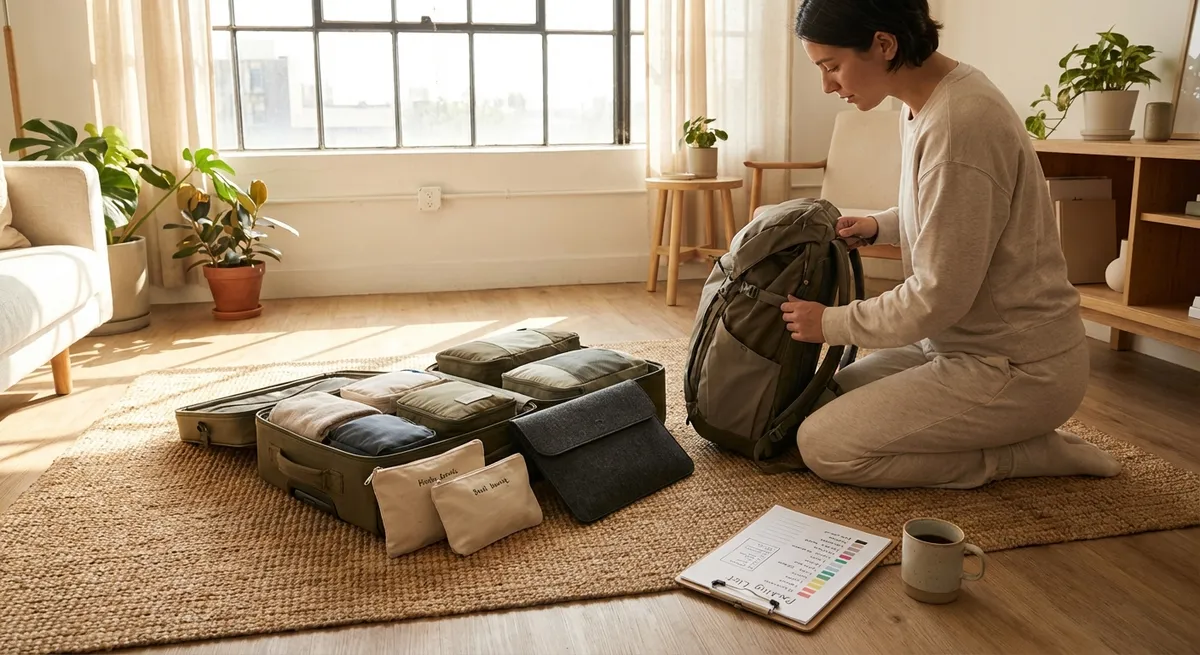
Think of your suitcase or backpack as a tiny apartment with rooms (zones), not a single big drawer. When everything has a “home,” you unpack and repack faster, lose fewer things, and find what you need instantly.
Here’s one way to zone your bag:
- Sleep & shower zone: Pajamas, underwear, socks, toiletries. This is your “first-night” kit—keep it near the top so you can get ready for bed even if you’re exhausted.
- Daywear zone: Shirts, pants, dresses, casual layers. Pack these in one section or cube so getting dressed is nearly autopilot.
- Weather & activity zone: Jacket, swimwear, workout clothes, hat, gloves, rain gear. These are situation-specific and easy to locate.
- Tech & documents zone: Chargers, adapters, headphones, backup battery, passport, tickets, printed confirmations if needed.
Use packing cubes, small pouches, or even simple zip-top bags to keep each zone separated. Choose semi-transparent pouches if possible, so you can quickly see what’s inside.
Once you decide on a layout, try to keep it consistent from trip to trip. Your “muscle memory” kicks in, and packing becomes a 10–15 minute routine instead of a full evening project.
Tip 3: Build a Permanent Travel Kit You Don’t Unpack Between Trips
One of the biggest time-savers: a dedicated travel kit that lives in your bag or closet, always ready to go. Instead of repacking your toiletries and tech accessories from scratch every time, you maintain a “travel-only” set.
Consider keeping a small pouch stocked with:
- Travel-size toothbrush, toothpaste, floss, deodorant, and your go-to skincare basics
- Refillable travel-size bottles of shampoo, conditioner, and body wash
- A tiny first-aid/health kit: bandages, pain reliever, anti-diarrheal, motion-sickness tablets (if you need them), a few blister bandages, and any essential meds
- A universal adapter (if you travel internationally), a compact power strip, and a short charging cable for each device you usually bring
After each trip, quickly restock items that are low. That way, for your next trip you simply grab the kit and drop it into your bag instead of hunting through your bathroom, desk, or nightstand.
Bonus: Keeping liquids in a separate, easily removable pouch makes airport security.
Tip 4: Use Smart Space Savers Without Overpacking
Space-saving tools can be your best friend—if they help you bring the right amount, not just more stuff. The goal is comfort and flexibility, not stuffing every inch of your bag.
A few smart ways to save space:
- Roll strategically: Rolling clothes can reduce wrinkles for many fabrics and makes it easier to fit items in gaps. Roll softer items (T-shirts, leggings, underwear) and keep structured items (blazers, stiff cotton shirts) folded.
- Use packing cubes for compression, not chaos: Compression cubes can shrink bulkier items like hoodies and jeans. Just avoid packing them so full that your bag becomes heavy and dense.
- Wear your bulkiest pieces on travel days: If you’re bringing boots or a heavier jacket, wear them on the plane or train. It frees up space and keeps you warmer in chilly airports.
- Limit “just in case” duplicates: One rain jacket is enough. One pair of versatile sneakers may cover most activities. Re-wear bottoms and outer layers; prioritize fresh socks and underwear.
If your bag is getting full, use this rule: remove one full outfit you’re least excited about. Most trips don’t need as many clothes as we initially think—especially when you’ve planned mix-and-match outfits.
Tip 5: Pack for Weather Swings, Not Just the Forecast
Weather apps are helpful, but conditions can change fast—especially in mountain regions, coastal cities, or shoulder seasons. Packing for ranges of weather instead of a single forecast keeps you comfortable without a ton of extra bulk.
Think in layers:
- Base layer: Breathable T-shirts or thin long-sleeves you can wear alone or under sweaters.
- Mid layer: A light sweater, fleece, or thin hoodie for cooler mornings and evenings.
- Outer layer: A packable rain shell or windbreaker that can go over everything else. Water-resistant and lightweight is usually best.
Choose fabrics that handle different conditions well. Quick-dry materials are useful if you get caught in the rain or need to hand-wash something in the sink. A thin scarf or buff, a light beanie, and compact gloves can all fit into a side pocket and make a huge difference on unexpectedly chilly days.
For hot climates, prioritize sun protection: a hat, sunglasses, and a breathable long-sleeve top you can layer over a T-shirt for sun coverage. Being prepared for both a warmer and cooler version of the forecast means fewer “I’m freezing” or “I’m roasting” regrets.
Conclusion
Packing well isn’t about perfection—it’s about supporting the trip you actually want to have. When your outfits are pre-thought, your bag is zoned, your travel kit is always ready, your space is used wisely, and you’re ready for weather swings, you travel with less stress and more freedom.
Next time you pack, try implementing just one or two of these tips. Once you feel the difference—faster mornings, calmer airport lines, easier hotel check-ins—you’ll start shaping your own signature packing system that makes every trip feel smoother from day one.
Sources
- U.S. Department of State – Travel Tips - Official guidance on preparing for international trips, including documents and essentials
- Centers for Disease Control and Prevention – Travelers’ Health - Up-to-date health advice, vaccine guidance, and packing considerations for medications and health supplies
- Transportation Security Administration (TSA) – What Can I Bring? - Details on what’s allowed in carry-on vs. checked luggage and how to pack liquids and other restricted items
- REI Co-op – Expert Advice on How to Pack a Bag - Practical techniques for organizing and balancing weight in luggage and backpacks
- Harvard Health Publishing – Travel Smart: Your Checklist for a Hassle-Free Trip - Health-focused packing considerations, including medications and comfort items
Key Takeaway
The most important thing to remember from this article is that this information can change how you think about Packing Tips.