Packing doesn’t have to feel like starting from zero every single time. With a bit of strategy, you can create a “smart suitcase” setup that flexes for weekend getaways, work trips, and long-haul adventures—without overthinking every item.
This guide focuses on practical, repeatable habits so you spend less time packing and more time actually enjoying your trip.
Build a Reusable Packing Core
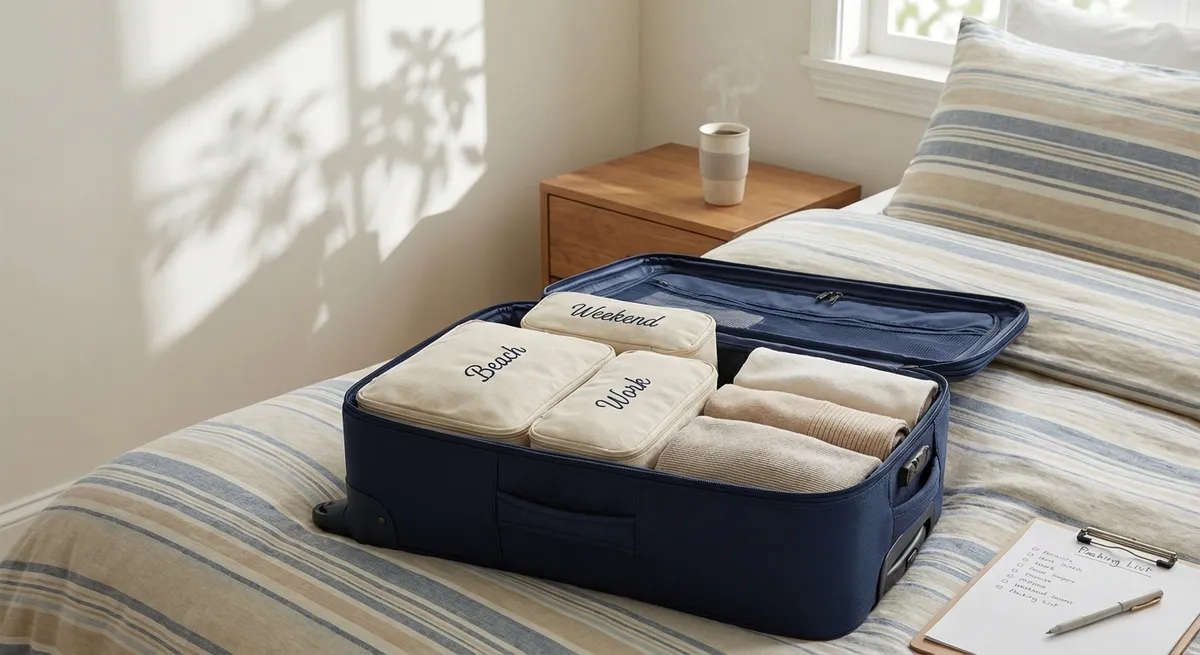
Instead of reinventing your packing list for each trip, create a reusable “core kit” you can keep semi-packed and ready to go.
Choose a small pouch or cube that always holds travel essentials, such as:
- Travel-size toothbrush, toothpaste, and floss
- Refillable travel bottles for shampoo/conditioner/body wash
- Solid toiletries (bar soap, solid shampoo, deodorant stick) to reduce leaks
- Basic medications: pain reliever, motion sickness tablets, antihistamines, bandages
- Mini first-aid basics (band-aids, blister patches, antiseptic wipes)
- Nail clippers, tweezers, and a few safety pins
Keep this core kit stocked and stored inside your suitcase when you’re home. After each trip, immediately refill anything that ran out. That way, for your next departure, you only need to add trip-specific items (clothes, shoes, tech)—not rebuild the basics.
This “core first, extras later” approach saves time, prevents last-minute shopping, and dramatically reduces the risk of forgetting something essential.
Choose Clothing That Mixes, Matches, and Multiplies
The secret to packing fewer clothes while still feeling like you have plenty of options is choosing pieces that cooperate with each other.
Think in terms of outfits-per-item instead of items-per-trip:
- Pick a color palette: 2–3 main colors (e.g., black, white, olive) plus one accent (e.g., rust or blue).
- Make sure every top can match at least two bottoms, and vice versa.
- Include layers: a light sweater or button-up that can be worn alone, over a T-shirt, or under a jacket.
- Choose wrinkle-resistant fabrics like merino wool blends, technical synthetics, or cotton with stretch.
- Make one piece “pull double duty”: a long-sleeve that’s also your plane layer, or a simple dress that works with sneakers in the day and flats at night.
Before you pack, lay everything out on your bed and physically pair outfits. If something only works in one specific combo, reconsider it. Focus on versatile clothes that work hard, not one-off statement pieces that take up space.
Pack Tech and Documents in a “Grab-and-Go” Zone
Airports, security lines, and boarding gates are much easier when your critical items live in one clearly defined place.
Designate a “grab-and-go” zone in your personal item (backpack or small tote). That zone should always contain:
- Passport or ID in an easily accessible but zipped pocket
- Printed and digital copies of reservations (or a travel app folder on your phone)
- Charging cables and a small power bank in a single pouch
- Universal adapter if traveling internationally
- Headphones and any in-flight comfort items (eye mask, earplugs, lip balm)
Avoid scattering these items in different pockets. One interruption (like rushing through security or gate changes) is enough to misplace something important.
Practice a quick checklist before leaving your home, hotel, or Airbnb: “Phone, ID, wallet, charger, boarding pass.” Make it a ritual. The more automatic it becomes, the less mental energy you spend worrying you’ve forgotten something.
Use the “Bulky-on-Body” Rule to Save Space
If something is bulky, heavy, or takes up a lot of suitcase real estate, wear it instead of packing it.
This rule is especially helpful for:
- Sneakers or boots that take up half your luggage
- Jackets, hoodies, or cardigans
- Jeans or thicker pants
- Scarves or larger accessories
On travel days, build an outfit around your bulkiest items. You can always remove layers on the plane or bus and stash them in the overhead bin or under the seat.
Inside your bag, prioritize rolling or folding lighter items—T-shirts, shorts, undergarments—around the edges and between shoes. Reserve interior corners for socks, chargers, and other small objects. This reduces wasted space and keeps your clothes more compact without needing complicated folding systems.
Plan a “Laundry Strategy” Instead of Extra Clothes
Many people overpack because they assume they can’t or won’t do laundry. A simple laundry plan lets you bring fewer items without feeling like you’re “roughing it.”
Before your trip, check:
- Does your accommodation have a washer/dryer or laundry service?
- Are there laundromats or wash-and-fold services nearby?
- Is the climate suitable for air-drying clothes overnight?
Then pack a tiny “laundry kit”:
- A few travel-size detergent sheets or liquid in a leak-proof container
- A sink stopper (many hotel sinks don’t seal well)
- A thin elastic travel clothesline or a few lightweight carabiners/clips
With a basic laundry setup, you can comfortably pack for 5–7 days, even on a 2–3 week trip. You’ll carry less, your bag will be easier to handle, and you’ll have more room for souvenirs or local finds on the way home.
Conclusion
Efficient packing isn’t about owning the perfect suitcase or memorizing complicated folding techniques—it’s about creating systems you can repeat for every trip.
A reusable core kit, mix-and-match clothing, a clear “grab-and-go” zone, wearing your bulkiest items, and a simple laundry plan work together to make packing faster, lighter, and much less stressful.
With a smart suitcase strategy in place, you’re not just ready for your next trip—you’re ready for all the ones after it.
Sources
- U.S. Transportation Security Administration (TSA) – What Can I Bring? - Official guidance on what’s allowed in carry-on and checked bags, including liquids and electronics
- U.S. Department of State – Traveler’s Checklist - Helpful for organizing documents and essentials before international travel
- CDC – Travelers’ Health: Pack Smart - Recommendations on health-related items, medications, and first-aid supplies to include
- Mayo Clinic – Traveling? Tips for Safely Managing Medicines - Guidance on packing and carrying medications while traveling
- REI Co-op – How to Choose Luggage - Expert advice on selecting and organizing luggage and travel bags
Key Takeaway
The most important thing to remember from this article is that this information can change how you think about Packing Tips.