Packing doesn’t have to be stressful, chaotic, or a night-before scramble. With a few smart strategies, your suitcase can go from overstuffed mystery box to streamlined travel HQ that makes every day on the road easier. Whether you’re heading out for a long weekend or a multi-country adventure, these practical tips will help you pack lighter, think smarter, and feel genuinely travel ready.
Build a “Travel Uniform” Instead of Random Outfits
One of the biggest packing mistakes is planning outfits one by one. That usually leads to extra shoes, random tops that only match one thing, and a heavy bag you’ll regret hauling up stairs.
Instead, think in terms of a travel uniform: a small set of pieces that all work together.
Choose:
- One base color (black, navy, or beige) for bottoms and outerwear
- 2–3 tops that match every bottom
- One lightweight layer (cardigan, denim jacket, or thin sweater)
- One nicer option (dress, button-down shirt, or tailored trousers) that still pairs with your other items
This “mix-and-match” approach multiplies your outfit options without multiplying the weight. For example, 2 bottoms + 3 tops + 1 dress + 1 layer can easily create a full week’s worth of looks.
Bonus move: stick to one style of metal (all gold or all silver) for jewelry so every piece works with every outfit. That way you can pack fewer accessories but still look pulled together in photos.
Turn Your Personal Item into an In-Flight Survival Kit
Your under-seat bag is prime real estate. Instead of tossing random stuff in, treat it like your in-flight survival kit—especially on long travel days.
Pack it in layers:
- Top layer (easy reach): passport, boarding pass, phone, headphones, a pen, lip balm, hand sanitizer, tissues
- Middle layer: snacks, refillable water bottle (empty for security), light scarf or hoodie, socks
- Bottom layer: small pouch with charger, power bank, eye mask, earplugs, medications, and any must-have toiletries (toothbrush, toothpaste, face wipes)
The rule: Anything you’d be stressed to lose or need before landing goes in your personal item, not your suitcase. That includes prescription meds, glasses/contacts, and at least one change of underwear and a basic outfit in case your checked bag is delayed.
This setup turns your bag into a mini comfort station—no digging through overhead bins, no hunting for a charger at the bottom of your tote, and no panicking if your checked luggage takes a detour.
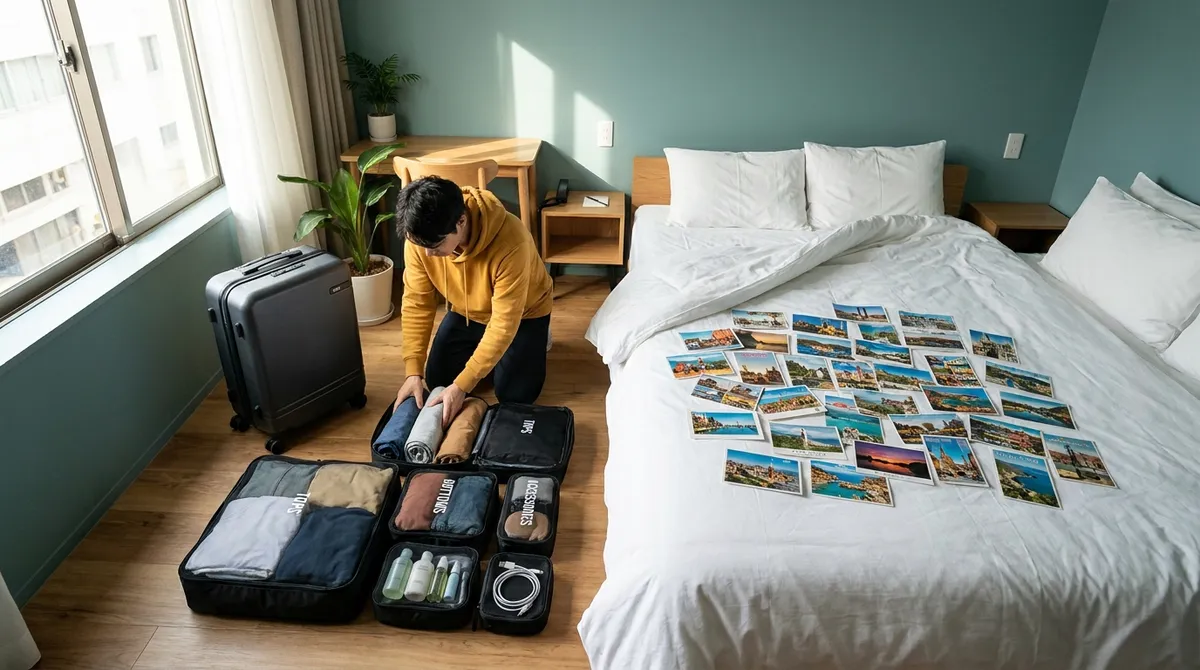
Make Packing Cubes Work Harder (By Giving Each One a Job)
Packing cubes aren’t just trendy; they’re organization superpowers when you use them intentionally.
Instead of stuffing cubes randomly, assign each cube a clear purpose:
- One for tops
- One for bottoms
- One for underwear, socks, and sleepwear
- Optional: one “arrival cube” with your first full outfit, pajamas, and basic toiletries
This means when you arrive tired and jet-lagged, you can just pull out your arrival cube and be instantly settled for the night—no full unpacking required.
A few extra tips to maximize cubes:
- Roll softer items, fold stiffer ones. Rolling saves space for t-shirts and activewear, while folding keeps button-downs and structured pieces less wrinkled.
- Use a laundry bag or spare cube for worn clothes so dirty and clean items don’t mix.
- For frequent movers (road trips, multi-city itineraries), keep “hotel-only” items, like pajamas and flip-flops, together so you always know where your evening essentials are.
Suddenly, living out of a suitcase feels more like using mobile drawers than rummaging through a clothing avalanche.
Create a Tiny “Travel Clinic” for Health & Hygiene
A well-packed toiletry kit does more than save space—it can save your trip when things go wrong. Build a mini “travel clinic” that always lives in your suitcase so you’re never starting from scratch.
Consider including:
- Pain reliever (like ibuprofen or acetaminophen)
- Anti-diarrheal tablets and basic antacid
- Motion sickness relief (if you’re prone)
- Bandages, blister pads, and a few alcohol wipes
- Travel-size sunscreen and lip balm with SPF
- Saline nasal spray or hydrating mist (airplanes are dry)
- Any personal prescription medications (in original labeled containers if crossing borders)
- Solid or travel-size shampoo/conditioner
- Refillable travel bottles for liquids within TSA’s 3-1-1 rule (100 ml/3.4 oz per container, all inside a quart-size clear bag if you’re flying carry-on only)
- Toothbrush, small toothpaste, floss
- Compact deodorant, razor with cover, and any skincare essentials
Then add your basic hygiene setup:
Keeping this kit pre-packed and replenished after each trip turns packing from a 2-hour chore into a 10-minute task. You just drop it in your bag, knowing you’re covered for typical travel hiccups.
Design a “Last-Minute Checklist” You Can Actually Trust
Most pre-trip stress comes from that “What am I forgetting?” feeling. The solution is a reusable, customized checklist that lives on your phone or in your notes app.
Create sections like:
- Documents & Money: passport/ID, visa (if needed), travel insurance details, credit cards, local currency, copies of documents (digital and/or printed)
- Tech: phone, charger, power bank, universal adapter, laptop/tablet and charger, camera and memory cards
- Essentials: medications, glasses/contacts, reusable water bottle, headphones, snacks
- Weather Specifics: umbrella or packable rain jacket, swimsuit, hat, gloves, sunscreen
Run through it the day before departure and again right before leaving home. This checklist becomes your calm, logical brain when your excited, distracted brain is thinking about the trip instead of the details.
Extra win: you can tweak it after each journey. Forgot a sleep mask last time? Add it. Never used that fourth pair of shoes? Remove it. Over time, your checklist evolves into a personalized, ultra-reliable packing playbook.
Conclusion
Packing well isn’t about being ultra-minimalist or owning fancy gear—it’s about intentional choices that make every step of your trip smoother. Build a flexible travel wardrobe instead of single-use outfits, treat your personal item like in-flight life support, give your packing cubes clear jobs, keep a ready-to-go “travel clinic,” and back everything up with a smart checklist.
The reward: lighter bags, fewer “oh no” moments, and more energy for the reason you’re traveling in the first place—exploring, connecting, and collecting great stories. With these strategies in place, you’re not just packed; you’re genuinely travel ready.
Sources
- Transportation Security Administration (TSA) – What Can I Bring? - Official guidelines on what items are allowed in carry-on and checked baggage, including liquids and medications
- U.S. Department of State – Travel Advisories & Preparation - Government resource on documents, safety, and preparation for international trips
- Mayo Clinic – Travel Health Tips - Medical guidance on travel health, first-aid items, and staying well on the road
- Cleveland Clinic – How to Prevent and Treat Motion Sickness - Evidence-based advice useful when building your “travel clinic” kit
- Harvard Health Publishing – Tips for Healthy Air Travel - Expert-backed strategies for staying comfortable and healthy on flights, informing in-flight packing choices
Key Takeaway
The most important thing to remember from this article is that this information can change how you think about Packing Tips.