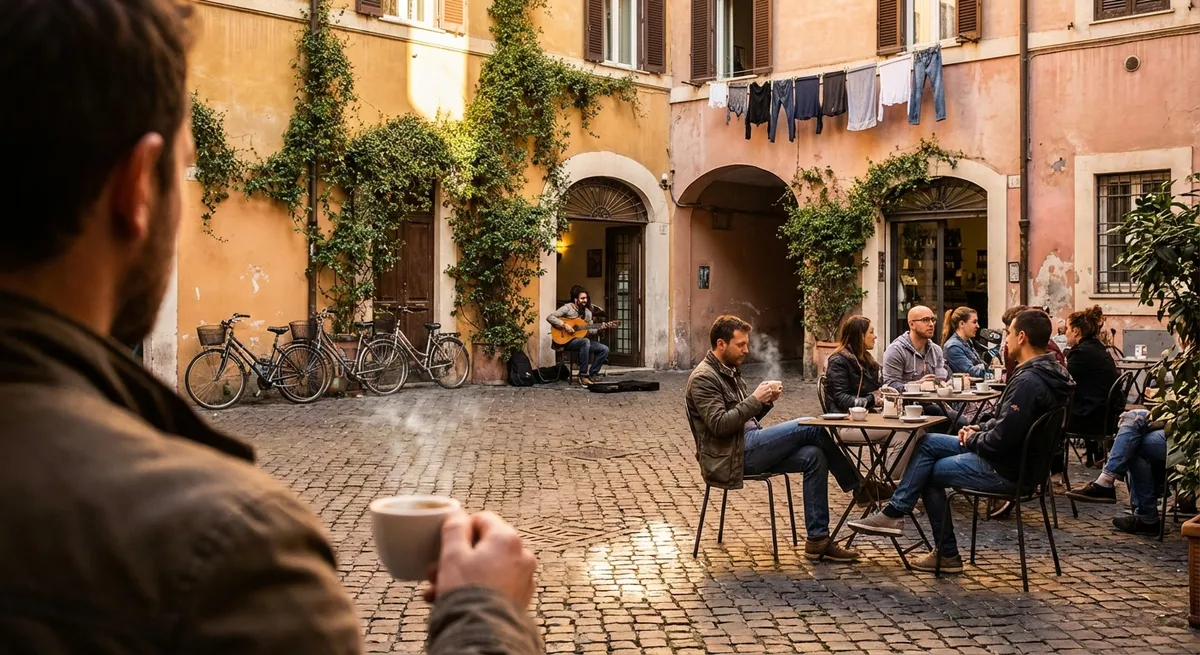
Most trips rush you from “must-see” to “must-see” until all the days blur together. Slow-travel cities flip that script. These are places where the real magic happens when you stay put—lingering in cafés, walking neighborhoods, and building tiny routines that make you feel less like a visitor and more like a temporary local.
This guide highlights how to choose great slow-travel destinations and how to actually experience them in a way that feels unhurried and deeply rewarding—plus 5 practical tips you can use in almost any city you visit.
What Makes a City Perfect for Slow Travel?
Slow-travel cities aren’t just beautiful; they’re places that invite you to stay a while. They tend to have walkable streets, safe public spaces, and neighborhoods that reward wandering instead of box-checking. Think compact historic centers, public transit that’s easy to figure out, and plenty of everyday life happening out in the open—markets, parks, mom-and-pop shops, and lively plazas.
Cities like Lisbon, Kyoto, Ljubljana, Mexico City, and Copenhagen often appeal to slow travelers because they balance culture, food, and nature access. You can spend the morning in a museum, the afternoon by a river or ocean, and evenings exploring local food without ever rushing. Even larger cities can work for slow travel if you treat them as clusters of small neighborhoods rather than one big checklist. When you judge a city not by how many sights it has, but by how pleasant it is to simply exist there for a week or more, you’ll start to see slow-travel destinations everywhere.
Designing an Unhurried Itinerary (That Still Feels Full)
An intentional slow-travel itinerary trades “seeing everything” for “savoring something.” Instead of stacking back-to-back attractions, you space them out and allow for unscripted time. That could mean picking one major activity per day—a museum, a cooking class, a day-trip hike—and leaving the rest open for wandering or resting. This breathing room doesn’t mean “doing nothing”; it gives you space to follow curiosities: a side street you hadn’t noticed, a conversation with a local, or a café where you end up writing postcards for an hour.
When you stay longer in one place, you can also sync with the city’s natural rhythm. You learn when streets are quiet, which days markets buzz, and what time locals eat. You might plan a late-morning start to avoid commuter crowds, take a midday pause during the hottest hours, then explore parks and waterfronts when locals go out at dusk. By thinking in terms of “days with a single highlight” instead of “days packed with highlights,” your trip feels both richer and more relaxing.
Choosing Neighborhoods That Feel Like a Temporary Home
Slow travel is less about the city center and more about the neighborhood you actually stay in. Instead of booking the most touristy area, consider one or two steps out from the main attractions—close enough to walk or take public transit, but residential enough that you see people living their everyday lives. Look for places with a mix of bakeries, small groceries, cafés, and local restaurants. A neighborhood market or weekly street fair is a great sign you’ve picked a spot with personality.
Reading recent traveler reviews and local blogs can help you understand vibes: Is the area lively at night or quiet? Is it family-oriented, creative, student-heavy, or business-focused? Once you arrive, treat your neighborhood like home base. Get coffee from the same spot a few days in a row, learn the names of a couple of streets without checking your map, and find “your” bench in a park. By the end of a week, the walk to your accommodation will feel less like navigation and more like a familiar commute.
5 Practical Tips to Make Any City a Slow-Travel Destination
You don’t need a special kind of trip or a remote village to embrace slow travel. These five practical habits can turn almost any destination into a place you truly inhabit, not just pass through.
1. Anchor Each Day Around a Single Local Ritual
Pick one small, repeatable activity that becomes your daily anchor. It could be a morning espresso at the same counter in Rome, an evening stroll along the river in Paris, or a daily bento pickup from a favorite shop in Tokyo. This ritual creates a sense of continuity and gives you something to look forward to that isn’t tied to a ticket or reservation.
A daily ritual also connects you with the people who live there. When you show up at the same bakery three days in a row, you’re no longer anonymous; you’re “the traveler who loves the sesame bread” or “the latte with oat milk, please.” Those micro-connections can become the most memorable part of your trip, and they require almost no planning—just consistency and curiosity.
2. Swap Taxis for Transit (At Least Once Per Day)
Public transportation is a slow traveler’s secret weapon. Buses, trams, and metro lines show you how locals actually move through their city and introduce you to neighborhoods you might never have found otherwise. Even using transit for just one leg of your day—like taking the tram to a park, then walking back—can reshape how you experience distance and scale.
Before you arrive, skim the city’s official transit website and download any recommended apps or offline maps. Many cities offer day or multi-day passes that simplify things and save money. Riding with commuters at off-peak times (morning after rush hour, early afternoon) lets you observe daily life without crowds being overwhelming. You’ll start recognizing route names and stops, and that familiarity makes the city feel less intimidating and more like a place you could actually live.
3. Plan One “Deep Dive” Experience Instead of Many Light Ones
Instead of sampling a little bit of everything, choose one aspect of the city to go deeper on. That might be food, architecture, street art, local history, or nature. Then book a longer, more immersive activity tied to that theme: a half-day cooking class in Oaxaca, a walking tour focused on modernist buildings in Barcelona, or a street-art workshop in Berlin.
This single “deep dive” helps you understand the city beyond surface-level impressions. You gain context: why certain dishes matter, how a neighborhood evolved, or what social or political stories are written on the walls. After that experience, other details around the city start clicking into place—you’ll notice design motifs, overhear familiar terminology, and understand references you would have otherwise missed.
4. Schedule “Aimless Hours” as Intentionally as Museum Visits
Slow travel doesn’t mean being disorganized; it means making room for spontaneity on purpose. Block out specific windows in your day—say, 2–5 p.m.—with no agenda beyond “walk and see what happens.” Pick a starting point like a neighborhood you’ve heard about or a park, and then let your curiosity steer you: follow the sound of music, the smell of fresh bread, or a street that looks especially charming.
Safely wandering works best when you set light boundaries: know roughly how to get back, keep an offline map handy, and be mindful of neighborhoods you’ve been advised to avoid. Within that framework, “aimless hours” are often when you stumble across the city’s real character: the family-owned stationery shop, the quiet courtyard, or the tiny bar playing live music to a crowd of regulars.
5. Collect Small, Repeatable Moments Instead of Souvenirs
Instead of focusing on physical souvenirs, pay attention to tiny experiences you could imagine repeating if you returned. That might be watching the city wake up from a bridge at sunrise, trying a specific street-food stall, or finding a spot where the late-afternoon light is perfect for journaling or reading. Note these in your phone or a travel notebook—places, times of day, smells, and sounds.
These repeatable moments become your mental “playlist” for the city. They’re easy to share with friends (“If you go, you have to sit on this specific staircase an hour before sunset”) and much more personal than generic recommendations. When you look back later, it won’t be the list of attractions that brings the city back to life; it’ll be those small, recurring scenes that made it feel like your place, even briefly.
Balancing Discovery and Rest Without Guilt
One of the biggest mental shifts in slow travel is allowing yourself to rest without feeling like you’re “wasting” your trip. Cities reveal different sides of themselves when you’re not exhausted—conversations flow more easily, you notice small architectural details, and you’re more open to unplanned invitations. Rest days or light-activity days aren’t a break from traveling; they’re part of traveling well.
If you tend to overbook, try setting personal “capacity limits”: no more than one reservation per day, no early mornings two days in a row, or at least one evening per trip with absolutely no plans. Use quieter hours to simply be somewhere beautiful—a park bench, a waterfront promenade, a historic square at dusk. The more you build in rest, the more each experience stands out and the less likely you are to blur trips together in hindsight.
Conclusion
Slow-travel destinations aren’t just about where you go—they’re about how you move through each place. When you linger instead of rush, choose neighborhoods with everyday life, and build your trip around small rituals and deep dives rather than endless checklists, cities start to feel like temporary homes instead of backdrops.
Whether you’re spending three days or three weeks somewhere, you can bring a slow-travel mindset with you: anchor your days with local habits, lean on public transit, let yourself wander, and protect your energy so you can actually enjoy the moments you came for. That’s when a destination stops being another pin on the map and becomes a place you genuinely know.
Sources
- UN World Tourism Organization – Tourism and Culture Synergies – Explores how cultural immersion and slower, more meaningful travel benefits both visitors and local communities
- OECD – Tourism Trends and Policies – Provides context on urban tourism, sustainability, and how cities adapt to new travel styles
- European Commission – Sustainable Tourism – Discusses principles of sustainable and responsible travel that align closely with slow-travel practices
- Japan National Tourism Organization (JNTO) – Official guidance on sustainable and slower-paced experiences in Japanese destinations
- Copenhagen Tourism – Official City Guide – An example of how a city promotes biking, walkability, and neighborhood exploration for visitors
Key Takeaway
The most important thing to remember from this article is that this information can change how you think about Destinations.