You don’t need a platinum card or VIP status to travel like you belong in the priority lane. With the right habits before, during, and after your trip, you can quietly upgrade your entire experience—without paying for actual upgrades. These practical, low-key hacks help you move through airports, cities, and hotels in “slipstream mode”: smoother, faster, and with way less stress.
Build a “Travel Identity” With One Airline and One Hotel Family
Instead of spreading your bookings across dozens of brands, treat your future trips as part of a long game.
Pick:
- One main airline (or alliance) that fits your usual routes
- One hotel group (or two, max) that regularly appears where you travel
Then:
- Create loyalty accounts immediately (even if you don’t fly often). Some benefits kick in at the lowest tiers—priority check-in lines, bonus points, occasional late checkout.
- Always add your loyalty number to every booking. Points add up faster than most casual travelers realize, especially with partner airlines or hotel brands inside the same group.
- Concentrate stays and flights with your chosen brands. Ten scattered hotel bookings mean nothing; ten nights with one chain might unlock free Wi-Fi, breakfast, or upgrades.
- Link your accounts with partners (for example, airline–hotel or airline–rideshare partnerships) to earn points in two places at once.
- Check your email and app for “status challenge” offers. Sometimes you can earn a higher tier more quickly with a focused burst of travel.
You’re turning every trip into a step toward better treatment on the next one: priority queues, room upgrades, and perks that make life on the road much easier—without paying extra for them.
Turn Your Phone Into a Local Command Center Before You Leave
Your phone can be more powerful than a tour guide, but only if you set it up before you’re jet-lagged in a new city.
Do this a week before departure:
- Download offline maps for your destinations (city + surrounding area). In Google Maps or Apple Maps, save key pins: your hotel, transit hubs, a hospital, embassy/consulate, and a few food spots.
- Save essential info in multiple places: a note app, a PDF in your files, and screenshots. Include your accommodation address in local script, booking numbers, and emergency contacts.
- Install local-friendly apps early: public transport apps, translation apps, and a reputable taxi or rideshare app used in that country.
- Set up offline translation packs in your language app so you can translate menus, signs, and basic phrases without data.
- Customize your home screen for travel mode: put your boarding passes, maps, translator, airline app, and note app in one folder or dock for quick access.
When you land, you’re not fumbling through emails or trying to remember Wi-Fi passwords—you’re operating from a clear, pre-built control panel tailored to that destination.
Use “Micro-Checklists” to Avoid Travel-Day Chaos
Most packing advice focuses on big lists, but travel stress usually comes from forgetting small, high-impact items or tasks. Instead of one giant list, create a set of reusable micro-checklists you can run through in minutes.
Examples:
1. Flight-Day Essentials (on your person)
- Passport/ID
- Payment methods (card + backup)
- Phone + earbuds
- Boarding pass (app + screenshot)
- A pen (for forms)
- Any medication you must not lose
- Light layers (hoodie, scarf)
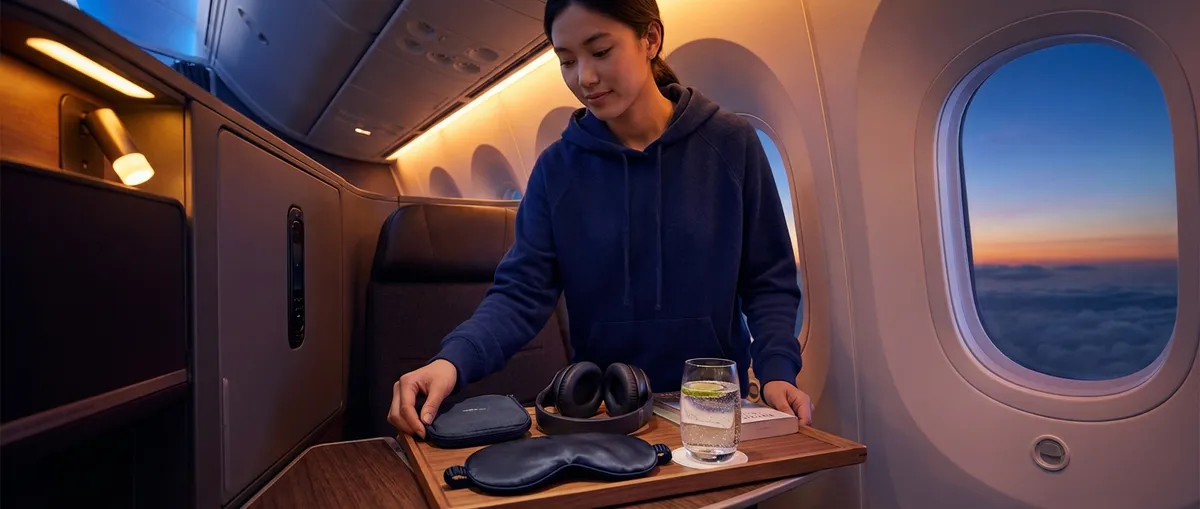
- Earplugs or noise-cancelling headphones
- Sleep mask
- Lip balm, travel toothbrush, hand sanitizer
- Refillable water bottle (empty until security)
- Hotel address in local language (screenshot + note)
- Local currency (even a small amount)
- Transit card info or QR codes
- SIM/eSIM details or roaming settings
2. Cabin Comfort Kit
3. Arrival-Ready Pack
Store these in your notes app and duplicate them for each trip. The goal isn’t perfection—it’s making sure you never again lose 20 minutes because you forgot a pen or can’t remember your hotel address at a taxi stand.
Make Time Zones Work for You Instead of Against You
Time zone shifts don’t just steal sleep—they can waste your first day if you land exhausted at the wrong time. With a bit of planning, you can soften jet lag and arrive closer to “trip ready” than “walking zombie.”
Try this approach:
- Shift your schedule 2–3 days before departure. Move your bedtime and meals by 30–60 minutes each day in the direction of your destination’s time zone.
- Change your devices’ clocks to destination time as soon as you board the plane. Start thinking and planning in that time, not your departure city’s.
- Use flights strategically:
- Overnight flight? Treat it like real night: light meal, no caffeine, eye mask, and sleep as early as possible.
- Daytime flight? Avoid long naps; use light, movement, and hydration to stay aligned with your target bedtime.
- Anchor yourself with three “local time” habits on arrival:
- Eat at local meal times (even a small meal or snack).
- Get at least 20–30 minutes of daylight outdoors.
- Stay awake until a reasonable local bedtime—no long naps.
You’re not trying to erase jet lag completely; you’re minimizing the “lost day” that often makes short trips feel much shorter and long trips start on the wrong foot.
Quietly Upgrade Any Hotel Room in 10 Minutes
You can’t change your room size, but you can quickly improve comfort, convenience, and even hygiene without being dramatic about it.
Once you enter the room:
- Do a 60-second layout scan. Where’s the nearest outlet to the bed? Is there a place to set up a mini “charging station”? Rearrange furniture slightly if it makes the space function better for you.
- Create a “landing zone” near the door. Choose a spot for your keys, transit cards, and room card that never changes—like a bowl, desk corner, or shelf. This eliminates daily “where did I put that?” searches.
- Use a small packing cube or pouch as a bedside caddy. Keep earplugs, lip balm, medication, and your phone here so you’re not stretching over gaps between the mattress and nightstand.
- Check curtains and light sources. Clip curtains together with a binder clip or hair tie to block light. Throw a small towel over bright LEDs from TVs or alarm clocks if they bother you at night.
- Do a quick surface wipe of high-touch areas (remote, handles, light switches) if you’re hygiene-conscious, using travel wipes.
- Ask (nicely!) once for a “comfort boost.” Example: “If possible, could I have an extra pillow and one more towel?” Small asks are often granted and can improve sleep and daily routines.
These micro-adjustments turn a generic hotel room into a space that behaves more like a place you chose—not just somewhere you were assigned.
Conclusion
Travel doesn’t have to feel like a test you pass only if you’re hyper-organized or wealthy. By building a “travel identity” with a few brands, prepping your phone like a local tool, relying on quick micro-checklists, respecting time zones, and tuning your room for comfort, you create your own slipstream through the journey.
Each of these hacks is small on its own—but together, they make your trips feel smoother, calmer, and a lot closer to first-class, even when you’re in the very last boarding group.
Sources
- U.S. Department of State – Country Information - Official travel advisories, local laws, and emergency contact details by destination
- Centers for Disease Control and Prevention – Travelers’ Health - Health recommendations, vaccines, and destination-specific health advice
- Transportation Security Administration (TSA) – What Can I Bring? - Up-to-date rules on what’s allowed in carry-on and checked baggage
- Google Maps Help – Download Offline Maps - Step-by-step instructions for saving maps to use without data
- Harvard Medical School – Resetting Your Internal Clock - Evidence-based guidance on minimizing jet lag and adjusting to new time zones
Key Takeaway
The most important thing to remember from this article is that this information can change how you think about Travel Hacks.