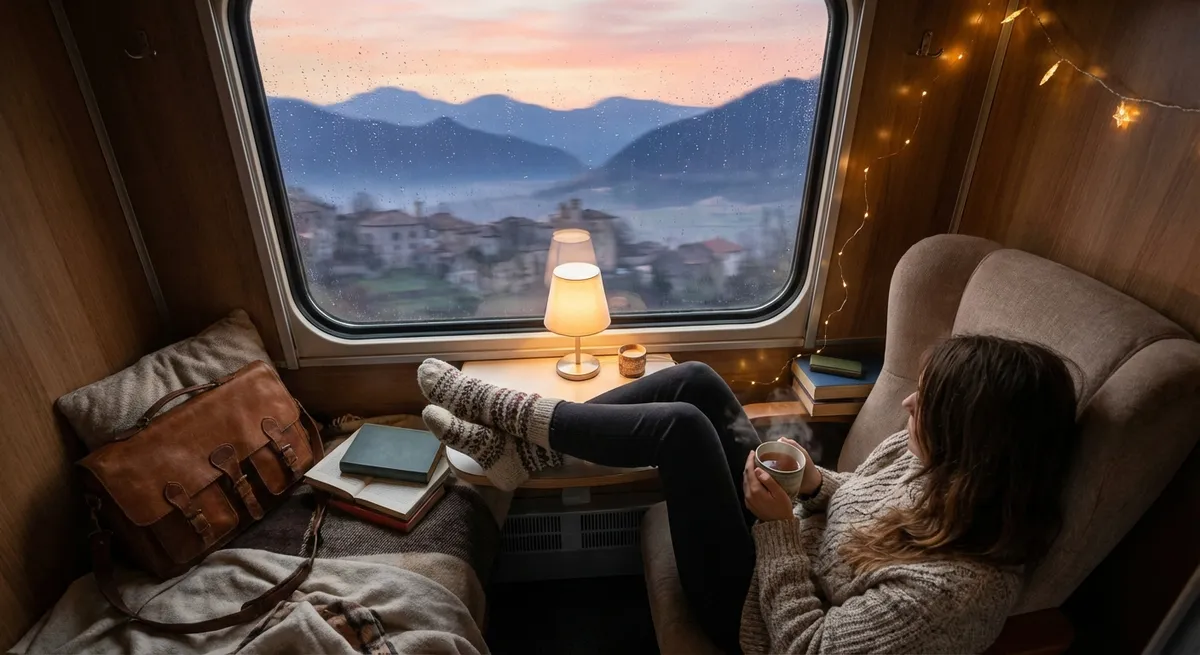
There’s a special kind of magic in falling asleep in one city and waking up in an entirely different world. Night trains and sleeper routes turn long distances into cozy, time-saving adventures—often for less money than flights and hotels. For travelers who want to see more without burning out (or burning through their budget), planning trips around overnight rail can unlock a completely new way to experience destinations.
In this guide, we’ll explore how to use night trains as the backbone of an itinerary, highlight inspiring routes worth building a trip around, and share five practical tips to make your next sleeper journey comfortable, efficient, and unforgettable.
Why Night Trains Make Destinations Feel Bigger (and Trips Feel Longer)
Night trains transform travel from “getting between places” into part of the journey itself. Instead of losing a day to transit, you reclaim those hours for exploring, eating, or wandering local neighborhoods—because your travel time and sleep time overlap.
On many routes, especially in Europe and parts of Asia, night trains connect city centers directly, so you skip airport transfers and security lines. You may board after dinner, settle into your bunk, and open your curtains at sunrise to mountains, coastlines, or a completely different country. This rhythm lets you cover serious distance while still traveling at a human pace that feels grounded and less stressful than sprinting between flights.
For destination planning, night trains are a strategic tool. They let you visit more places on a fixed schedule, reach regions that are under-served by flights, and build creative one-way routes that don’t require you to circle back. Instead of a simple A–B–A round-trip, you can chain together linear journeys—Vienna to Venice to Rome, or Bangkok to Chiang Mai to Nong Khai—waking up in a new place each time.
Destinations That Shine When You Arrive by Night Train
Some destinations are simply better when you roll in after dawn with a coffee in hand and a train window framing your first impression. Planning around routes—rather than just airports—opens up surprising combinations.
In Europe, lines like Vienna–Venice or Munich–Rome serve as moving bridges between very different cultures and landscapes. You might fall asleep passing alpine villages and wake up gliding past lagoons or coastal hills. Scandinavia’s night trains turn Oslo–Bergen or Stockholm–Narvik into cinematic transitions, where the landscape changes from forest to fjord or city to Arctic terrain.
In Asia, sleeper trains weave directly into local life. Routes like Bangkok–Chiang Mai in Thailand or Hanoi–Da Nang in Vietnam often include locals, backpackers, families, and business travelers all sharing the same car. You’re not just getting from city to city; you’re getting a preview of the region’s rhythm and people before you even arrive. In India, classic routes like Delhi–Varanasi or Mumbai–Goa can become core anchors in a longer itinerary, allowing you to wake up in a spiritual center or a coastal escape without sacrificing days to transport.
In many countries, night trains are also a smart workaround for limited domestic flights, seasonal weather disruptions, or busy travel periods. By anchoring your trip around a few well-chosen sleeper segments, you gain flexibility to explore smaller cities and towns that might otherwise feel “too far” for a short trip.
Choosing the Right Night Train for Your Travel Style
Not all sleeper routes are created equal, and picking the right one for your style can make the difference between “romantic rail journey” and “never again.” Think about what you value most: comfort, price, scenery, or speed.
On many networks, you’ll find several options on the same route: reclining seats, shared couchette compartments, classic sleeper cabins, or deluxe private rooms with en-suite bathrooms. If you’re used to hotels and want a seamless upgrade path, look for brands like ÖBB Nightjet in Europe or premium classes on national railways that offer quieter, more spacious compartments. If you’re more focused on stretching your budget and meeting other travelers, shared couchettes or second-class sleepers are often perfectly fine—especially on popular backpacker routes.
Timings matter, too. Ideally, your train should depart after you’ve had dinner and arrive after sunrise, so you’re not forced to leave in the middle of the night or disembark at 4 a.m. Check not just departure and arrival times, but seasonal schedules and whether your route runs daily or only on certain days of the week.
When planning, cross-check your intended routes on both the official rail operator’s website and a neutral journey planner (like Deutsche Bahn’s international planner in Europe), so you can compare connection times and see if your night train fits neatly into your broader itinerary.
Five Practical Tips for Making Night Trains Work Beautifully
Here are five actionable ways to make overnight rail a highlight of your trip instead of just a way to save on a hotel:
- Book earlier than you think—especially for sleepers and peak dates.
Sleeping berths are limited and popular with both locals and tourists. On many European and Asian routes, the cheapest or most comfortable options can sell out weeks in advance, especially in summer, around holidays, and on Friday or Sunday nights. As soon as you fix your dates, reserve your sleeper category (cabin, couchette, or berth) so you’re not stuck in a reclining seat for 10+ hours. If you’re traveling during a local festival or school holiday, treat the night train like a key hotel night and secure it first.
- Pack a tiny “night train kit” you can grab without opening your whole bag.
Keep a small packing cube or pouch ready with what you’ll want in your bunk: earplugs, an eye mask, a lightweight scarf or sleep shirt, a toothbrush, wet wipes, and any medication you need at night or in the morning. This way you’re not unpacking your entire backpack in a small compartment. If the route doesn’t provide bedding, a thin sleep sack or large scarf can make you much more comfortable; even on trains with linens, having an extra layer can help if the AC runs cold.
- Treat the station like your pre-flight ritual: arrive early and stock up.
Many night trains offer dining cars or snacks, but options and hours can be unpredictable. Arrive at the station early enough to pick up a simple dinner, breakfast for the morning (yogurt, fruit, pastries), and plenty of water. This also gives you time to find your platform, car, and compartment without rushing. Snap a quick photo of your train car number and the interior once you’re settled; it sounds trivial, but it can help you relocate your cabin after a stop and is great for sharing your journey later.
- Prioritize security with simple, low-stress routines.
Night trains are generally safe, but you’ll sleep better with a few habits in place. Keep your passport, phone, and wallet in a money belt, neck pouch, or small bag that stays on your person while you sleep. Use a small cable lock or strap to secure your main bag to the luggage rack or a fixed point in the compartment; this deters opportunistic theft in busy corridors. If you’re in a shared compartment, introduce yourself briefly to fellow travelers—it’s both friendly and practical, as people tend to look out for each other once they’ve exchanged names.
- Plan your arrival like a local: know your first move off the train.
The romance of rolling into a new city can evaporate quickly if you step onto the platform sleepy, hungry, and unsure how to reach your accommodation. Before departure, screenshot or download maps for the station area, transit options to your stay, and a backup route in case of delays. Check when your hotel or guesthouse allows check-in; if you’ll arrive early, ask in advance about luggage storage and nearby cafés. Having a “first 60 minutes” plan—ATM or currency exchange location, a coffee stop, local SIM or eSIM details—turns that fuzzy early-morning arrival into a confident start.
Weaving Night Trains into a Bigger Itinerary
Night trains work best when they’re not just a one-off novelty, but a structural element in your trip design. Think of them as “anchors” that break your journey into distinct chapters. For example, your route might look like: three days in a capital city, night train to a coastal region, four days exploring smaller towns, then another night train to a final city where you fly home.
This approach allows you to balance fast transitions with slow exploration. You can linger longer in places that resonate with you, knowing that your next big move happens while you sleep. You also gain flexibility: if a destination feels “done” sooner than expected, many networks allow ticket changes or alternate routes, especially if you’re traveling on flexible rail passes.
From a sustainability angle, weaving in more rail and fewer short-haul flights can reduce your trip’s carbon footprint while still expanding what’s possible in your available time off. In many regions, night trains are experiencing a revival for exactly this reason, with new routes and refurbished cars making overnight rail more comfortable and connected than it’s been in years.
Conclusion
Night trains turn distance into possibility, and long journeys into some of the most memorable parts of a trip. With a bit of planning—choosing the right route and sleeper type, packing smart, and setting up a smooth arrival—you can wake up in new destinations rested, ready, and already in the heart of the action.
For travelers who want to see more without feeling rushed, building itineraries around overnight rail is a powerful way to stretch your time, your budget, and your sense of adventure. The next time you map out a trip, don’t just look at flight paths and highways—trace the lines of the night trains, and see which sunrise you’d like to wake up to.
Sources
- Eurail: Night Trains in Europe - Overview of major European night train routes, classes, and booking advice
- ÖBB Nightjet Official Site - Details on sleeper options, routes, and onboard services for popular European overnight trains
- Amtrak: Sleeping Accommodations - Information on sleeper choices, what’s included, and tips for overnight rail in the United States
- Rail Europe: Tips for Taking Night Trains - Practical guidance for booking and riding European night trains, including comfort and safety tips
- Transport & Environment: Night Train Renaissance - Analysis of the environmental benefits and renewed interest in overnight rail services in Europe
Key Takeaway
The most important thing to remember from this article is that this information can change how you think about Destinations.