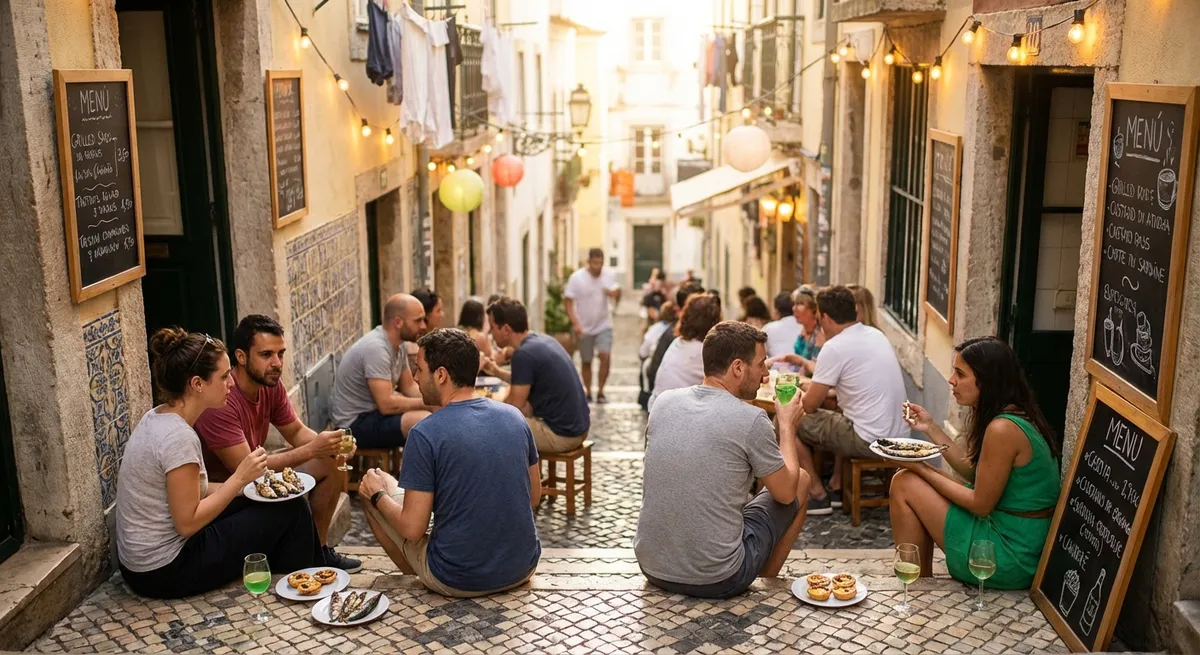
Travel hits different when you plan it with your taste buds first. Instead of just checking off big landmarks, building a trip around local food turns every day into a mini adventure: morning markets, hole‑in‑the‑wall spots, regional specialties you can’t find back home.
This isn’t just about “eating well.” It’s about understanding a place through what people cook, how they shop, and where they gather. Here’s how to turn any destination into your own personal tasting map—plus five practical, on-the-road tips you can actually use.
Why Food-Focused Travel Changes How You Experience a Place
When you organize a trip around food, you automatically slow down and see more of the real destination.
Instead of sprinting between tourist highlights, you’re suddenly noticing what’s piled high at street stalls, which bar gets busy at sunset, how families gather around a shared dish. You’re in morning markets before the tour buses start rolling, wandering residential neighborhoods in search of a beloved bakery, or sitting shoulder-to-shoulder with locals at a lunchtime counter.
Food is also one of the easiest ways to bridge language and cultural gaps. A smile, a pointed finger at what looks good, a “thank you” in the local language—these small interactions add up to some of the most memorable moments of a trip.
Whether it’s trying yakitori in Tokyo’s alleys, learning why tapas culture in Spain is social glue, or sipping thick hot chocolate in Mexico City, you’ll come home with stories that start with, “We ducked into this tiny place…” instead of, “We stood in line for two hours at a famous spot.”
How to Choose Destinations by Flavor, Not Just Photos
If you want your next trip to revolve around food, start trip-planning with your stomach instead of your camera roll.
Look for destinations with strong regional identities: think Bologna for pasta and cured meats, Oaxaca for moles and mezcal, Hanoi for street noodles, or Penang for hawker centers. A single country can have wildly different food cultures from region to region—southern Thailand’s spicy, coconut-rich curries feel totally different from northern Thai herbs and grilled meats; northern vs. southern India might as well be different culinary planets.
Use these questions to guide your search:
- What cuisines do you already love eating at home? (Thai, Korean, Italian, Mexican, Lebanese, etc.)
- Are there dishes you’ve only ever had in “fusion” form that you’d like to try at the source?
- Do you crave street food chaos or white-tablecloth tasting menus…or a mix of both?
- Are you more excited by seafood coasts, wine country, mountain comfort food, or big-city variety?
Once you have a rough idea—say “I want fresh seafood and markets, not a nightlife scene”—you can start comparing destinations that fit the vibe: maybe Lisbon instead of Barcelona, Busan instead of Seoul, or Palermo instead of Rome.
Mapping Out Your Food Days Without Over-Scheduling
The sweet spot: enough structure to hit the good stuff, enough flexibility to follow irresistible smells down side streets.
Start by blocking out anchor experiences that define the day:
- Mornings: local markets, bakeries, coffee spots, or a food tour
- Afternoons: a leisurely lunch, cooking class, or café break
- Evenings: dinner in a neighborhood known for its food, then a bar, dessert shop, or night market
Then layer in neighborhoods, not just individual restaurants. Instead of a random list of “places to eat,” create clusters: “Tuesday = Trastevere in Rome,” “Friday = Le Marais in Paris,” “First night = Old Quarter in Hanoi.” That way, if your first-choice restaurant is closed or full, you’re already in an area with solid backups.
Leave at least one meal a day unplanned on purpose. This gives you room for spontaneous discoveries: the corner stand your hotel staff swears by, the food truck with a line around the block, or the tiny spot you stumble on while wandering.
Five Practical Tips to Make Food-Centered Travel Actually Work
1. Use Maps Like a Local Food Treasure Hunt
Before you go, build a custom map on Google Maps or a similar app:
- Save every recommendation you get (articles, TikToks, blogs, locals’ suggestions)
- Color‑code or label: “must-try,” “if nearby,” “coffee,” “drinks,” “markets,” “dessert”
- Download maps for offline use in case you lose signal
On the ground, instead of chasing a single place across town, you can open your map and see what’s good around you right now. This massively reduces decision fatigue and long, hungry walks.
2. Time Your Eating Around Local Schedules
A destination’s food rhythm can be as important as what you eat:
- In Spain, many locals eat dinner after 9 p.m.; showing up at 6:30 may mean touristy options only.
- In many parts of Italy and France, restaurants close between lunch and dinner; a 3 p.m. hunger strike might land you at the only open (and mediocre) spot.
- In Southeast Asia, some of the best street food is a breakfast or late-night affair, not an all-day thing.
Check typical meal times before you go, and build your sightseeing around those windows. If you’re arriving from another time zone, use jet lag to your advantage: if you’re wide awake at 6 a.m., hit a fish market or breakfast stall before the crowds.
3. Learn Key Phrases and Etiquette Before You Sit Down
A tiny bit of homework goes a long way in food culture:
- Look up what’s normal for tipping, splitting plates, ordering at the counter vs. the table, and whether reservations are expected.
- Learn a handful of phrases: “please,” “thank you,” “delicious,” “I’d like…,” “no meat,” or “no nuts” if you have dietary needs.
- Research how to respectfully eat local dishes (e.g., not sticking chopsticks upright in a bowl in Japan, or how to eat with your right hand in parts of India and the Middle East).
You’ll feel more confident walking into local spots—and staff are often warmer and more helpful when you show respect for their way of doing things.
4. Balance Big-Name Spots With Everyday Places
It’s fun to score a table at a famous restaurant, but the soul of a destination usually lives in its everyday spots: neighborhood bakeries, family-run restaurants, market counters, food courts, and no-frills cafés.
A simple rule of thumb:
- Keep any splashy or high-end reservations to one out of every three dinners.
- Aim for one “destination” meal + two “local life” meals per day: market breakfast, casual lunch, bar snacks, street food.
Ask people who aren’t in hospitality—shopkeepers, rideshare drivers, students, office workers—where they actually eat. Phrase it like: “If your friend was visiting and you wanted to show them your favorite place, where would you take them?”
5. Protect Your Stomach Without Being Afraid of Street Food
You can eat adventurously and take care of your health:
- Choose busy stalls and restaurants with high turnover; fast-moving food is usually fresher.
- Look for vendors cooking food to order or reheating it piping hot.
- Stick to bottled or filtered water where recommended, and be careful with ice if local water quality is questionable.
- Start light on heavily spiced or very rich foods the first day to give your system time to adjust.
- Pack a tiny “food first aid” kit: rehydration salts, basic meds for stomach upsets, and hand sanitizer.
Street food is often where a destination’s best flavors live; smart choices mean you don’t have to miss out.
Adding Layers: Markets, Classes, and Food-Focused Day Trips
Once your main meals are roughly mapped, sprinkle in experiences that deepen your connection to the local food scene.
- Markets: Visit a mix of big, famous markets and smaller neighborhood ones. Go early for watching the action, or around lunchtime to find prepared food stalls.
- Cooking classes: Choose ones that include a market visit or are run out of family homes or small studios instead of hotel kitchens. You’ll get stories and context along with recipes.
- Vineyards, farms, or factories: Think olive oil tastings in Greece, cheesemakers in France or Switzerland, sake breweries in Japan, or cocoa farms in Latin America.
- Food-focused neighborhoods: Many cities have “little” enclaves—like Little Ethiopia, Koreatowns, Chinatowns, or historic districts known for one specialty.
These experiences give you anchors beyond just “where to eat”—you start to understand why those foods matter in the first place.
Conclusion
When you build a trip around what a place eats, you tap into its everyday heartbeat. Suddenly, your itinerary isn’t just museums, viewpoints, and “top 10” lists—it’s morning markets and late-night snacks, recipes and family stories, tiny shops and big communal tables.
Pick a destination for its flavor, plan loose “food days” instead of rigid restaurant schedules, and use the five practical tips above to keep things smooth on the ground. You’ll come home not only with incredible photos and full camera rolls, but with favorite vendors, new dishes you crave, and a deeper connection to the places you visited—one bite at a time.
Sources
- UNESCO: Intangible Cultural Heritage – Food and Drink Practices - Overview of how food traditions shape cultural identity around the world
- CDC Travelers’ Health – Food and Water Safety - Evidence-based guidance on eating and drinking safely while traveling
- U.S. Department of State – Country Information - Country-specific travel details that can help you plan around local conditions and norms
- National Geographic Travel – Culinary Travel Guides - In-depth articles on food-focused destinations and culinary traditions
- BBC Travel – Food and Travel Features - Story-driven pieces exploring how local foods reflect place, history, and culture
Key Takeaway
The most important thing to remember from this article is that this information can change how you think about Destinations.