Packing doesn’t have to be stressful, chaotic, or last-minute. With a few smart habits, your suitcase can shift from “barely-zips mess” to a calm, organized basecamp for your trip. Instead of memorizing complicated hacks, this guide focuses on practical, repeatable moves you can use for any destination, any season, and any bag.
Whether you’re flying carry-on only or checking a big suitcase, these five packing habits will help you travel lighter, find things faster, and feel more in control from the moment you zip up.
Build a Trip “Uniform” Instead of Random Outfits
One of the biggest packing mistakes is treating every day of your trip like a separate fashion show. That leads to extra shoes, one-off tops, and pieces that only work with a single outfit.
Instead, design a simple trip “uniform” around a tight color palette and repeatable basics:
- Choose 2–3 base colors (for example: black, white, olive, or navy, beige, rust).
- Pack layers that all mix and match: one warmer layer, one lighter layer, and a weather-ready outer layer.
- Let accessories (scarves, jewelry, hats) do the heavy lifting for variety instead of bulky clothing.
- Commit to 1–2 “hero” bottoms (like one pair of pants + one pair of shorts or a skirt) that match every top.
This uniform approach shrinks what you bring while expanding how many combinations you can create. You’ll save suitcase space, decision fatigue, and time getting ready—without feeling like you’re wearing the exact same thing every day.
Design Your Bag in “Zones” So You Always Know Where Things Live
Instead of just placing items wherever they fit, think of your suitcase like a tiny apartment with zones. Everything has a “home,” which makes packing, unpacking, and daily use dramatically easier.
Try this zoning structure:
- Sleep zone: Pajamas, earplugs, eye mask, meds you take at night. Pack them near the top or in a cube so they’re the first thing you can grab after a long travel day.
- Clean & care zone: Toiletries, skincare, razor, toothbrush, and a small laundry bag or plastic bag for dirty items.
- Tech & work zone: Chargers, adapters, cables, power bank, maybe a compact extension cord or multi-plug if you use multiple devices.
- Out-and-about zone: Day bag, packable tote, reusable water bottle, small umbrella, sunglasses—anything you’ll pull out daily.
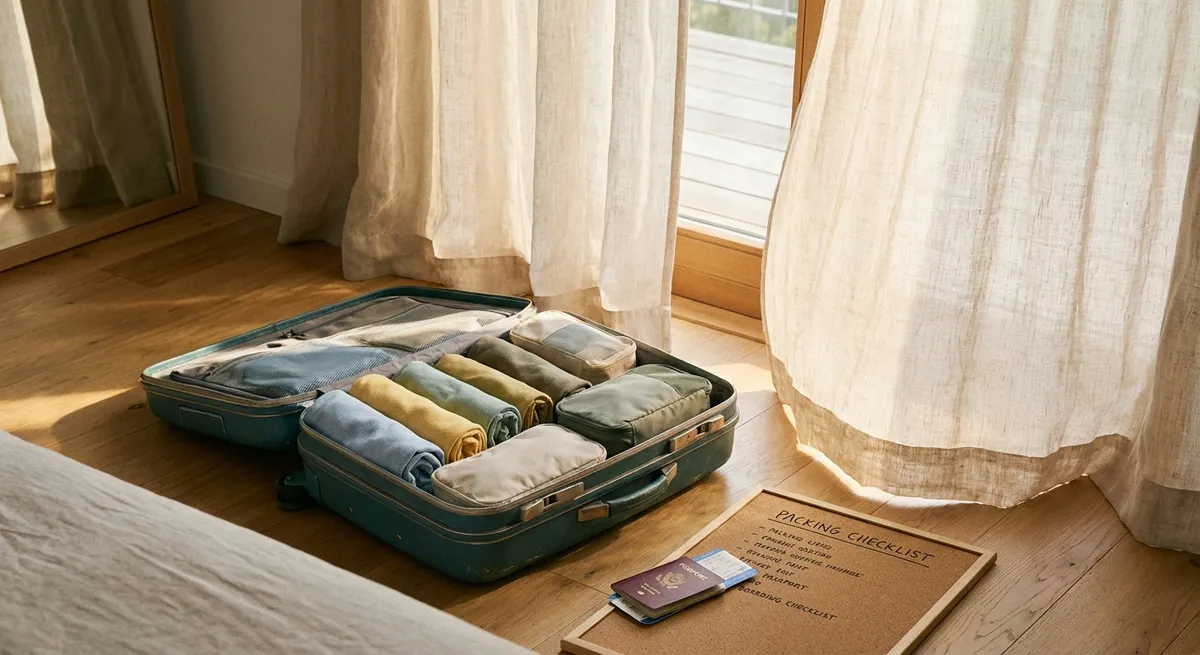
Use packing cubes, zip pouches, or even simple gallon-size freezer bags to mark the zones. Once you use a system like this for one trip, your brain gets used to it, and packing for the next trip becomes much faster because you’re repeating a known “layout” instead of starting from scratch.
Pre-Pack a Tiny “Arrival Kit” for the First Hour at Your Destination
The first hour after you arrive can set the tone for your whole trip. You’re tired, maybe disoriented, and you don’t want to dig through your entire bag just to feel human again.
Create a small “arrival kit” that lives at the very top of your suitcase or in your personal item:
- Travel-size toothpaste and toothbrush
- Face wipes or a mini cleanser and moisturizer
- Deodorant and lip balm
- Fresh socks and underwear
- Basic meds you might need quickly (pain reliever, allergy pill, motion sickness tablet—follow dosage guidelines and local regulations)
- A printed or offline copy of your accommodation address and check-in info
This kit lets you reset quickly: change one or two items, rinse your face, refresh your breath, and have your key details ready, even if your phone battery is low or you don’t have service yet. It’s a small step that makes arrivals feel calmer and more controlled.
Make Every Item Earn Its Place (and Spot “Space Wasters” Early)
Before anything goes into your suitcase, ask one question: Does this item earn its space? That means it should deliver at least one of these:
- Used multiple times (not a single-event item)
- Works in several outfits or situations
- Replaces something bulkier (for example, a lightweight packable jacket instead of a heavy coat)
- Solves a high-stress issue for you personally (like noise-canceling earbuds if you’re a light sleeper)
Watch for silent “space wasters” that sneak into many bags:
- Shoes that only work with one outfit
- Hair tools you barely use at home
- Full-size toiletries (especially shampoo/conditioner provided at many hotels)
- Heavy books when you could use an e-reader or download reading material offline
Lay everything out on your bed or floor before you bring the suitcase over. Seeing it all together makes it easier to cut duplicates and single-use items. Aim to remove at least 3–5 things during this edit—your back, shoulders, and future self will thank you.
Treat Your Personal Item Like a Mini Survival Kit
Your personal item (backpack, tote, or under-seat bag) is the real MVP of travel. If your checked bag is delayed or overhead bins are full, this is the bag that keeps your trip moving.
Pack it with three priorities in mind: access, comfort, and continuity.
- Access: Keep passports, IDs, boarding passes, wallet, and phone in a spot you can reach without emptying the bag. Use a slim pouch or zip pocket for important documents.
- Comfort: Add a light layer (hoodie or scarf), snacks, hydration (empty bottle to fill after security), and anything that helps you rest (earplugs, eye mask, or neck pillow if you truly use it).
- Continuity: Pack a 24-hour “backup” set: one change of underwear, a spare shirt, basic toiletries within airline liquid rules, and absolutely all your essential medications (in original containers when possible, and in your carry-on—never checked).
Organize your personal item in vertical layers, not as a deep “pit” of things. Use small pouches to group items and place the “high-use” pouch (documents, phone charger, earbuds) on top. That way, you’re not that person holding up the line while digging around for a boarding pass.
Conclusion
Packing well isn’t about memorizing dozens of clever tricks; it’s about building a repeatable system that works for you. When you travel with a simple clothing “uniform,” clear zones in your suitcase, an arrival kit, thoughtful item selection, and a dialed-in personal item, the whole travel experience feels smoother.
Next time you’re getting ready for a trip, treat your suitcase like a tiny, well-designed home: everything has a purpose, everything has a place, and everything you bring genuinely supports the way you like to travel. That’s where the real packing magic happens.
Sources
- U.S. Department of State – Travel Tips - Official guidance on preparing for trips, documents, and safety considerations
- Transportation Security Administration (TSA) – What Can I Bring? - Detailed rules on packing liquids, medications, electronics, and other items in carry-on vs. checked bags
- Centers for Disease Control and Prevention (CDC) – Travelers’ Health - Advice on medications, health kits, and staying healthy while traveling
- Mayo Clinic – Travel and Health - Recommendations for travel health kits and personal medications on the road
- Harvard Business Review – How to Pack a Suitcase Efficiently - Practical strategies and research-backed tips on efficient packing and organization
Key Takeaway
The most important thing to remember from this article is that this information can change how you think about Packing Tips.