Packing can either set you up for a smooth, stress-free adventure—or weigh you down before you even leave home. The good news: you don’t need specialty gear or extreme minimalism to pack smarter. With a little strategy, you can fit more into less space, stay organized on the road, and keep your bag light enough that you still actually want to carry it.
Below are five practical, traveler-tested tips to help you pack confidently for almost any trip.
Tip 1: Build Outfits, Not Items
Instead of tossing random clothes into your bag, start with complete outfits. Picture what you’ll wear each day based on your actual plans: walking tours, dinners out, hiking, beach days, work meetings, or travel days.
Choose a simple color palette—two main neutrals (like black and beige or navy and gray) plus one or two accent colors. This lets most tops and bottoms mix and match, multiplying outfit options without adding more pieces.
Lay everything out on your bed and ask:
- Does every top match at least two bottoms?
- Can each item be worn in more than one situation (day and night, casual and slightly dressy)?
- Are you packing “just in case” clothes you never actually wear at home?
If something doesn’t work in at least two outfits, it probably doesn’t earn a spot in your bag.
Tip 2: Pack in Layers, Not Bulky Items
Layers give you flexibility without the bulk. A single heavy sweater takes up a lot of space and is only comfortable in certain temperatures. Instead, pack:
- A lightweight base layer (T-shirt or thin long sleeve)
- A mid-layer (thin sweater or fleece)
- A compact outer layer (packable jacket or windbreaker)
- Lightweight but warm (like merino wool or technical synthetics)
- Quick-drying (so you can wash in a sink if needed)
- Wrinkle-resistant (to look put together straight from your bag)
You can combine these to handle a wide range of climates, from cool evenings to chilly flights, while still fitting everything into a carry-on. Choose fabrics that are:
Wear your bulkiest pieces on the plane—like sneakers, boots, or your heaviest jacket—to save space and keep you comfortable in over-air-conditioned airports.
Tip 3: Use a Simple Packing System (That You’ll Actually Maintain)
Staying organized isn’t about having the fanciest cubes or bags; it’s about using a system you can easily stick to while tired, jet-lagged, or rushing to check out.
Pick one simple rule, such as:
- “Top half / bottom half / everything else” system
- One cube or section for tops
- One for bottoms
- One for underwear, socks, and pajamas
Or:
- “By purpose” system
- Clothes for day-to-day
- Clothes for activities (gym, hiking, swimming)
- Sleepwear + lounge
- Small bag for undergarments and swimwear
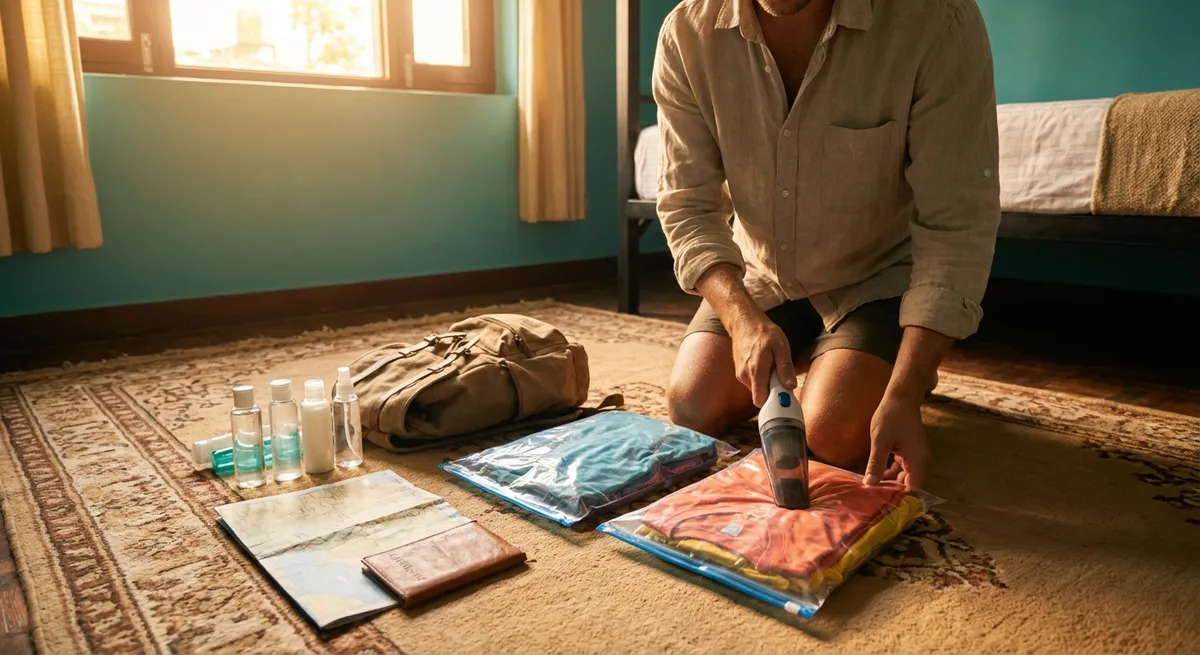
Use lightweight packing cubes, large zip bags, or even reusable grocery totes—whatever you already have that keeps categories separate. The key is consistency: always put items back in their category. That way, finding a clean shirt doesn’t require completely exploding your suitcase across the hotel room floor.
Tip 4: Turn Toiletries into a Tiny, Travel-Ready Kit
Toiletries are where bags quietly gain a lot of extra weight and bulk. Instead of bringing full-size products “just in case,” build a slim, permanent travel kit that can live in your suitcase.
Focus on:
- Travel-sized containers (reusable 100 ml / 3.4 oz or less) for liquids
- Multi-use products (like a moisturizer with SPF, or shampoo that works as body wash in a pinch)
- Solid versions when possible (solid shampoo, bar soap, solid perfume) to reduce spill risk and fit into carry-on rules more easily
Put all liquids into a transparent, resealable bag that meets airline security regulations. Keep a small checklist inside your toiletry pouch so you can quickly scan it before every trip (e.g., toothbrush, toothpaste, deodorant, face wash, travel-sized sunscreen, any prescription medication). Refill immediately when you get home so it’s always ready to go.
Tip 5: Make a Micro “Day Kit” You Can Grab and Go
Think beyond the suitcase: what do you actually need on you during long travel days or out exploring a new city?
Create a small “day kit”—a pouch or organizing case—that moves easily between your personal item, daypack, or purse. It might include:
- Earplugs and a sleep mask
- A refillable water bottle (empty for airport security, then filled after)
- Compact power bank and charging cable
- Travel-sized hand sanitizer and tissues
- A few bandages, pain reliever, and any must-have personal meds
- A pen (for forms and quick notes)
Having all of this in one grab-and-go kit means you’re always ready for long flights, bus rides, or spontaneous day trips—without rummaging through your entire bag every time you need something small.
Conclusion
Smart packing isn’t about strict rules or complicated gear; it’s about making deliberate choices before you zip your bag. When you build outfits instead of random items, rely on layers instead of bulk, keep a simple organizing system, streamline toiletries, and prepare a tiny day kit, your luggage starts working for you instead of against you.
Your future self—tired, excited, and eager to explore—will be grateful every time you can find exactly what you need in seconds and head out the door lighter, faster, and ready for whatever your trip brings.
Sources
- U.S. Transportation Security Administration (TSA) – Liquids Rule - Official guidelines on what toiletries and liquids you can pack in carry-on and checked baggage
- U.S. Department of State – Traveler’s Checklist - Government guidance on travel preparation, including documents and essentials to organize before a trip
- Mayo Clinic – Travel and Chronic Conditions: Pack Smart - Practical tips for packing medications and health-related items safely
- Cleveland Clinic – How to Pack a First Aid Kit for Travel - Medical advice on what to include in a compact health/first-aid pouch
- REI Co-op – Layering Basics - Detailed explanation of how to use layering to stay comfortable in different climates while keeping your clothing load light
Key Takeaway
The most important thing to remember from this article is that this information can change how you think about Packing Tips.