Packing doesn’t have to be the part of your trip you dread. With a little strategy, your suitcase can become a portable command center that keeps you calm, organized, and ready for whatever your journey throws at you. This guide walks you through five practical, field-tested tips that make packing feel less like chaos and more like confidence.
Start with Your “Non‑Negotiables” Before Anything Else
Before you even think about outfits, lock in the essentials you absolutely cannot travel without. These are the items that would seriously derail your trip if they went missing or ended up in checked baggage.
Make a short, non-negotiable list that always includes your passport or ID, wallet, phone, medication, glasses or contacts, and any critical documents like visas or printed confirmations. Add destination-specific must-haves such as an adapter, vaccination card, or physical map if you’ll be offline. Pack these first into your personal item (not your checked suitcase), ideally in a small pouch so you can grab everything at once. Doing this upfront instantly reduces stress—you know the “irreplaceable” items are handled, and everything else becomes optional or easily replaceable.
Build Outfit “Systems,” Not Single Pieces
Instead of tossing random clothes into your suitcase, think in terms of complete systems: outfits that mix and match easily and work in multiple settings. This is the key to packing light without feeling like you’re wearing the same thing every day.
Choose a base color palette (like black, navy, or beige) and stick to 2–3 accent colors. Every top should go with every bottom, and shoes should work with nearly everything you’ve packed. Prioritize fabrics that are lightweight, wrinkle-resistant, and quick-drying so you can wash items in a sink or hotel bathroom if needed. Lay outfits out on your bed first to visually confirm combinations, then remove one full outfit—you usually don’t need as many clothes as you think. This approach gives you flexibility for changing weather, last-minute plans, and longer trips without overstuffing your bag.
Use a “Layers and Zones” Strategy for Your Carry‑On
How you pack your bag matters just as much as what you put in it. A simple “layers and zones” strategy keeps you from tearing your luggage apart every time you need something mid-journey.
Think in vertical layers: items you’ll need during transit (like snacks, headphones, a light sweater, and your toiletry bag) should be at the top or in easily accessible compartments. Less urgent items (extra clothes, backup shoes) go deeper. Use zones—or dedicated pouches—for categories: one pouch for tech and chargers, one for toiletries, one for meds and health items, one for documents. This keeps security checks smoother, prevents tangled cables, and makes long flights more comfortable because you’re not hunting for earplugs in the dark. When each category has a “home,” it’s also much easier to re-pack quickly when you’re on the move.
Downsize Liquids and Toiletries with Intention
Toiletries are where many bags quietly gain unnecessary weight and bulk. With a little intention, you can shrink your liquids kit without sacrificing comfort.
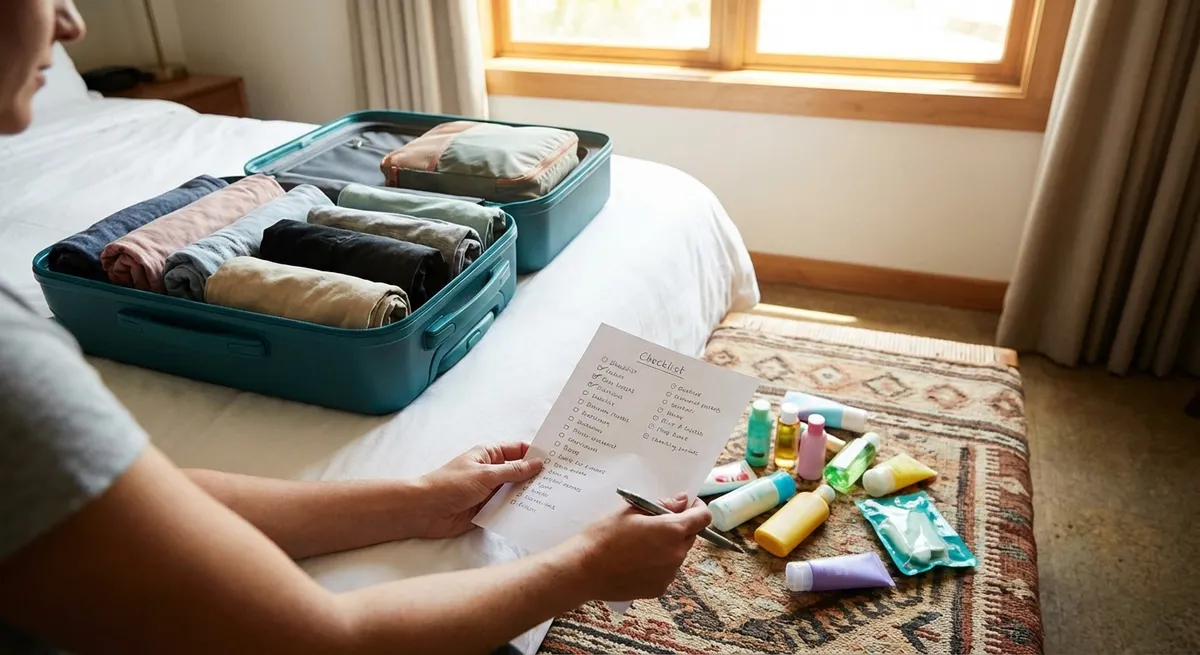
Transfer products into travel-sized containers, but only pack what you realistically use in a week or two—most people don’t finish full minis on a single trip. Opt for solid alternatives where possible: bar shampoo and conditioner, solid perfume, or bar soap cuts down on leaks and gets around liquid limits. Keep your 3-1-1 bag (liquids under 100 ml in a clear quart-sized bag) easily accessible in your carry-on for security screening. Consider what your accommodation will provide; skip items like basic shampoo or body wash if your hotel or hostel typically includes them. A lean, well-curated toiletries kit saves space, reduces spill risks, and speeds you through airports.
Create a Tiny “In‑Transit Survival Kit”
Your in-transit comfort can make or break the first day of your trip, so pack a mini survival kit designed just for the journey. This is separate from your main toiletry or tech bags and should live in your personal item within arm’s reach.
Include a small pack of tissues, lip balm, hand sanitizer, a pen (for customs forms), earplugs, an eye mask, a packable toothbrush and toothpaste, and one or two essential meds like pain relievers or motion sickness tablets. Add a reusable water bottle (filled after security) and a compact snack like nuts or granola bars to avoid relying completely on airport food. This little kit makes long flights, train rides, and bus journeys much more comfortable and helps you arrive feeling human, not drained. It’s especially helpful if checked bags are delayed—at least you have everything you need for the first stretch.
Conclusion
Smart packing isn’t about fitting your entire closet into a suitcase; it’s about being intentional so you can focus on the trip, not your stuff. When you lock in your non-negotiables, think in outfit systems, organize your bag by layers and zones, streamline your toiletries, and keep a small in-transit survival kit close, you turn packing into a strategic advantage. The result: lighter bags, smoother travel days, and more energy left for the experiences that really matter.
Sources
- U.S. Department of State – Travel Checklist - Official guidance on essential documents and preparation before international travel
- Transportation Security Administration (TSA) – What Can I Bring? - Detailed rules on carry-on items, liquids, and how to pack for airport security
- Centers for Disease Control and Prevention (CDC) – Travelers’ Health - Advice on medications, health kits, and destination-specific health needs
- Mayo Clinic – Jet Lag Disorder - Information on staying comfortable during long flights and managing jet lag
- REI Co-op – How to Pack a Suitcase - Practical guidance on organization methods, clothing choices, and packing strategies
Key Takeaway
The most important thing to remember from this article is that this information can change how you think about Packing Tips.