Packing doesn’t have to feel like solving a puzzle every time you travel. With a few smart moves, you can build a flexible “travel kit” that works for weekend getaways, long-haul adventures, and everything in between. Instead of starting from zero before every trip, you’ll have a reliable system you can tweak in minutes—and spend your energy on the fun parts of travel, not the logistics.
Build a Reusable “Travel Core” You Never Fully Unpack
Think of your packing as two parts: a permanent “travel core” and trip-specific add‑ons. Your travel core is a small set of items that live in your bag or a dedicated drawer and only get removed to be refilled or washed.
Your core might include: a compact toiletry kit (with small duplicates of your daily essentials), universal travel adapter, lightweight tote or packable daypack, basic meds, a dedicated charging cable set, and a sleep kit (earplugs, eye mask, maybe a tiny sound machine app on your phone).
Store this all together in a pouch or cube. When a trip pops up, you’re starting at 60% packed instead of 0%. You just add clothes, weather-specific gear, and any special items (like formal wear or ski gear). This dramatically cuts pre-trip stress and lowers the risk of forgetting the “boring but important” stuff like chargers and toothbrushes.
Tip: After each trip, restock your core immediately—refill liquids, replace meds before they expire, and stow it back in your bag. Future you will be very grateful.
Use “Outfit Anchors” Instead of Packing Full Looks
Instead of packing separate, complete outfits, build around 2–3 “anchors” that everything else can connect to. These anchors are simple, neutral pieces that can dress up or down and mix with almost anything: think dark jeans or chinos, a black or navy dress, or a neutral skirt plus a versatile top.
From there, add layers and accents: a light sweater or button-up, a scarf, a belt, or a statement necklace. The anchors do the heavy lifting; accessories and layers change the vibe. This lets you create multiple looks from fewer pieces—perfect for photos and different activities—without a bulging suitcase.
A quick way to check versatility before you pack: lay your clothes out on the bed and make sure every top matches at least two bottoms and vice versa. If an item only works with one other piece, it either needs a promotion to “anchor” status or it stays home.
Bonus: Sticking to a loose color palette (for example: navy, white, and tan with one accent color) makes mixing and matching effortless and reduces “nothing goes together” stress on the road.
Pack by Activity, Not by Day
Instead of thinking, “Monday outfit, Tuesday outfit,” plan around what you’ll actually be doing: walking city streets, beach days, hiking, nice dinners, coworking sessions, transit days, etc. This narrows your packing list to what your trip truly requires.
For each activity type, list what you must have versus what’s just “nice to have.” For example:
- City walking: breathable shoes, sun protection, crossbody bag, light layer
- Beach/pool: swimsuit, quick-dry towel, sandals, cover-up, dry bag or zip pouch
- Hiking: moisture-wicking layers, hat, reusable water bottle, small first-aid basics
- Evenings out: one dressier outfit that can repeat with different accessories
This approach prevents overpacking “just in case” outfits that never leave your suitcase. If an item doesn’t clearly serve at least one planned activity—and ideally two or three—it probably doesn’t earn the space.
Use your itinerary (even a rough one) as a filter. You’ll end up with a leaner, more intentional bag that actually supports how you travel instead of how you might travel in some hypothetical version of your trip.
Create Smart “Micro-Kits” Inside Your Bag
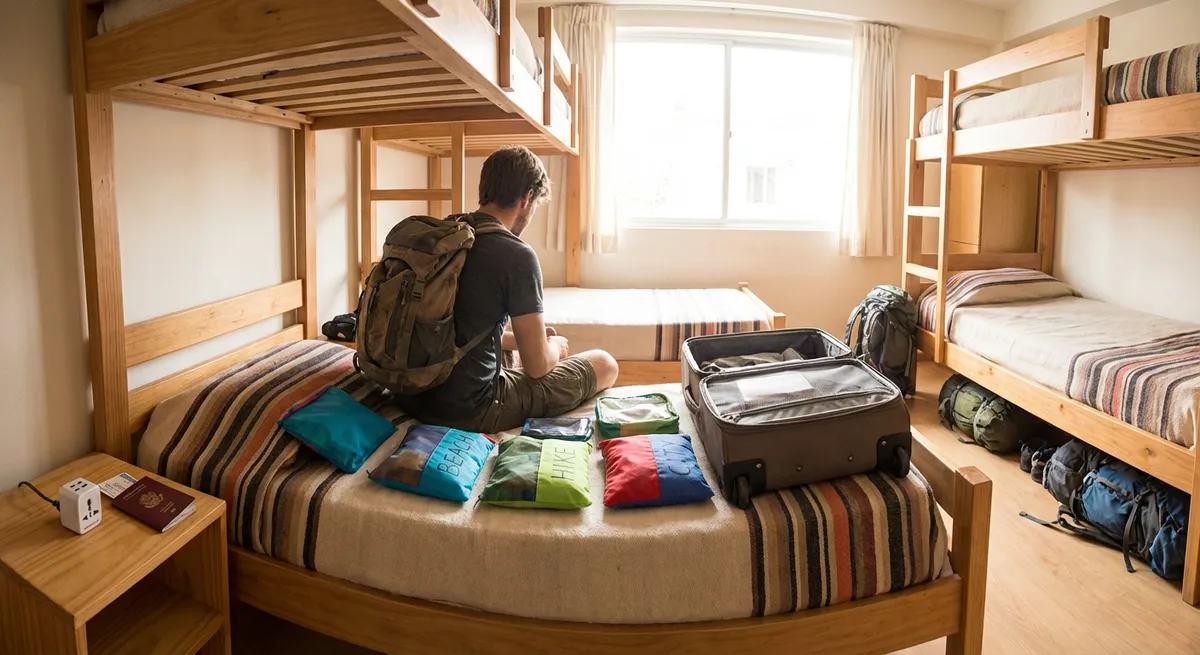
Small, purpose-built kits inside your main bag save time and keep you calm when things get chaotic. Instead of digging for loose items, you grab the exact pouch you need.
Some useful micro-kits to consider:
- In-flight/Transit kit: lip balm, hand sanitizer, wipes, pen, sleep mask, earplugs, headphones, a small snack, and any meds you’ll need in the next 12 hours.
- Health & comfort kit: basic pain reliever, motion sickness tablets (if you need them), bandages, a few disinfecting wipes, blister care strips, and any prescription meds.
- Tech kit: universal adapter, charging cables, small power strip or travel USB hub, spare earbuds, and a tiny cable organizer or twist ties.
- Wet/dirty gear kit: a foldable laundry bag or even a large zip-top bag for damp items, muddy shoes, or worn clothes that should stay away from clean ones.
Use different colored or labeled pouches so you can identify them at a glance. This not only keeps you organized but also makes security screening, hotel unpacking, and day trips smoother. Over time, you’ll refine what each kit needs based on the way you personally travel.
Optimize Weight and Space with Laundry in Mind
You can pack significantly less if you plan for laundry from the start instead of trying to avoid it. Even one wash mid-trip can cut your clothing load almost in half, especially on longer journeys.
Before you pack, check if your accommodation has laundry facilities or nearby laundromats, or if they offer paid service. If not, consider lightweight, quick-dry items you can wash in the sink or shower and hang overnight on a small travel clothesline or hanger.
A simple laundry mini-kit might include: a tiny bottle or leaves of concentrated detergent, a sink stopper (if you’ll be washing in sinks), and a packable clothesline or a few lightweight clips. Favor fabrics that dry quickly—avoid heavy cotton and thick denim if you know you’ll be hand-washing.
The upside: your bag is lighter, moving between destinations is easier, and you rely on a smaller, well-tested wardrobe you actually like wearing. Plus, if your trip takes an unexpected turn—an extra night in one city, a spontaneous detour—you know you can stretch your clothing without stress.
Conclusion
A great packing strategy isn’t about squeezing more into your suitcase; it’s about packing more usefully. By creating a reusable travel core, relying on flexible outfit anchors, planning by activity, using micro-kits, and embracing laundry, you transform packing from a dreaded chore into a quick, confident routine.
The payoff is huge: less time repacking, fewer “I forgot…” moments, and more energy for the experiences you’re actually traveling for. Start small—set up one micro-kit or build your first travel core—and let your system grow with every trip.
Sources
- Transportation Security Administration (TSA) – What Can I Bring? - Official guidelines on items allowed in carry-on and checked luggage, helpful when planning your travel core and micro-kits.
- U.S. Department of State – Travel Tips - General travel preparedness advice, including documents, health, and safety considerations that influence what you pack.
- CDC Travelers’ Health - Country-specific health recommendations and packing considerations such as vaccines, medications, and preventive items.
- REI Co-op – Expert Advice: How to Pack a Suitcase - Practical guidance on organizing items, choosing fabrics, and using packing tools like cubes and compression bags.
- Harvard Health Publishing – Travel and Health - Evidence-based insights on staying healthy on the road, informing health and comfort items for your packing list.
Key Takeaway
The most important thing to remember from this article is that this information can change how you think about Packing Tips.