Packing doesn’t have to feel like a puzzle you never quite solve. With a few smart moves before you zip your suitcase, you can make every trip smoother, lighter, and way less stressful. Think of your luggage as your mobile home base: if it’s organized, versatile, and easy to handle, your whole trip feels easier. This guide walks you through five practical, road-tested packing tips that keep your bag under control and your adventures wide open.
Start With Your “Travel Uniform” and Build Around It
Before you reach for that cute-but-impractical jacket, lock in your “travel uniform” — the core outfit formula you’ll wear most days. This isn’t about fashion minimalism; it’s about making your clothes work harder so you can pack less and still feel like yourself.
Pick a base palette (like black, navy, or beige) and two accent colors. Then choose tops and bottoms that all mix and match in that mini color universe. Aim for breathable, wrinkle-resistant fabrics you can re-wear: merino wool, performance blends, and lightweight cotton are your best friends. Shoes are the real space hogs, so lock in what you’ll actually use: one comfortable walking pair you can wear all day, and (if needed) one “upgrade” pair for nicer dinners or events. Wear your bulkiest shoes and layers on travel days to save suitcase space.
With a consistent travel uniform, you’ll spend less time choosing outfits each morning and more time exploring. Plus, photos still look varied because you’re changing up combinations, not hauling your entire closet.
Turn Toiletries Into a Permanent, Grab-and-Go Kit
The biggest packing time-waster? Rebuilding your toiletry kit from scratch before every trip. Instead, treat toiletries like a permanent piece of travel gear you keep packed and ready to go.
Start with a clear, TSA-compliant bag and fill it with travel-sized versions of what you actually use daily: cleanser, moisturizer, sunscreen, deodorant, toothpaste, and any must-have makeup or hair products. Choose multi-use items where possible, like a moisturizer with SPF, a tinted balm that works for lips and cheeks, or a solid shampoo bar that can double as body wash. Keep this kit stored in your suitcase or a dedicated “travel drawer,” not mixed into your everyday bathroom shelf.
If you’re flying, verify the liquids rule (currently 3.4 oz/100 ml containers or less, all fitting in a single quart-sized bag for carry-ons) and keep meds in original labeled packaging. Refill or replace items right when you get home, while your memory of what you used (or didn’t) is still fresh. That way, the next time you book a trip, your toiletry kit is already 90% done — you just grab and go.
Use Packing Zones So You Always Know Where Everything Lives
Instead of thinking in terms of “clothes vs. not clothes,” organize your bag into clear zones: Sleep, Daywear, Tech, Health, and “Grab Now.” This makes it way easier to find things quickly in a cramped hotel room, hostel, tent, or overnight train.
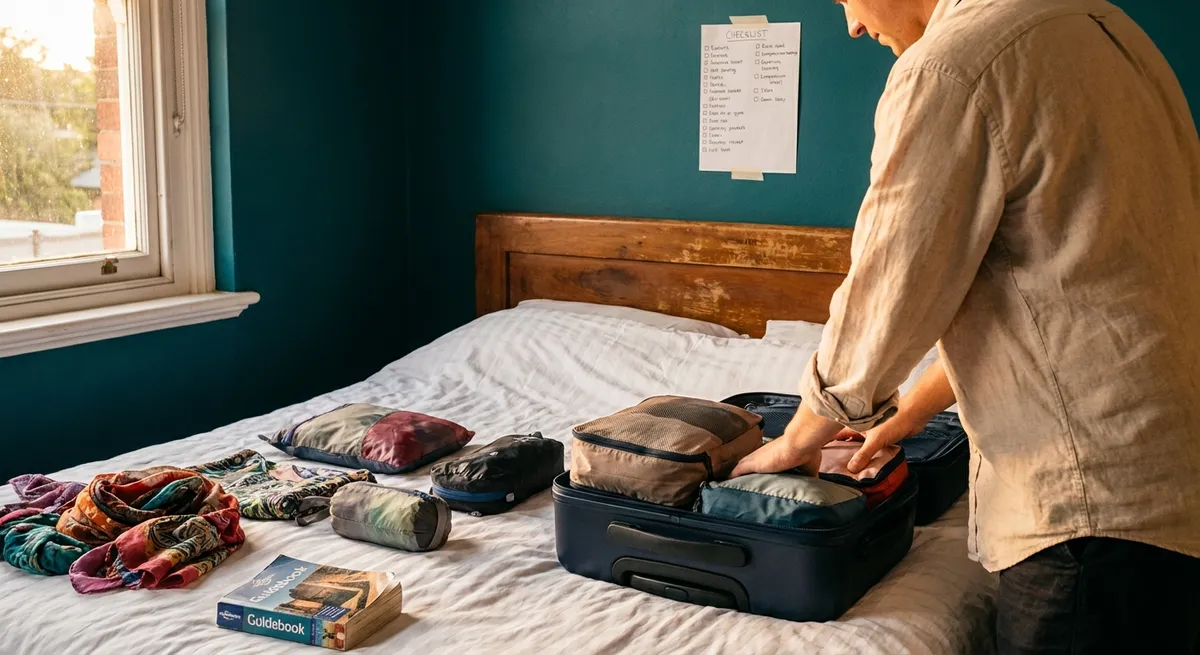
Use packing cubes or small pouches to create these zones:
- Sleep: Pajamas, eye mask, earplugs, lightweight socks
- Daywear: Tops, bottoms, underwear, and a small laundry bag for dirties
- Tech: Chargers, adapters, headphones, power bank, backup cables
- Health: Medications, basic first aid (bandages, pain reliever, motion sickness pills), hand sanitizer, disinfecting wipes
- Grab Now: Passport, wallet, pen, snacks, lip balm, tissues — all in a small pouch that moves from your bag to your daypack
Keep the “Grab Now” kit in your personal item (not your checked luggage) so you can access it on planes, buses, or long train rides. Once you get to your destination, put that same pouch into your day bag. Having fixed zones means you’re not constantly digging and repacking, and you’ll immediately notice if something’s missing.
Pack for Laundry, Not for “Every Scenario”
Most people overpack because they imagine edge-case situations: a fancy dinner that might not happen, a surprise hike, or “just in case” weather. A more realistic strategy is to pack for 5–7 days and assume you’ll do laundry on longer trips.
Check your destination in advance: Does your accommodation have a washer? Is there a laundromat nearby? If not, plan for simple in-room washing. A small bottle of concentrated travel detergent or even a bar of laundry soap takes up almost no space. Use the sink, hang items on a travel clothesline or hangers, and you’ll stretch a handful of outfits into a multi-week wardrobe.
Prioritize items that dry quickly and don’t wrinkle much: lightweight synthetics, merino wool, and quick-dry underwear. This approach dramatically shrinks your suitcase while still keeping you clean, comfortable, and ready for whatever your trip brings. You’re not underprepared — you’re relying on systems (laundry) instead of hauling backup outfits you’ll never wear.
Build a Tiny “Travel Problems” Kit That Saves the Day
The difference between a stressful trip and a smooth one often comes down to tiny tools you wish you had: a safety pin, a spare tote, or a bit of tape. Build a compact “problems kit” that lives in your luggage and barely takes up any room.
Great items to include:
- A few adhesive bandages and blister patches
- Mini sewing kit or just a needle, a neutral thread color, and a couple of safety pins
- Small roll of tape or a strip of duct tape folded onto itself
- Reusable shopping tote that folds into a pocket-size pouch
- Compact microfiber towel (great for hostels, picnics, sudden rain, or beach days)
- Zip-top bags for wet swimsuits, leaky toiletries, or organizing snacks
Keep this kit in an outer pocket or near the top of your main compartment so you can reach it fast. You probably won’t use every item on every trip, but when you do need one, it feels like magic. A broken zipper, a ripped seam, an unexpected picnic, or surprise market haul becomes a non-issue instead of a headache.
Conclusion
Packing well isn’t about being a minimalist for its own sake; it’s about making room in your trip — and in your head — for the good stuff. When you anchor your bag with a reliable travel uniform, keep a permanent toiletry kit, organize by zones, plan around laundry, and carry a tiny “problems kit,” your suitcase stops being chaos and starts being a calm, reliable base. The result: less pre-trip stress, fewer mid-trip frustrations, and more energy for the adventures you’re actually traveling for.
Sources
- U.S. Transportation Security Administration (TSA) – Liquids Rule - Official guidance on carry-on liquids, medications, and other restricted items
- U.S. Department of State – Travel Checklist - Government checklist for documents, health prep, and planning considerations
- Mayo Clinic – Travel Health Tips - Medical advice on staying healthy while traveling, including essentials that can influence your packing list
- REI Co-op – How to Choose Travel Clothing - Detailed breakdown of fabrics, quick-dry gear, and layering strategies useful for building a travel wardrobe
- CDC – Travelers’ Health - Destination-specific health recommendations that help determine what health and hygiene items to pack
Key Takeaway
The most important thing to remember from this article is that this information can change how you think about Packing Tips.