Packing doesn’t have to be the stressful pre-trip chaos that steals the joy from your adventure. With a few strategic tweaks, your suitcase can turn from a black hole of “just in case” items into a super-organized launchpad for your travels. This guide dives into five practical, real-world packing tips that help you stay light, prepared, and ready for anything from a weekend getaway to an international escape.
Build a Personal “Travel Uniform” Instead of Random Outfits
One of the biggest packing mistakes is planning day-by-day outfits instead of planning a system you can mix and match. That’s where a travel uniform comes in: a small set of pieces that all work together.
Choose a simple color palette (for example: black, white, and one accent like olive or blue). Pick 2–3 bottoms that go with every top, and 3–5 tops that can dress up or down. Add one lightweight layer (like a cardigan or packable jacket) and one slightly nicer option for evenings. This approach shrinks your packing list while expanding your outfit options.
Think in terms of textures and function, not trends alone. Quick-dry fabrics and wrinkle-resistant materials hold up better in transit and re-wear well. Shoes take up the most space, so anchor your “uniform” around 2–3 pairs max: one comfortable walking shoe, one versatile nicer pair (e.g., loafers or simple flats), and—only if your trip really requires it—one specialty option like hiking boots or sandals. When everything coordinates, you can stop overthinking clothes and start focusing on the actual trip.
Turn Toiletries into a Grab-and-Go Kit You Never Unpack
Last-minute packing panic usually starts in the bathroom. You’re trying to decant shampoos, digging for your tiny toothpaste, and hoping you didn’t forget something essential. Solve this once by creating a dedicated travel-only toiletry kit that lives in your bag between trips.
Use a clear, TSA-compliant pouch or dopp kit and stock it with duplicates of your essentials: travel-size toothpaste, toothbrush, deodorant, miniature skincare, travel-size sunscreen, razor, small hairbrush/comb, and any medications you regularly take (plus copies or extra scripts if needed for longer trips). Refill or replace items right when you get home so it’s always ready for next time.
Stick to solid versions when you can—solid shampoo, conditioner bars, facial soap, and even solid perfume balms reduce leak risk and help with liquid restrictions on flights. Keep prescriptions in original labeled containers and, if flying, in your personal item in case your checked bag is delayed. With a standing kit, you’re not reinventing your routine every trip; you’re just zipping up and going.
Use Smart Layering to Beat Weather Surprises and Save Space
Weather is one of the biggest wildcards in travel—and one of the fastest ways to overpack. Instead of stuffing your bag with “just in case” bulky items, rely on a thoughtful layering system that handles temperature swings without taking over your suitcase.
Start with breathable base layers: lightweight T-shirts or tank tops in moisture-wicking fabrics. Add a mid-layer like a thin sweater, fleece, or light sweatshirt. Top it with a compact outer layer such as a packable rain jacket or windbreaker. Each piece should work alone in mild temperatures and stack together for colder conditions.
Choose a single, packable outer layer that’s water-resistant or waterproof and windproof. Many packable jackets compress into their own pocket, disappearing into small bags. For colder destinations, swap heavy coats for a thin thermal base layer you can wear under your usual clothes—these take up far less room than a big parka and are surprisingly warm.
This layering approach lets you adapt on the go: shed layers on warm afternoons, bundle up at night, and stay prepared for sudden rain without dragging around a heavy coat “just in case.”
Pack a Small “In-Transit” Pouch You Can Reach Instantly
Whether you’re on a plane, train, or bus, constantly digging into your main bag is frustrating and disruptive. Instead, pack a small in-transit pouch—your mini command center for the journey—that you can keep at your seat or in the seatback pocket.
Use a small zip pouch or organizer and stock it with items you’ll actually use while traveling: headphones or earbuds, charging cable and small power bank, lip balm, hand sanitizer, tissues, a pen, a tiny snack, and any meds you might need during the journey (like motion sickness tablets or pain relievers). Add a copy (digital or printed) of key travel details like hotel address and reservation codes.
If you’re flying, keep this pouch at the top of your personal item. Once you board, pull it out and stow the bigger bag in the overhead bin. No climbing, no rummaging, no irritation. This tiny packing habit makes transit smoother and keeps essential items within arm’s reach the entire time.
Use a “Last-Out, First-In” System for Your Bag
The way you load your bag can make or break your first 24 hours in a new place. Instead of randomly stuffing items wherever they fit, pack in reverse order using a “last-out, first-in” system: what you’ll need first goes in last so it’s right on top when you arrive.
Think about what happens when you get to your destination: maybe you’ll want to change, brush your teeth, or grab essentials before crashing. Pack an “arrival bundle” near the top or in a dedicated cube: sleepwear, one change of clothes, basic toiletries, and any must-have nighttime items (like a sleep mask or earplugs). That way, even if you’re exhausted or your room isn’t fully organized yet, you can access what you need in seconds.
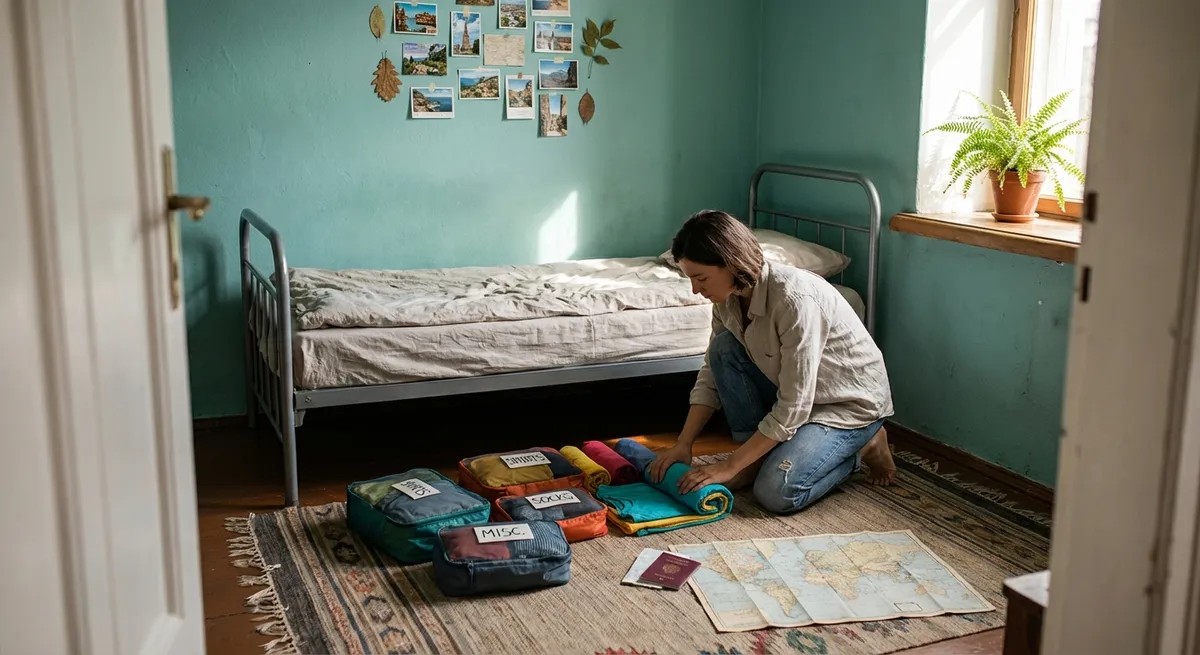
Place less urgent items—extra outfits, backup shoes, and overflow toiletries—deeper in your bag. If you use packing cubes, label or color-code them (for example: blue for clothing, clear for toiletries, bright color for arrival items). This system makes unpacking optional: you can live out of your bag without creating chaos, and your first night in a new place feels calm instead of cluttered.
Conclusion
Packing well isn’t about being perfect—it’s about creating systems that work every time you travel. A simple travel uniform, a ready-to-go toiletry kit, smart layers, an in-transit pouch, and a “last-out, first-in” packing strategy can transform your pre-trip routine from frantic to effortless. When your bag is organized and intentional, you don’t just save space; you save energy you can spend on exploring, connecting, and making memories. Pack once, stress less, and let the fun part of travel finally take center stage.
Sources
- Transportation Security Administration (TSA) – Travel Tips - Official guidance on liquids, carry-ons, and how to pack to move smoothly through security
- U.S. Department of State – Travel Advisories & Preparation - Offers important pre-trip planning information, including documentation and safety considerations
- Mayo Clinic – Travel Health Tips - Covers medication, health, and safety essentials to keep in mind while packing
- REI Co-op – Layering Basics for Travel and Outdoors - Explains how to build effective layering systems for varying weather conditions
- CDC – Traveling with Medications - Provides guidance on packing and carrying prescription medicines safely and legally
Key Takeaway
The most important thing to remember from this article is that this information can change how you think about Packing Tips.