Packing shouldn’t feel like a puzzle you’re destined to lose. With a few smart moves, you can turn the chaos of “Do I really need this?” into a confident, dialed-in system you’ll reuse for every trip. Whether you’re heading out for a long weekend or a multi-week adventure, these practical tips will help you pack lighter, stay organized, and actually enjoy the getting-ready part of travel.
Start With Your Days, Not Your Closet
Before you even touch your suitcase, plan your packing around your actual days, not your wardrobe.
Walk through your trip day by day and ask:
- What am I doing in the morning, afternoon, and evening?
- Will I need anything specific (hiking boots, swimwear, modest clothing, business attire)?
- Which pieces can work for more than one activity?
Write out a simple timeline (even in your phone notes) and plug in outfits that mix and match. Aim for a color palette of 2–3 main colors so tops and bottoms all work together. This prevents “just in case” pieces that never leave your bag and forces your packing to stay intentional.
By starting with your schedule rather than your favorite clothes, you end up with a capsule-style travel wardrobe that fits your trip instead of your “what if” anxiety.
Build a Lightweight “Essentials Kit” You Never Unpack
Instead of rebuilding your toiletry and essentials bag from scratch every trip, create a ready-to-go kit you never fully unpack—just refill.
Use a small pouch or clear toiletry bag and keep it stocked with:
- Travel-size toothbrush, toothpaste, floss, and deodorant
- Refillable travel bottles with your usual shampoo/conditioner/body wash
- Basic meds: pain reliever, allergy tablets, antidiarrheal, motion sickness tabs
- Bandages and a couple of disinfectant wipes
- Compact razor, nail clippers, tweezers
- A tiny stash of backups: spare contacts, hair ties, lip balm
Keep this kit stored in your suitcase or a dedicated drawer at home. After each trip, top up anything that’s low so it’s always “trip-ready.” This simple habit eliminates last-minute bathroom scavenger hunts and makes spontaneous weekends away much easier.
Use “Zones” Inside Your Bag So You Always Know Where Things Live
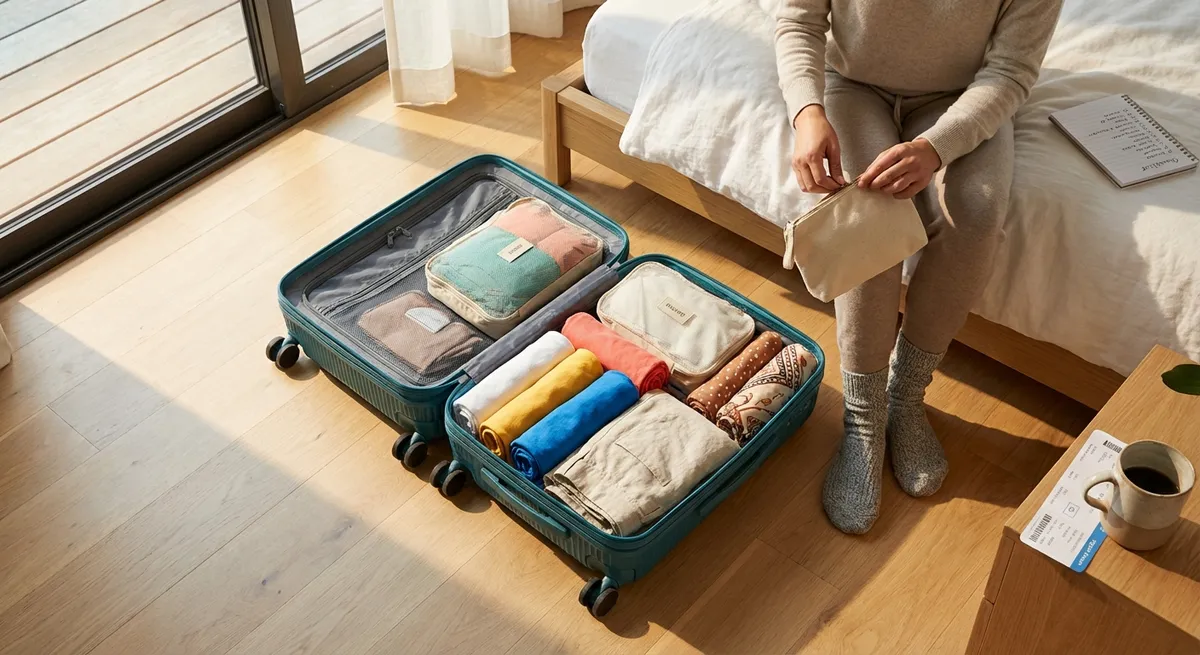
Think of your suitcase as a tiny studio apartment: everything needs its own “zone.”
Instead of tossing items in wherever they fit, assign each area a job:
- Packing cube or side section for clothes: Group by type (tops, bottoms, sleepwear, underwear) or by outfit.
- Dedicated tech pouch: Cables, adapters, power bank, headphones, and chargers all in one place.
- Health and hygiene pocket: Toiletries, meds, wipes, tissues, and a small pack of hand sanitizer.
- “In transit” kit: Eye mask, earplugs, pen, snacks, and a collapsible water bottle for planes or trains.
Using lightweight packing cubes or even simple fabric pouches reduces rummaging and repacking chaos. When everything has a “home,” unpacking at your destination is faster, and repacking to move locations becomes almost automatic.
Pack Clothes That Work Hard: Layers, Multipurpose, and Fast-Dry
The key to packing less isn’t suffering with fewer outfits—it’s choosing pieces that do more.
Look for:
- Layer-ready basics: A light sweater, a long-sleeve top, and a packable jacket can cover cool mornings, air-conditioned flights, and chilly evenings.
- Neutral bottoms: One pair of jeans or casual pants, one lighter option (like chinos or shorts), and one activity-specific bottom (hiking tights, running shorts, etc.) are often enough.
- Fast-dry fabrics: Items labeled moisture-wicking or quick-dry are easier to sink wash and rewear, cutting your clothing count nearly in half.
- Dress-up/dress-down pieces: A simple black dress or a neutral button-down can go from day exploring to dinner out with just a change of shoes or accessories.
If you’re staying somewhere with laundry or willing to do a quick sink wash, you can comfortably pack for 10+ days using roughly a week’s worth of clothes. Less bulk in your bag means more comfort on the move—and usually fewer baggage fees.
Create a Tiny “Oh-No” Kit for Travel Surprises
Even the best packing plan can’t prevent every curveball, but a compact “oh-no” kit can turn most mini-crises into non-events.
Stash a small pouch with:
- A roll of travel-size duct tape or gear repair tape (for torn bags, broken shoe soles, or luggage fixes)
- A mini sewing kit (two needles, a few safety pins, neutral thread, and a spare button)
- A couple of zip-top bags (for wet swimsuits, leaky bottles, or organizing snacks)
- A foldable tote bag or packable reusable bag (for overflow items or groceries on longer stays)
- A copy (digital or printed) of key info: passport photo page, confirmation numbers, emergency contacts
This little collection barely takes up any space but can save a travel day when something breaks, spills, rips, or doesn’t quite go as planned. Having a few smart backups lets you relax, knowing small problems won’t derail your trip.
Conclusion
Packing doesn’t have to be a stress test. When you plan around your actual days, keep a ready-to-go essentials kit, assign “zones” inside your bag, choose hard-working clothes, and carry a tiny “oh-no” kit, you turn packing into a repeatable system instead of a dreaded chore.
Use this on your next trip, then tweak it to match your style. The more you refine your personal packing setup, the more Travel Ready you’ll feel—before you’ve even left your front door.
Sources
- U.S. Department of State – Travel Checklist - Official guidance on documents, health, and safety items to prepare before a trip
- Transportation Security Administration (TSA) – What Can I Bring? - Detailed rules on what is allowed in carry-on and checked baggage
- Mayo Clinic – Travel and Health - Evidence-based advice on travel health, meds, and preparation
- Centers for Disease Control and Prevention (CDC) – Travel Health - Country-specific health notices and packing recommendations for medicine and preventive care
- REI Co-op Expert Advice – How to Pack a Suitcase - Practical strategies on packing efficiently, using organization systems, and choosing versatile gear
Key Takeaway
The most important thing to remember from this article is that this information can change how you think about Packing Tips.