Packing doesn’t have to be the stressful “night before” scramble. With a few intentional moves, your bag can feel lighter, more organized, and way more travel-ready—without sacrificing what you actually need. These five practical tips are designed to help you pack smarter, move faster, and enjoy your trip instead of wrestling with your luggage.
Start With Your Days, Not Your Closet
Before you even open your suitcase, map out what your trip actually looks like. Instead of thinking in “outfits,” think in days and activities. What are you doing morning, afternoon, and evening on each day? Are there dress codes, weather swings, or special events?
By matching clothes to specific moments (city walking, hiking, nice dinner, travel day), you avoid packing “just in case” items that never get worn. Lay everything out on your bed and ask, “What day and activity is this for?” If it doesn’t have a job, it stays home. This method keeps your bag lean while still making you feel prepared.
Bonus move: Take quick phone photos of your planned combinations. When you’re jet-lagged in a hotel room, you won’t waste time figuring out what to wear—you’ll just check your mini lookbook and go.
Build a Simple Color System So Everything Works Together
A loose color strategy makes packing insanely easier. Choose one dark neutral (black, navy, or charcoal), one light neutral (white, cream, or gray), and one or two accent colors (like olive, rust, or blue). Then, aim for every top to match every bottom.
This turns a few pieces into a lot of outfits. For example, three tops and three bottoms with compatible colors give you nine different combinations—before you even count layers or accessories. It also simplifies shoes: if your clothes follow a palette, you can usually get by with two pairs (one casual walking pair, one dressier or activity-specific pair).
The goal isn’t to look identical in every photo. It’s to create a flexible “mini wardrobe” that lets you mix and match effortlessly—especially when weather or plans change and you need to improvise.
Use a Packing Structure: Zones, Not Chaos
Instead of stuffing things wherever they fit, give everything a “zone” in your bag. This cuts down on digging, repacking, and that awful feeling that you’ve lost your passport in your own luggage.
A simple structure to follow:
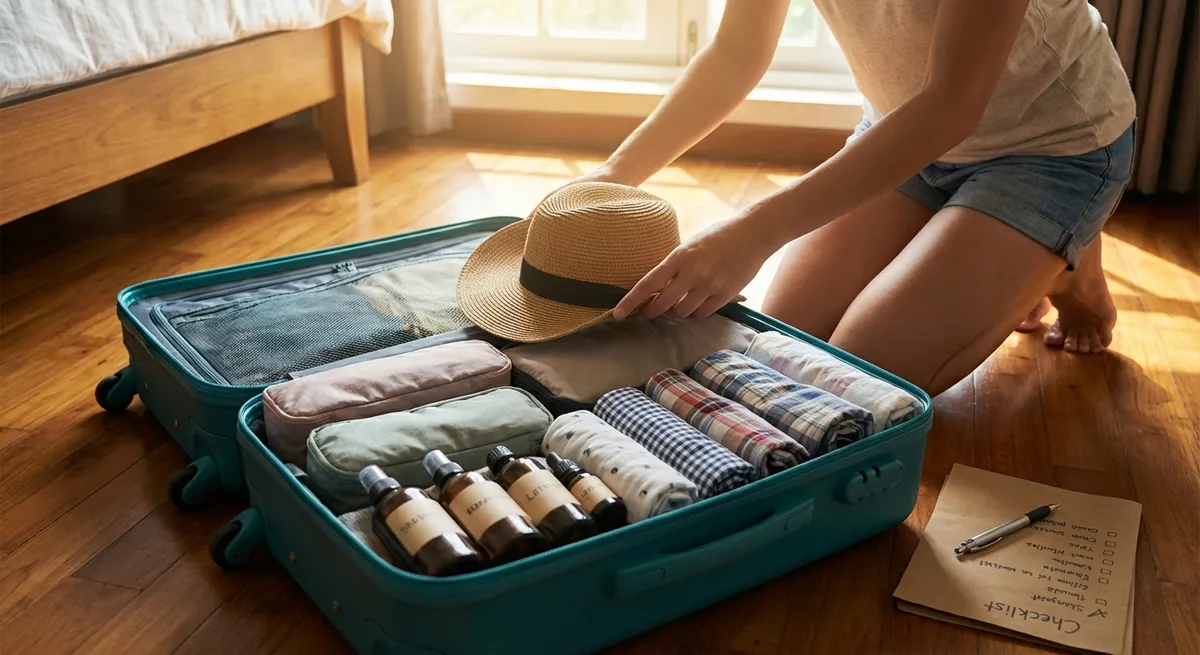
- Core zone (main compartment): Clothes, organized by packing cubes or rolled bundles (tops together, bottoms together, socks/underwear in a small cube).
- Access zone (top or front pocket): Items you’ll reach for often—light jacket, scarf, chargers, small toiletry bag, snacks, pen.
- Security zone (inner pocket): Passport, important documents, emergency cash, spare card. Always in the same place.
- Wet/dirty zone (separate pouch or plastic bag): Swimsuits, used socks, or anything damp/dirty so they don’t mix with clean items.
By keeping zones consistent every trip, you build “muscle memory.” You’ll know exactly where things live, which makes hotel changes, airport security, and early departures much smoother.
Shrink Your Toiletries Without Feeling Deprived
Toiletries are sneaky space hogs. The goal isn’t to bring everything—it’s to bring enough of the right things in a compact way.
Here’s how to streamline:
- Decant, don’t bring full-size: Use travel containers for shampoo, conditioner, and lotion. Estimate how much you actually use per day and pack slightly more than that.
- Prioritize multipurpose products: A solid bar that works as shampoo and body wash, a moisturizer with SPF, or a tinted sunscreen that doubles as light makeup.
- Use solids when possible: Solid shampoo, conditioner, and bar soap save space and avoid liquid limits in carry-ons.
- Create a “ready to go” kit: Keep a pre-packed toiletry bag at home with travel-size essentials (toothbrush, paste, deodorant, basic meds). After each trip, top it up. Next time you travel, you just grab and toss it in your bag.
A tight, curated toiletry kit lightens your luggage—and your mental load—without sacrificing your comfort routine on the road.
Pack a Micro “In-Transit” Kit for the Journey
Your travel day bag should function like a mini survival kit so you’re comfortable even if flights are delayed or your luggage takes the scenic route. Instead of scattering essentials throughout your carry-on, gather them in a small pouch that lives under the seat in front of you.
Useful items to include:
- Refillable water bottle (empty at security, refill afterward)
- Noise-canceling headphones or earplugs
- Eye mask and a light scarf or compact layer
- Travel-size hand sanitizer and wipes
- Lip balm and small moisturizer (airplanes are dry)
- One change of underwear and a fresh T-shirt, just in case
- Basic meds you might need: pain reliever, allergy tablets, motion sickness remedies
This kit makes long flights, buses, or train rides more bearable and gives you a safety net if your checked bag is delayed. Everything you really need to feel human while in transit is within arm’s reach.
Conclusion
Packing well isn’t about complicated hacks or owning special gear—it’s about being intentional. When you plan around your days, choose a flexible color system, give your bag a clear structure, trim your toiletries, and carry a smart in-transit kit, travel suddenly feels lighter in every way. Your suitcase becomes a tool that works for you, not a burden you drag around. Next time you’re getting ready to go, try just one of these shifts—and watch how much smoother your entire trip feels.
Sources
- U.S. Department of State – Travel Tips - Official guidance on preparing for international travel, including documents and essentials
- Transportation Security Administration (TSA) – What Can I Bring? - Details on liquid rules, carry-on restrictions, and allowed items in luggage
- Centers for Disease Control and Prevention (CDC) – Travelers’ Health - Advice on health-related items and medications to consider when packing
- Mayo Clinic – Jet Lag Disorder - Background on jet lag and tips to stay comfortable and rested in transit
- BBC Travel – How to Pack Light for Any Trip - Practical examples and perspectives on minimalist and efficient packing strategies
Key Takeaway
The most important thing to remember from this article is that this information can change how you think about Packing Tips.