Packing isn’t just about fitting stuff into a bag—it’s about designing your trip before you even leave home. When your bag is organized, your travels feel lighter, smoother, and way less stressful. Let’s turn your suitcase into a smart little “travel HQ” that works for you, not against you.
Below are five practical, field-tested packing tips that help you stay ready, flexible, and calm—no matter where you’re headed.
Build a Reusable Travel “Core Kit”
Instead of starting from zero for every trip, build a permanent “core kit” that lives in your suitcase or a dedicated packing cube. This is your always-ready foundation, so you’re never scrambling the night before a flight.
Include travel-sized toiletries (decanted into TSA-compliant containers), a small first-aid pouch (bandages, pain reliever, any critical meds), a spare phone charger, universal adapter, earplugs, an eye mask, and a simple laundry setup (a flat sink stopper or travel-size detergent). Add a compact foldable tote or packable daypack—this doubles as a grocery bag, beach bag, or overflow carry-on.
Restock and refresh this kit when you return home, not right before your next trip. That way, when a last-minute deal pops up or work sends you away unexpectedly, you’re already 70% packed. Your suitcase isn’t just storage—it’s your ready-to-go base.
Pack Around “Outfit Formulas,” Not Individual Items
Instead of tossing in random clothes you “might” wear, choose 2–3 simple outfit formulas and build everything around them. This gives you flexibility without overpacking.
For example:
- Warm weather formula: breathable top + lightweight bottoms + sandals or sneakers
- Cool weather formula: base layer + mid-layer (sweater or fleece) + outer layer (jacket) + closed shoes
- City exploring formula: comfortable top + versatile bottoms (dark jeans or chinos) + layer + walking shoes
- Can be worn multiple ways (a button-up shirt as a top, cover-up, or light jacket)
- Dry quickly (for washing in the sink or dealing with surprise rain)
- Don’t wrinkle easily
Pick a limited color palette (e.g., black/white/denim, or navy/khaki/olive) so nearly everything mixes and matches. Prioritize items that:
Lay outfits out by day or by activity before they go in your bag. If something doesn’t plug into at least two outfits or activities, it probably doesn’t earn its space.
Use “Zones” in Your Bag So You Always Know Where Everything Lives
Think of your luggage like a tiny studio apartment with zones: sleep, clean, dirty, tech, and “on-the-go.” This mental map saves you from digging through your bag every time you need one small thing.
You might set it up like this:
- Top / easy-access zone: pajamas, toiletries, and next-day outfit so you can get ready fast after a late arrival.
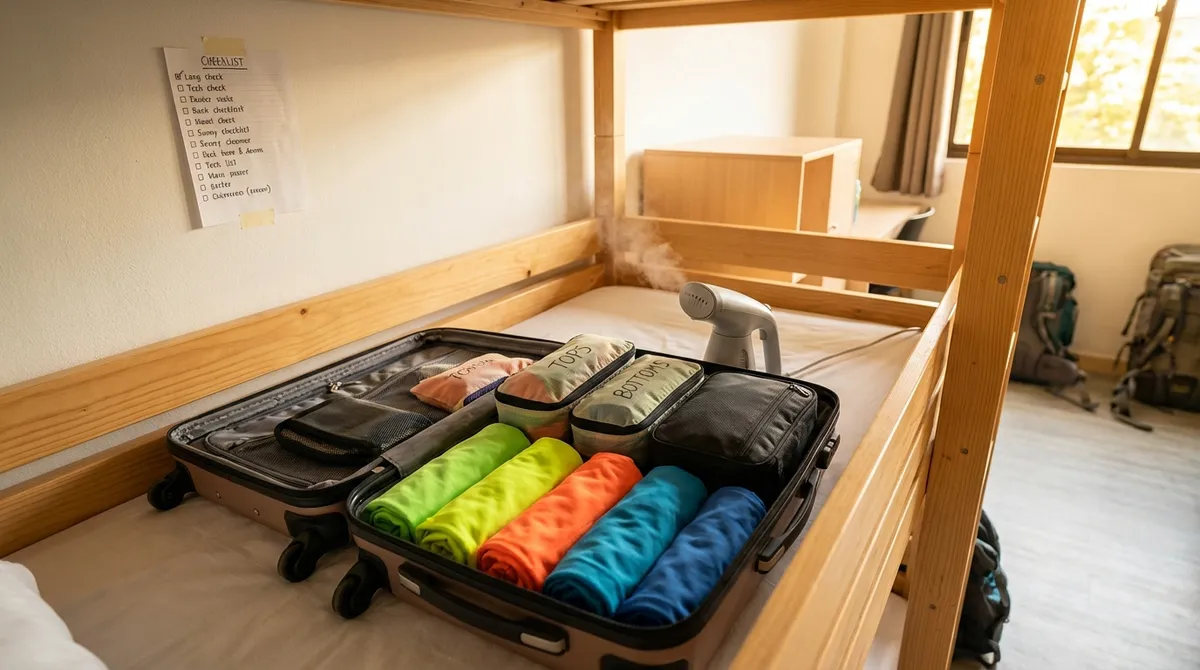
- One packing cube for tops, one for bottoms, one for underwear/socks: so you’re never hunting for basics.
- Dedicated “dirty” bag: a lightweight laundry sack so worn clothes don’t mingle with clean ones.
- Tech pouch: chargers, adapters, cables, power bank, small extension cord if you use one.
- “Reach without thinking” pocket: passport, boarding passes, pen, a bit of cash, and a tiny snack.
Always put things back in their same “zone.” By day two of your trip, you’ll know exactly where everything lives, even in the dark or when you’re tired. That kind of friction-free access is worth more than one extra pair of shoes.
Flatten, Roll, and Stuff: Use Hybrid Packing Techniques
There’s no one “perfect” way to pack clothes—each piece does better with a different method. Using a hybrid strategy can help prevent wrinkles and save space.
Try this approach:
- Roll soft items like t-shirts, leggings, underwear, and workout clothes. They compress well and resist creasing.
- Fold and stack structured items like blazers, stiff shirts, and tailored pants; place them in a neat stack at the top or in a packing folder.
- Bundle more wrinkle-prone outfits (like a dress and lightweight jacket) together, placing them in the middle of your bag where there’s less movement.
- Fill every small space:
- Socks inside shoes
- Belts coiled around the perimeter
- Scarves or small items tucked into corners
If you’re flying with carry-on only and want extra compression, packing cubes or compression bags (for non-bulky items) can keep everything slim and organized. Just be mindful of weight—if you compress too much, it’s easy to overpack to the point that your bag becomes a shoulder workout.
Create a Tiny “First 24 Hours” Kit You Can Grab Instantly
Flights get delayed, bags go missing, check-in times get pushed back—your first 24 hours are where good packing really pays off. Create a mini kit you could live out of if your main bag disappeared or your arrival didn’t go as planned.
This kit should fit in your personal item or the most accessible part of your carry-on and might include:
- A change of underwear and socks
- One versatile top (and maybe leggings or lightweight pants if space allows)
- Travel-size toothbrush and toothpaste, facial wipes or a small cleanser, deodorant
- Essential medications and a copy/photo of prescriptions
- Phone charger and basic adapter
- A small reusable water bottle (empty for security) and simple snack
- Important documents: passport, ID, reservation confirmations (digital + printed backup)
Treat this kit like insurance: you hope you don’t need it, but if you land late, your room isn’t ready, or your checked bag goes on its own vacation, you’ll still feel human, functioning, and ready to explore.
Conclusion
Smart packing isn’t about owning special gear or mastering some secret folding ritual—it’s about making thoughtful choices before you leave home so your future self can relax. A reusable core kit, mix-and-match outfit formulas, clear zones in your bag, hybrid packing techniques, and a “first 24 hours” kit all work together to keep your trip smooth from the moment you zip up your suitcase.
The more you travel, the more you’ll refine your own system. Start with these five strategies, adjust them to your style, and soon your bag will feel less like luggage—and more like a portable, well-run basecamp for every adventure.
Sources
- Transportation Security Administration (TSA) – What Can I Bring? - Official guidelines on what’s allowed in carry-on and checked baggage, including liquids and electronics
- U.S. Department of State – Traveler’s Checklist - Government checklist for documents, health, and safety prep before international trips
- CDC – Travelers’ Health Packing List - Health-focused packing advice including medications, first-aid, and prevention items
- Mayo Clinic – Smart Travel Packing Tips - Practical suitcase organization and clothing suggestions from a major medical institution
- National Institutes of Health – Traveling with Medications - Guidance on safely transporting and managing medications while traveling
Key Takeaway
The most important thing to remember from this article is that this information can change how you think about Packing Tips.