Packing isn’t just about getting your stuff from home to hotel—it’s about how easy your trip feels every single day. Your bag can either slow you down or quietly supercharge your travel. With a few smart packing moves, you’ll spend less time digging through your suitcase and more time actually enjoying your destination.
Below are five practical, traveler-tested tips to transform any backpack, duffel, or suitcase into a stress-free, go-anywhere kit.
Build a “Daily Flow” Layout, Not Just a Neat Suitcase
Most people pack to fit everything in. Smart travelers pack to make their days easier.
Instead of thinking in piles of clothes, think in routines: what you need for your first evening, first morning, and first full day. Pack those items so they’re easiest to access. Your airport outfit, sleepwear, and one full change of clothes should all be reachable without exploding your entire bag.
Designate a “front-row zone” in your bag—the part that’s easiest to reach—for your most-used items: toiletries, sleepwear, chargers, a light layer, and medication. Everything you’ll only use later in the trip (extra outfits, backup shoes, spare supplies) can go deeper or at the bottom.
Suddenly, checking in late, waking up early for a tour, or changing plans mid-transit feels smoother because your bag is organized around how you actually live, not how neatly things fold.
Treat Your Personal Item as a Mobile Command Center
Your personal item (backpack, tote, or small sling) is the bag you’ll interact with most during flights, trains, and long bus rides—so give it a job: it’s your command center.
Set it up in layers:
- Top layer: Passport, boarding pass, wallet, phone, pen, lip balm, hand sanitizer. These are items you reach for often—no digging required.
- Middle layer: Noise-cancelling headphones or earplugs, snacks, reusable water bottle (empty at security), a scarf or hoodie, and an e-reader or book.
- Bottom layer: Things you want available just in case—a small charger, power bank, glasses case, and a compact toiletry pouch that meets liquid rules.
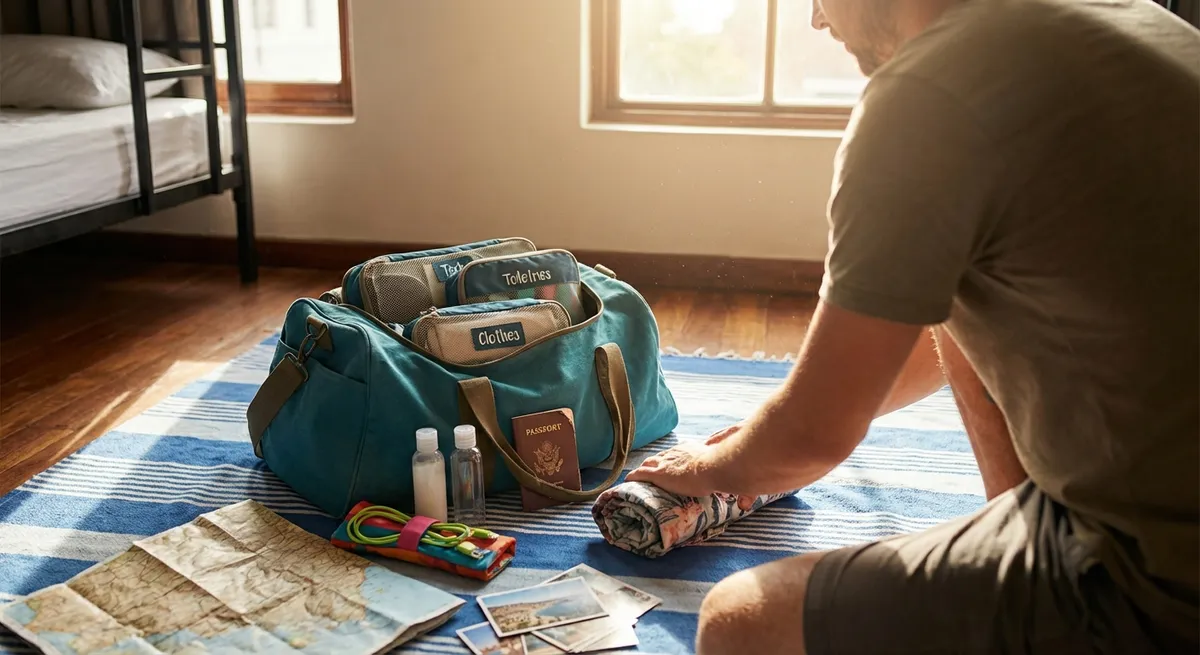
Use small pouches or zip bags to group similar items: tech in one, comfort items in another, documents in a slim folder. That way, you’re not rummaging through a black hole of random stuff, and security checks are much faster.
Think of it like this: if your main luggage disappeared for 24 hours, could your personal item keep you reasonably comfortable and functional? If the answer is yes, you’ve packed it well.
Create a “First Hour Kit” You Can Grab Instantly
Travel days can be long, and the moment you arrive is when fatigue and frustration hit hardest. A dedicated “first hour kit” turns arrival chaos into calm.
Pack this mini-kit in its own small pouch and keep it near the top of your bag:
- A toothbrush and small toothpaste
- Travel-size face wipes or cleanser
- Deodorant and a tiny moisturizer
- Fresh socks and underwear
- One pain reliever or any essential medication
- A spare phone charging cable
- A small pack of tissues
As soon as you reach your accommodation—or even during a layover—you can “reset” in five minutes. You’ll feel surprisingly refreshed and ready to explore, even if your luggage hasn’t been fully unpacked.
This kit is especially powerful for red-eyes, long-haul flights, or overnight buses. It also doubles as your emergency pack if your checked bag is delayed, buying you comfort and confidence until your suitcase shows up.
Pre-Pack Smart Outfits Around Shoes, Not the Other Way Around
Footwear quietly controls how much you can do on your trip. Long walks, surprise detours, and cobblestone streets all depend on your feet not hating you.
Instead of choosing outfits first and then matching shoes, do the reverse: choose 1–2 versatile pairs of shoes and build everything else around them.
A simple strategy:
- Pick one “workhorse” pair: comfortable, closed-toe walking shoes or sneakers that go with nearly all your daytime outfits.
- Add one “upgrade” pair: something slightly dressier but still walkable (loafers, nicer sneakers, low-profile boots, or comfy flats).
Now build your clothes to match those two shoes: limit your color palette, choose pieces that can dress up or down, and favor fabrics that resist wrinkles. This reduces both overpacking and decision fatigue because nearly everything goes with everything.
Packing cubes or roll-folding can help you group outfits by “vibe”: casual exploring, nice dinner, travel days. When shoes are sorted and outfits are flexible, you can adjust to weather changes or last-minute plans without scrambling.
Assemble a Tiny “Fix It Fast” Kit for Travel Surprises
Unexpected snags—literally and figuratively—are part of travel. A mini repair kit can save an outfit, a cable, or even a reservation day.
Use a small zip pouch or old sunglasses case and add:
- 1–2 safety pins (for broken zippers, quick hem fixes, or improvised hooks)
- A mini sewing kit or pre-threaded needles with a couple of basic buttons
- Duct tape or gaffer tape wrapped around a pen or card (for tears, soles, or broken straps)
- A spare charging cable and a universal plug adapter if you’re going abroad
- A couple of bandages and blister patches
- A small zip tie or two (great for zipper pulls, quick fixes, or securing luggage)
You won’t use this kit every day—but the moment you need it, you’ll be incredibly glad it’s there. Instead of losing an afternoon hunting for a pharmacy or electronics shop, you can patch things up instantly and keep your plans on track.
Conclusion
Packing well isn’t about being ultra-minimal or stuffing your bag to the limit—it’s about designing your luggage to support the kind of trip you want to have. When your bag is set up around your routines, your comfort, and your ability to adapt, every travel day feels lighter.
Turn your personal item into your command center, keep a first hour kit ready, design outfits around a couple of reliable shoes, and carry a tiny fix-it kit. These small, intentional choices make your luggage feel less like a burden and more like your own portable basecamp—so you can land, reset quickly, and get straight to the good part of travel.
Sources
- Transportation Security Administration (TSA) – What Can I Bring? - Official guidance on what’s allowed in carry-on and checked bags, including liquids and electronics
- U.S. Department of State – Traveler’s Checklist - Government recommendations for documents, safety, and preparation before departure
- Mayo Clinic – Jet Lag Disorder - Helpful context on managing long flights and why comfort items (like sleep kits) matter
- Cleveland Clinic – Healthy Travel Tips - Medical guidance on staying comfortable and prepared during trips
- BBC Travel – How to Pack Like a Pro - Additional expert-backed packing strategies and organization ideas
Key Takeaway
The most important thing to remember from this article is that this information can change how you think about Packing Tips.